Statistics hub · Updated October 2026
Dog Health Statistics 2026: 130+ cited facts on common diseases, lifespan, obesity, cancer, rabies and vet costs
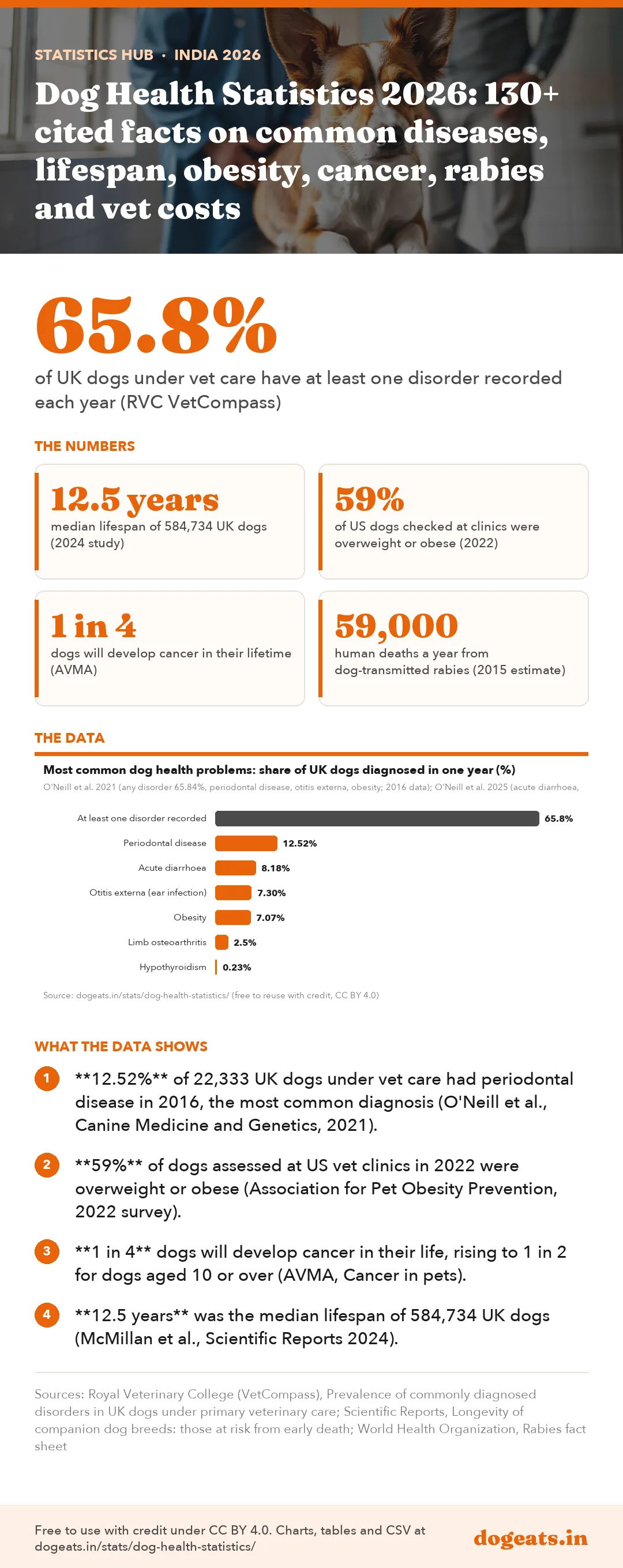
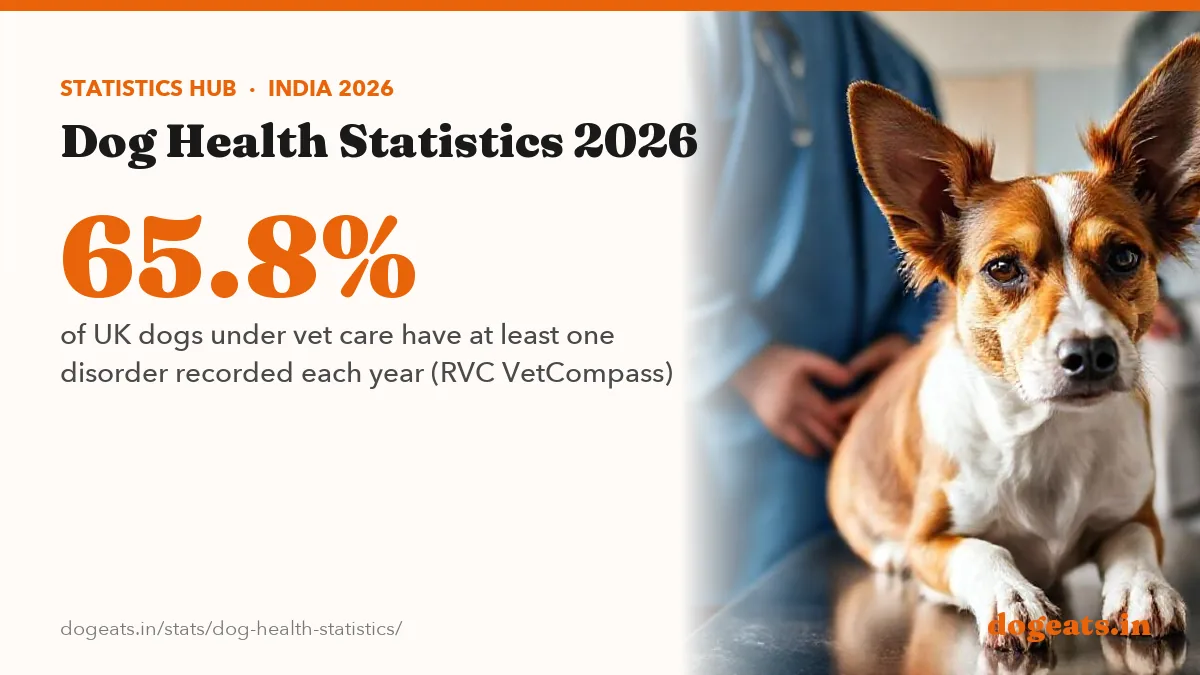
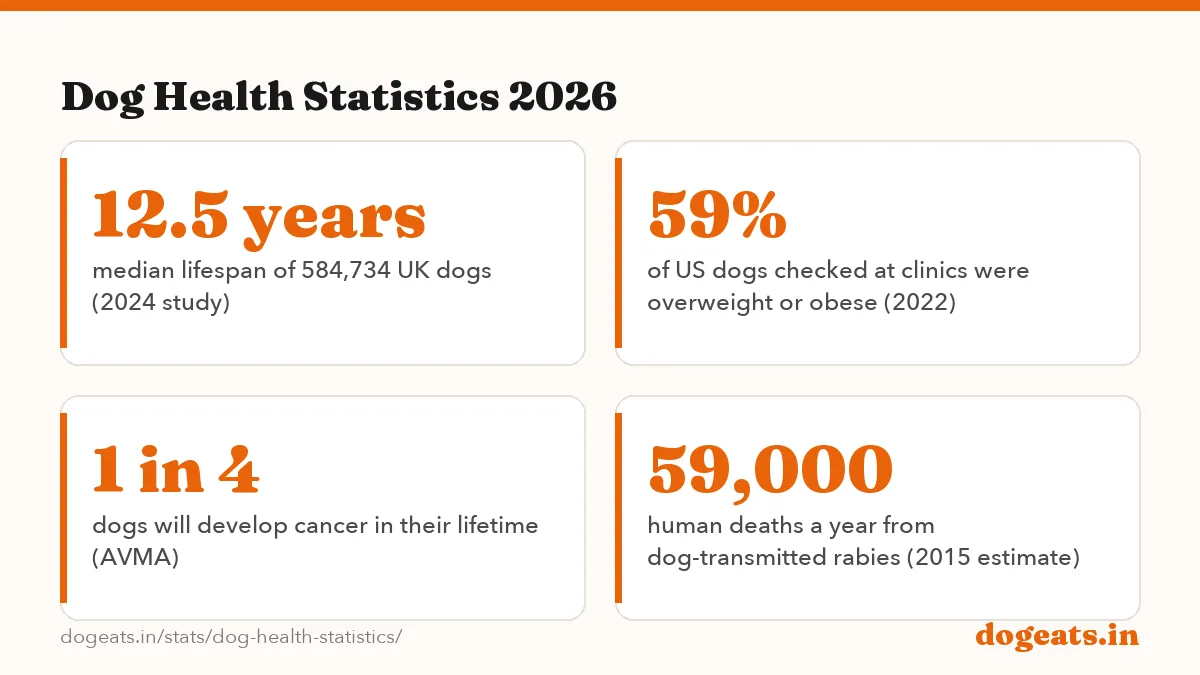
About two in three dogs under vet care have at least one health problem recorded each year, most often dental disease, ear infections or obesity. The typical dog lives 11 to 13 years, one in four develops cancer, and 59% of US dogs checked in 2022 were overweight. This hub collects 130+ dated figures, each linked to its original source.

Key findings
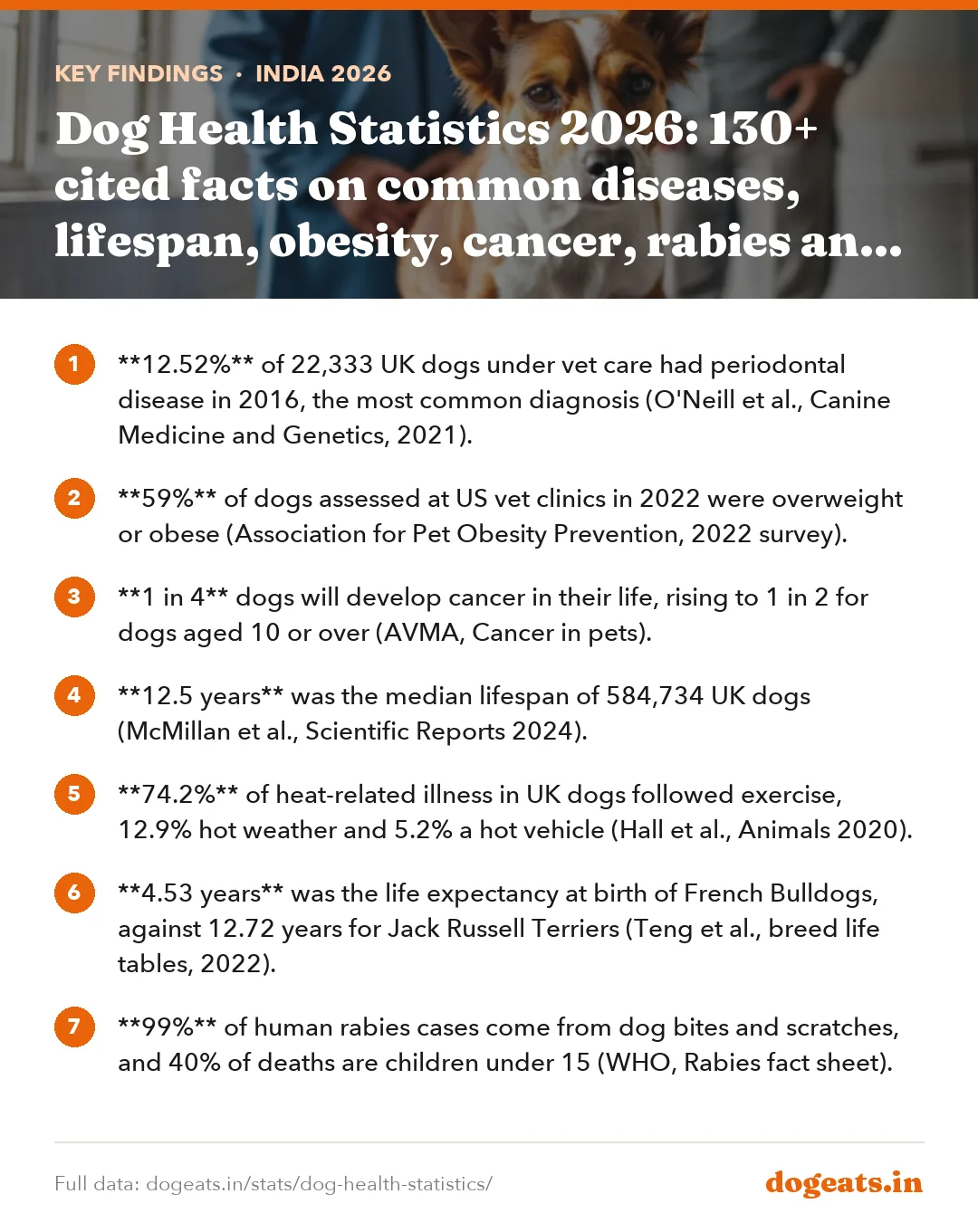
- 12.52% of 22,333 UK dogs under vet care had periodontal disease in 2016, the most common diagnosis (O'Neill et al., Canine Medicine and Genetics, 2021).
- 59% of dogs assessed at US vet clinics in 2022 were overweight or obese (Association for Pet Obesity Prevention, 2022 survey).
- 1 in 4 dogs will develop cancer in their life, rising to 1 in 2 for dogs aged 10 or over (AVMA, Cancer in pets).
- 12.5 years was the median lifespan of 584,734 UK dogs (McMillan et al., Scientific Reports 2024).
- 74.2% of heat-related illness in UK dogs followed exercise, 12.9% hot weather and 5.2% a hot vehicle (Hall et al., Animals 2020).
- 4.53 years was the life expectancy at birth of French Bulldogs, against 12.72 years for Jack Russell Terriers (Teng et al., breed life tables, 2022).
- 99% of human rabies cases come from dog bites and scratches, and 40% of deaths are children under 15 (WHO, Rabies fact sheet).
- 72.5% of 13,700 Finnish pet dogs showed at least one highly problematic anxiety-related behaviour (Salonen et al., Scientific Reports 2020).
- 63% was the rise in average UK vet prices between 2016 and 2023, against 32% general inflation (CMA final report summary, March 2026).
- 52% of 1,225 Swiss dogs were at least partly affected by fear of fireworks (2019 study) (Riemer, PLOS ONE 2019).
What are the most common health problems in dogs?
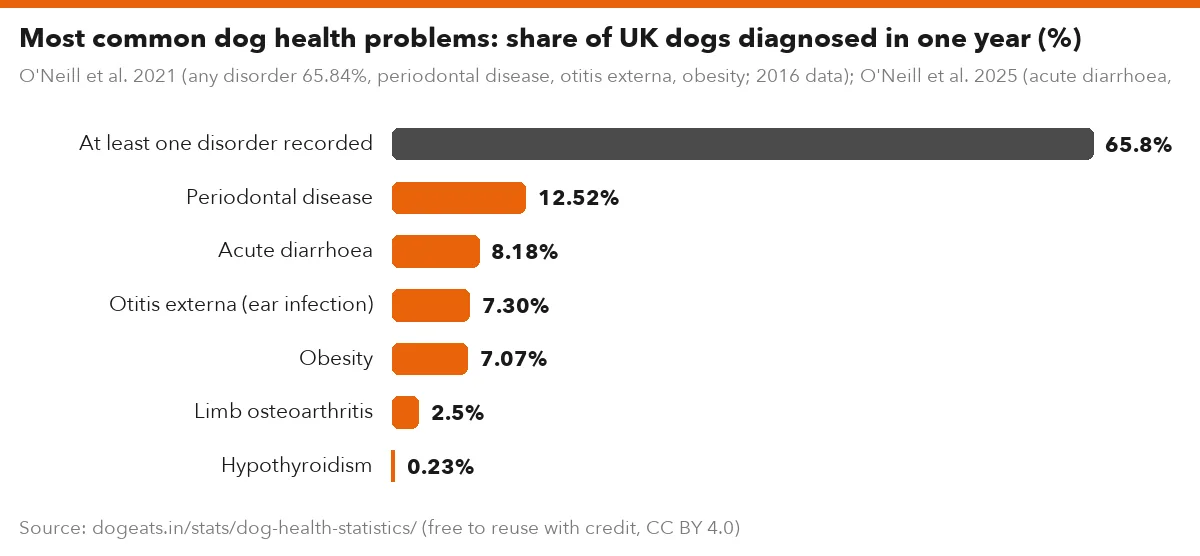
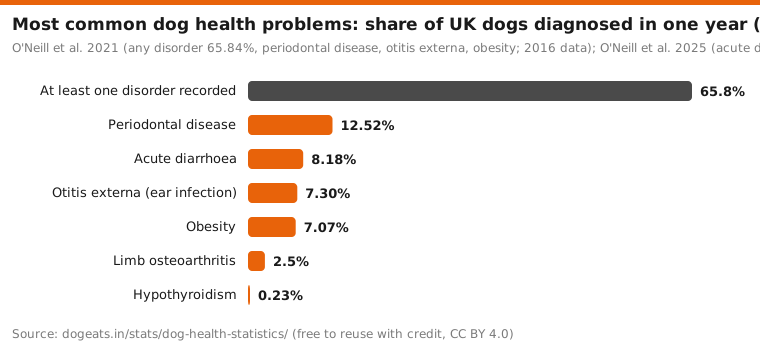
Dental disease, ear infections, obesity and diarrhoea are the problems vets record most often. About two in three UK dogs under vet care have at least one disorder noted each year. Our most common dog health problems report breaks these down by body system.
- 12.52% of 22,333 UK dogs under vet care had periodontal disease in 2016, the most common diagnosis (O'Neill et al., Canine Medicine and Genetics, 2021).
- 7.30% of the same dogs had an outer ear infection (otitis externa), and 7.07% were obese (VetCompass disorder study, 2021).
- 10.2% of 3,884 English dogs had otitis externa in clinic records from 2009 to 2013, with periodontal disease at 9.3% (O'Neill et al., PLOS ONE 2014).
- 8.18% of UK dogs had acute diarrhoea needing vet care within a year (2019 data) (O'Neill et al., acute diarrhoea study, PLOS ONE 2025).
- 2.5% of UK dogs had limb osteoarthritis in a year (2013 data), about 200,000 dogs (Anderson et al., Scientific Reports 2018).
- 0.23% of 905,553 UK dogs had diagnosed hypothyroidism in 2016 (O'Neill et al., hypothyroidism study, Canine Medicine and Genetics 2022).
- 78 of 227 dogs with skin disease at a Palampur, India hospital had bacterial dermatitis, which is 34.4% (Sharma et al., Haryana Veterinarian 2023).
- 14.6% of 733 dogs seen at a clinic in Aizawl, Mizoram had a skin disease (Kar et al., Indian Journal of Animal Research, 2025).
- 7.03 years of life were lost, at the median, by dogs that died of trauma (Years of life lost to trauma, JAVMA 2026).
- 1,382 reports of dilated cardiomyopathy in dogs reached the FDA from January 2014 to November 2022, and not every report was verified (US FDA, DCM questions and answers, 2024).
- 73.8% of UK giant breed dogs had at least one disorder recorded in 2019, against 65.8% across all dogs in VetCompass (Royal Veterinary College, June 2026).
O'Neill et al. 2021 (any disorder 65.84%, periodontal disease, otitis externa, obesity; 2016 data); O'Neill et al. 2025 (acute diarrhoea, 2019); Anderson et al. 2018 (osteoarthritis, 2013); O'Neill et al. 2022 (hypothyroidism, 2016). Bars come from different studies and years, so they are not one survey.
Show the numbers
| Label | % |
|---|---|
| At least one disorder recorded | 65.8% |
| Periodontal disease | 12.52% |
| Acute diarrhoea | 8.18% |
| Otitis externa (ear infection) | 7.30% |
| Obesity | 7.07% |
| Limb osteoarthritis | 2.5% |
| Hypothyroidism | 0.23% |
Embed this chart
How long do dogs live? Dog lifespan statistics
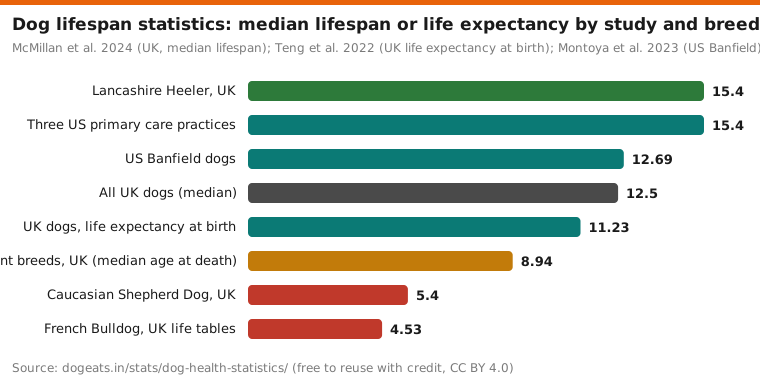
Most large studies put the typical dog lifespan at 11 to 13 years, with wide gaps between breeds. Small breeds tend to outlive giant ones by several years. Breed-by-breed medians are in our dog lifespan by breed report.
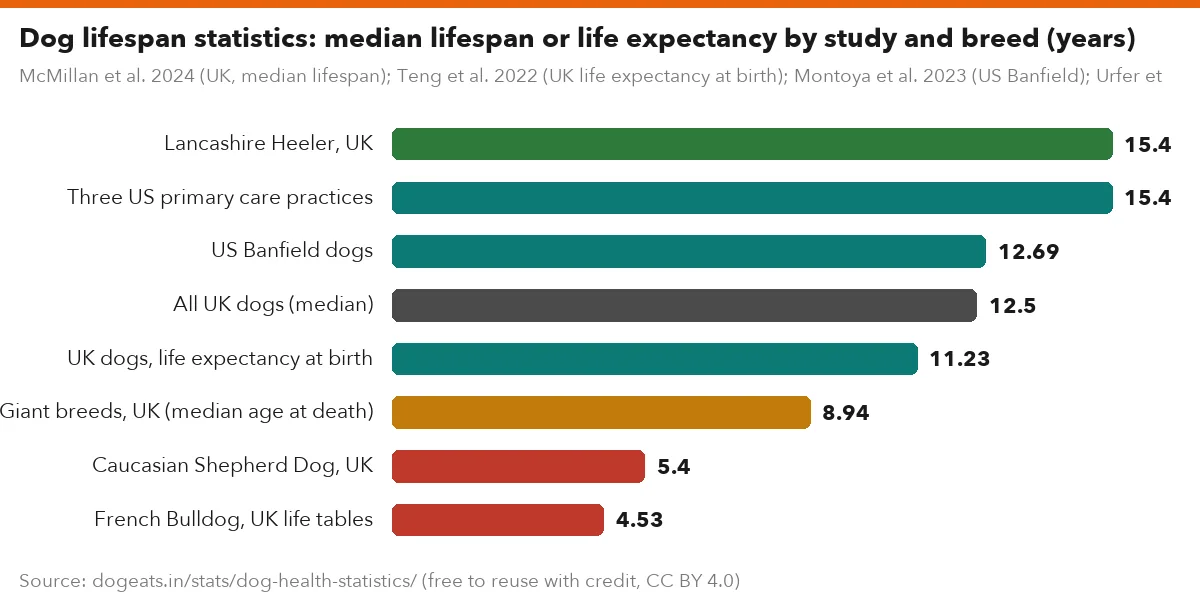
- 12.5 years was the median lifespan of 584,734 UK dogs (McMillan et al., Scientific Reports 2024).
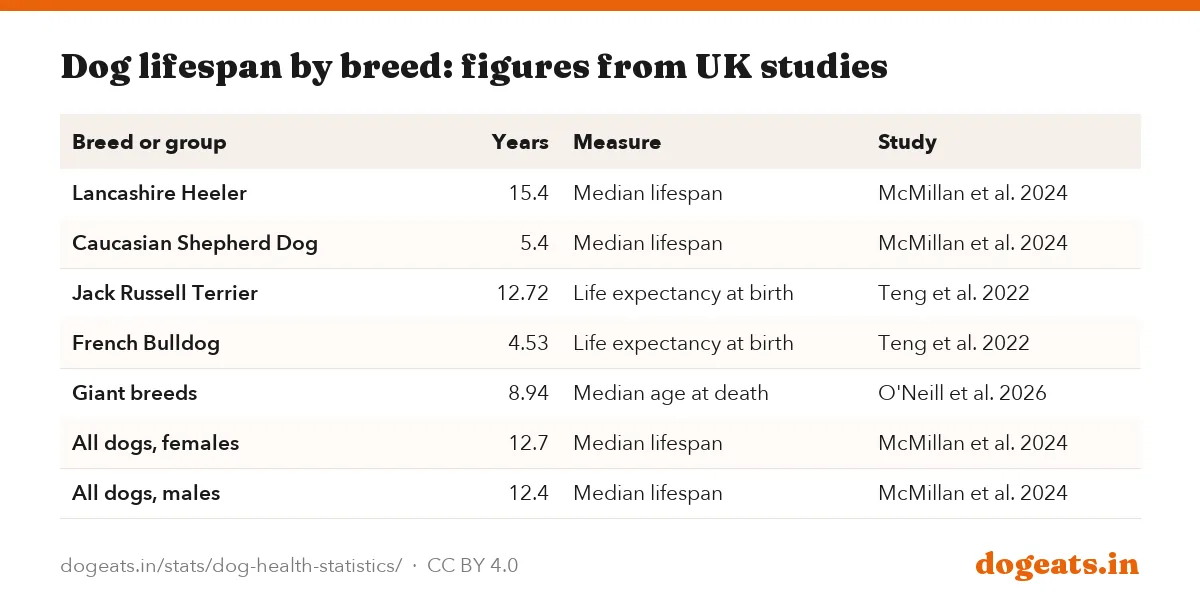
- 12.7 years was the median lifespan of female dogs in that study, against 12.4 years for males (McMillan et al., sex differences, 2024).
- 15.4 years was the median lifespan of the Lancashire Heeler, the longest-lived breed, against 5.4 years for the Caucasian Shepherd (McMillan et al., breed medians, 2024).
- 11.23 years was the life expectancy at birth of UK dogs that died in 2016 to 2020 (Teng et al., UK dog life tables, Scientific Reports 2022).
- 4.53 years was the life expectancy at birth of French Bulldogs, against 12.72 years for Jack Russell Terriers (Teng et al., breed life tables, 2022).
- 12.69 years was the life expectancy at birth of 13,292,929 dogs seen at Banfield hospitals in the US (Montoya et al., Frontiers in Veterinary Science 2023).
- 15.4 years was the median survival time of dogs at three US primary care practices (2020 study) (Urfer et al., Canine Medicine and Genetics 2020).
- 8.94 years was the median age at death of 1,068 UK giant breed dogs that died in 2019 (O'Neill et al., Companion Animal Health and Genetics 2026).
- 91.5% of UK dog deaths with a recorded method involved euthanasia, against 8.5% unassisted (2021 study) (Pegram et al., Scientific Reports 2021).
McMillan et al. 2024 (UK, median lifespan); Teng et al. 2022 (UK life expectancy at birth); Montoya et al. 2023 (US Banfield); Urfer et al. 2020 (US median survival); O'Neill et al. 2026 (giant breeds, median age at death). Bars mix studies and measures, so they are not directly comparable.
Show the numbers
| Label | years |
|---|---|
| Lancashire Heeler, UK | 15.4 |
| Three US primary care practices | 15.4 |
| US Banfield dogs | 12.69 |
| All UK dogs (median) | 12.5 |
| UK dogs, life expectancy at birth | 11.23 |
| Giant breeds, UK (median age at death) | 8.94 |
| Caucasian Shepherd Dog, UK | 5.4 |
| French Bulldog, UK life tables | 4.53 |
Embed this chart
| Breed or group | Years | Measure | Study |
|---|---|---|---|
| Lancashire Heeler | 15.4 | Median lifespan | McMillan et al. 2024 |
| Caucasian Shepherd Dog | 5.4 | Median lifespan | McMillan et al. 2024 |
| Jack Russell Terrier | 12.72 | Life expectancy at birth | Teng et al. 2022 |
| French Bulldog | 4.53 | Life expectancy at birth | Teng et al. 2022 |
| Giant breeds | 8.94 | Median age at death | O'Neill et al. 2026 |
| All dogs, females | 12.7 | Median lifespan | McMillan et al. 2024 |
| All dogs, males | 12.4 | Median lifespan | McMillan et al. 2024 |
Dog obesity statistics: how many dogs are overweight?
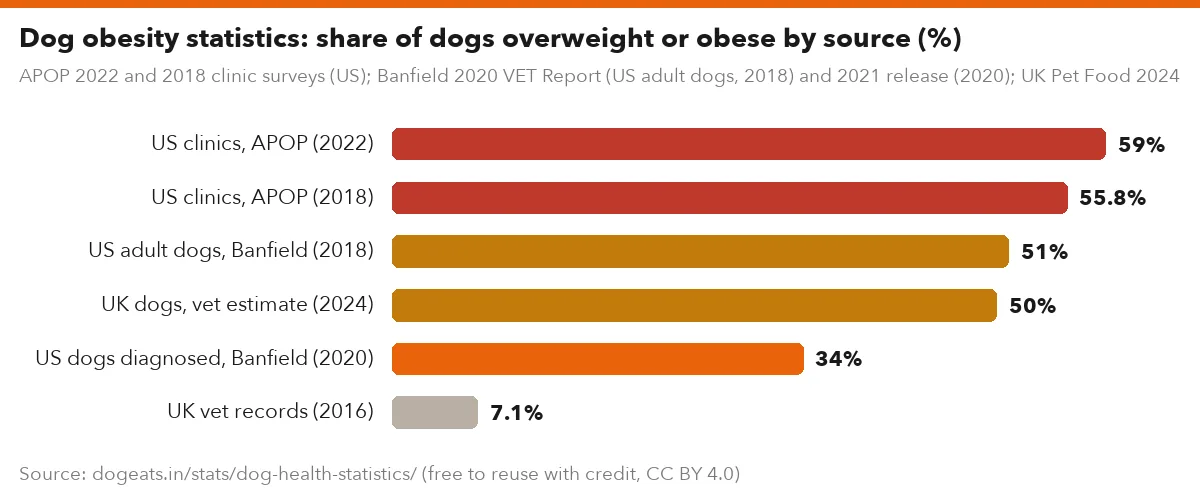
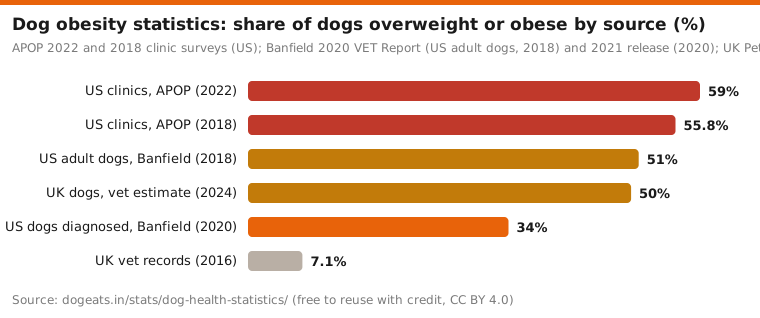
Vet surveys find that about half of dogs in the US and UK carry too much weight, yet few owners see it. Clinic records show lower rates because many cases are never written down. Weight and cancer data for US dogs are compared in our dog obesity and cancer statistics report.
- 59% of dogs assessed at US vet clinics in 2022 were overweight or obese (Association for Pet Obesity Prevention, 2022 survey).
- 32% of owners whose pets were overweight or obese in the 2022 survey described them as normal, ideal or thin (APOP press release, October 2026).
- 55.8% of 1,560 dogs assessed in the 2018 US survey were overweight or obese (Association for Pet Obesity Prevention, 2018 survey).
- 34% of dogs seen at Banfield were diagnosed overweight or obese in 2020, up from 16% in 2011 (company data) (Banfield Pet Hospital release, June 2021).
- 44.5% of adult dogs were overweight and 8.4% obese among about 4.9 million US dogs, 2020 to 2023 (Montoya et al., Preventive Veterinary Medicine 2025).
- 7.1% of UK dogs had overweight status recorded by a vet in 2016 (Pegram et al., Journal of Small Animal Practice 2021).
- 13.7 years was the median lifespan of overweight Yorkshire Terriers, against 16.2 years at normal weight (Salt et al., Journal of Veterinary Internal Medicine 2019).
- 25% less food from puppyhood extended median lifespan in 48 Labrador Retrievers (2002 study) (Kealy et al., JAVMA 2002).
- 17% of UK dog owners said their dog needed to lose weight in 2026 (PDSA PAW Report 2026).
- 50% of UK dogs are overweight, according to vets surveyed for the 2024 obesity report (UK Pet Food, Pet Obesity Report 2024).
- 77% of UK owners believed their pet was a healthy weight; only 4% saw a need to lose weight (UK Pet Food, owner survey, 2024).
- 13 years was the median lifespan of lean-fed Labradors, against 11.2 years for their littermates (2002 study) (Penn Today, University of Pennsylvania, 2002).
- 17% of US dog owners identified their dog as overweight in 2023, while 84% called it ideal or healthy (APOP, 2023 survey).
- 37% of US dog owners described their dog as above ideal weight in 2025, up from 35% in 2024 (APOP, 2025 survey).
- 51% of 1.9 million adult dogs seen at Banfield in 2018 were overweight (company data) (Banfield, 2020 VET Report release).
APOP 2022 and 2018 clinic surveys (US); Banfield 2020 VET Report (US adult dogs, 2018) and 2021 release (2020); UK Pet Food 2024 (vet estimate); Pegram et al. 2021 (UK vet records, 2016). Methods differ, so rates are not directly comparable.
Show the numbers
| Label | % |
|---|---|
| US clinics, APOP (2022) | 59% |
| US clinics, APOP (2018) | 55.8% |
| US adult dogs, Banfield (2018) | 51% |
| UK dogs, vet estimate (2024) | 50% |
| US dogs diagnosed, Banfield (2020) | 34% |
| UK vet records (2016) | 7.1% |
Embed this chart
Dog cancer statistics: how common is cancer in dogs?
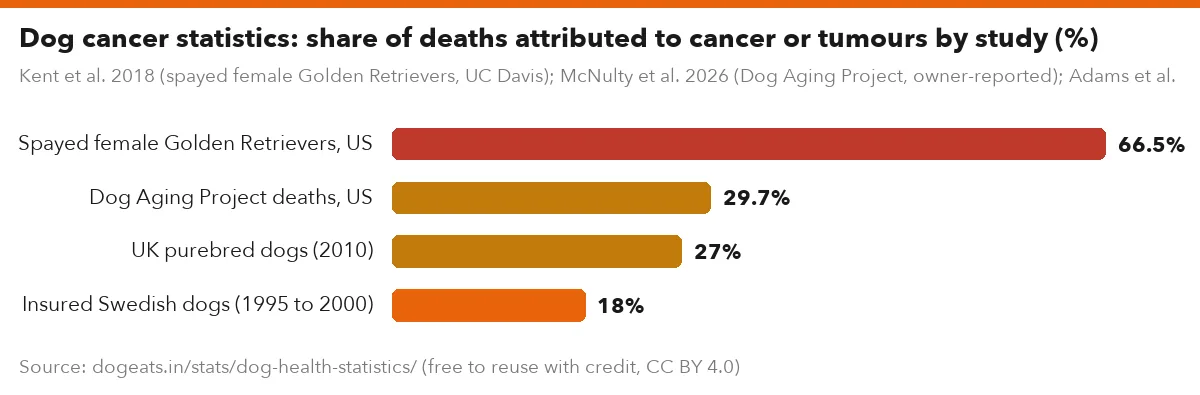
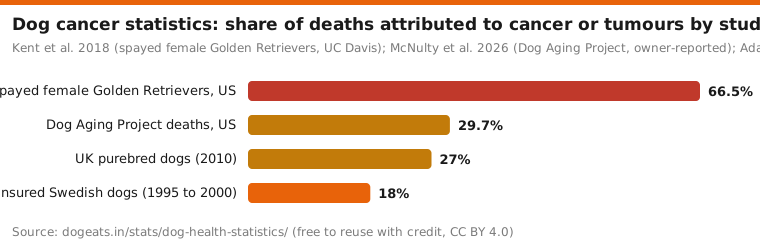
Cancer is the most common cause of death in older dogs in most mortality studies. The AVMA says one in four dogs will develop it, and one in two dogs aged 10 or older. The share of deaths it causes ranges from about one in five to two in three, depending on breed and study.
- 1 in 4 dogs will develop cancer in their life, rising to 1 in 2 for dogs aged 10 or over (AVMA, Cancer in pets).
- 27% of 15,881 deaths in a UK purebred dog survey were from cancer (2010 study) (Adams et al., Journal of Small Animal Practice 2010).
- 8.8 years was the median age at cancer diagnosis in over 3,000 US dogs (Rafalko et al., PLOS ONE 2023).
- 775 tumours per 100,000 dog-years at risk were diagnosed in Swiss dogs in 2008 to 2020 (Swiss Canine Cancer Registry, PLOS ONE 2024).
- 34.64% of 54,986 Swiss registry tumours were in the skin, ahead of soft tissue (20.17%) (Swiss Canine Cancer Registry, tumour sites, 2024).
- 66.5% of spayed female Golden Retrievers seen at UC Davis in 1989 to 2016 died of cancer (Kent et al., PLOS ONE 2018).
- 7.65% of 3,044 dogs in the Golden Retriever Lifetime Study had haemangiosarcoma by September 2022 (Veterinary and Comparative Oncology, 2023).
- 29.7% of 646 dog deaths in the Dog Aging Project were put down to cancer by owners (McNulty et al., JAVMA 2026).
- 18% of diagnosed deaths in over 350,000 insured Swedish dogs were tumours (1995 to 2000 data) (Bonnett et al., Acta Veterinaria Scandinavica 2005).
- 8.7 brain tumour cases per 100,000 dog-years were recorded in Australia, 1994 to 2024 (Brain tumours in Australian dogs, Scientific Reports 2026).
- 12.0% of 788 UK dogs diagnosed with haemangiosarcoma, an aggressive cancer, were still alive one year later (Taylor et al., PLOS ONE 2025).
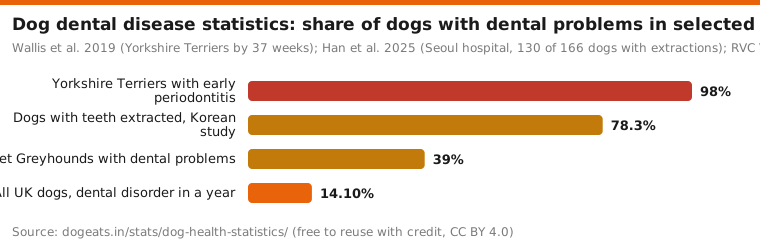
Dog dental disease statistics
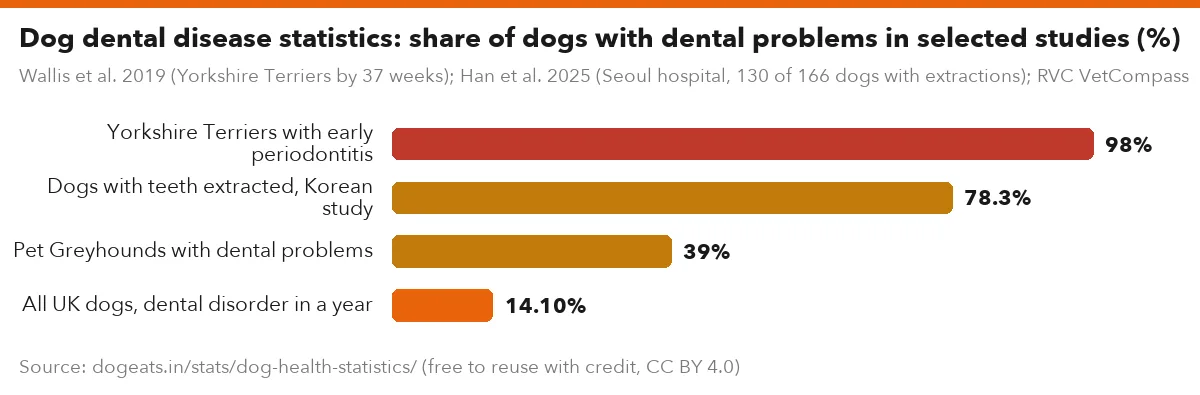
Dental disease is the single most common diagnosis in dogs, and full exams under anaesthesia find it in most adults. Small breeds are hit hardest. Tooth counts, cleaning costs and breed risks are covered in our dog dental disease statistics report.
- 14.10% of UK dogs had a dental disorder in a year, ahead of skin (12.58%) and gut disorders (10.43%) (VetCompass grouped disorders, 2021).
- 44 to 100% of dogs have periodontal disease on examination under anaesthesia (Wallis and Holcombe, Journal of Small Animal Practice 2020).
- 98% of 49 Yorkshire Terriers had early periodontitis in at least one tooth by 37 weeks of age (Wallis et al., BMC Veterinary Research 2019).
- 35 of 52 Miniature Schnauzers had 12 or more teeth progress to periodontitis within 60 weeks (2014 study) (Marshall et al., BMC Veterinary Research 2014).
- 130 of 166 dogs in a Seoul hospital study had teeth extracted, which is 78.3% (Han et al., Veterinarni Medicina 2025).
- 34.6% of upper left second molars were extracted for periodontal disease in 2,201 small and medium dogs (Tooth extraction study, Animals 2025).
- 42 permanent teeth is the normal adult set for most dogs, after 28 deciduous teeth (Merck Veterinary Manual).
- $1,284 was the average US cost in the first 30 days after a dog dental disease diagnosis (company data) (Nationwide press release, March 2025).
- 39% of pet Greyhounds in UK vet records had dental problems (2019 study) (Royal Veterinary College, VetCompass, 2019).
Wallis et al. 2019 (Yorkshire Terriers by 37 weeks); Han et al. 2025 (Seoul hospital, 130 of 166 dogs with extractions); RVC VetCompass 2019 (Greyhounds); O'Neill et al. 2021 (all UK dogs, one year). Bars come from different studies and measures.
Show the numbers
| Label | % |
|---|---|
| Yorkshire Terriers with early periodontitis | 98% |
| Dogs with teeth extracted, Korean study | 78.3% |
| Pet Greyhounds with dental problems | 39% |
| All UK dogs, dental disorder in a year | 14.10% |
Embed this chart
Dog heatstroke statistics: how many dogs die of heat?
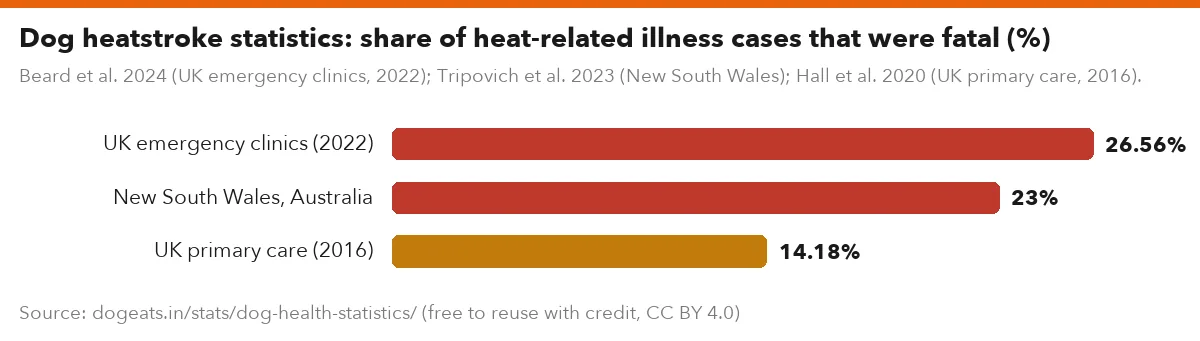
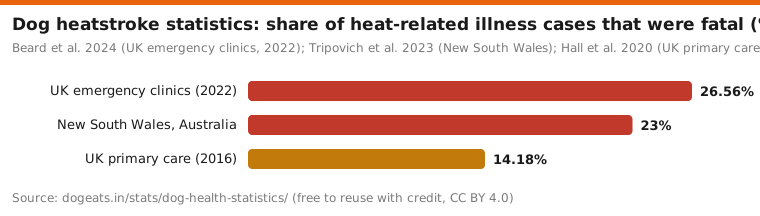
Heatstroke is rare but often deadly: about one in seven UK cases seen in primary care is fatal, and one in four at emergency clinics. Exercise, not hot cars, triggers most cases. Risk factors and recovery data are in our dog heatstroke statistics report.

- 14.18% of heat-related illness events in UK dogs in 2016 were fatal, from an incidence of 0.04% (Hall et al., Scientific Reports 2020).
- 0.50% of Chow Chows had heat-related illness in 2016, the highest of any breed, ahead of Bulldogs (0.42%) (Hall et al., breed incidence, 2020).
- 74.2% of heat-related illness in UK dogs followed exercise, 12.9% hot weather and 5.2% a hot vehicle (Hall et al., Animals 2020).
- 8.87 times the odds of fatal heat-related illness were found in dogs aged 12 or over, against dogs under 2 (Hall et al., Veterinary Sciences 2022).
- 26.56% of heat-related illness events at UK emergency clinics in 2022 were fatal (Beard et al., Veterinary Record 2024).
- 23% of 119 heat-related illness cases in New South Wales dogs were fatal (Tripovich et al., Australian Veterinary Journal 2023).
- 9.5% higher risk of dog death was found on extreme heat days in New South Wales, 1997 to 2017 (Tripovich et al., Australian Veterinary Journal 2025).
- 0.79 was the accuracy score (AUROC) of a revised tool for predicting fatal heatstroke, up from 0.72 (Beard et al., Scientific Reports 2025).
- 26% of UK vets treating heat-affected dogs in summer 2018 saw at least one hot car case (British Veterinary Association, 2019).
- 607 files about animals in hot cars were opened by the BC SPCA helpline in British Columbia in 2025 (BC SPCA, June 2026).
Beard et al. 2024 (UK emergency clinics, 2022); Tripovich et al. 2023 (New South Wales); Hall et al. 2020 (UK primary care, 2016). Settings and years differ between studies.
Show the numbers
| Label | % |
|---|---|
| UK emergency clinics (2022) | 26.56% |
| New South Wales, Australia | 23% |
| UK primary care (2016) | 14.18% |
Embed this chart
Infectious disease and vaccination statistics for dogs
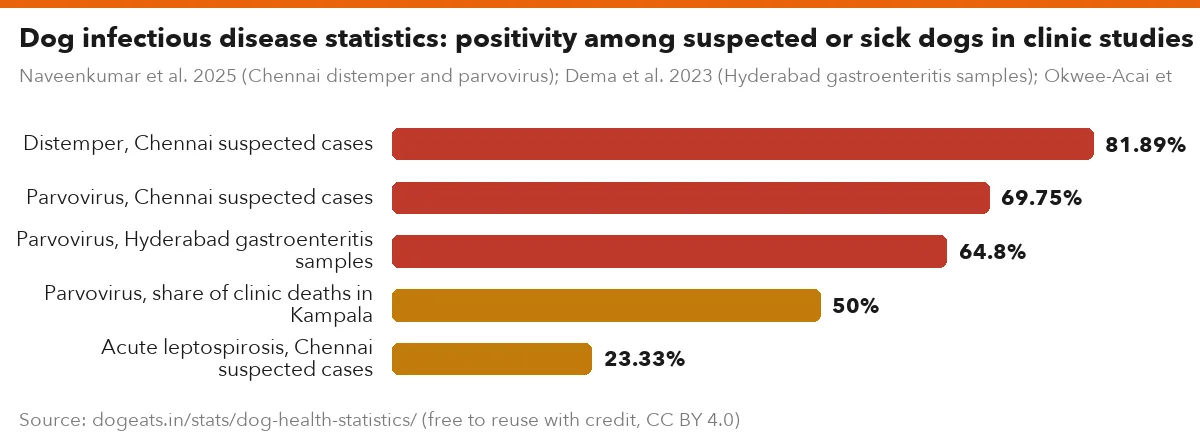
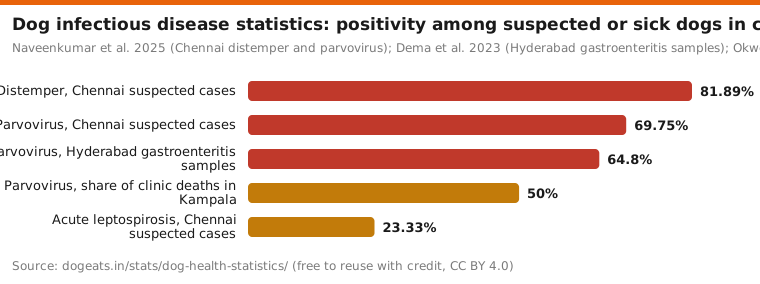
Parvovirus and distemper still dominate clinic caseloads where vaccination is patchy, as studies from India and Uganda show. In the UK, about four in five owners report puppy vaccinations and boosters. Indian parvo and tick fever data are in our dog diseases in India report.
- 82% of UK dog owners said their dog had its puppy vaccinations, and 82% said it gets regular boosters (PDSA PAW Report 2026).
- 69% of UK dog owners said their dog was neutered in 2026, up from 64% in 2025 (PDSA PAW Report 2026, neutering).
- 50% of dogs that died at a Kampala, Uganda university clinic in 2021 to 2022 had parvovirus (Okwee-Acai et al., BMC Veterinary Research 2024).
- 64.8% of samples from Hyderabad dogs with gastroenteritis carried canine parvovirus (Dema et al., Archives of Virology 2023).
- 69.75% of 6,105 dogs suspected of parvovirus enteritis in Chennai were confirmed with it (Naveenkumar et al., Preventive Veterinary Medicine 2025).
- 81.89% of 1,447 dogs suspected of distemper in Chennai were diagnosed with it (Naveenkumar et al., International Journal of Biometeorology 2025).
- 23.33% of 210 Chennai dogs suspected of leptospirosis had acute infection (Sarangi et al., Microbial Pathogenesis 2025).
- 0 of 239 urine samples from healthy dogs in Haryana carried pathogenic Leptospira (2020 study) (Rohilla et al., Veterinary World 2020).
- 10% of US vets surveyed saw no heartworm cases in 2025, and Texas topped the state list for the first time (American Heartworm Society, 2025 incidence survey).
- 19% of US practitioners said heartworm rates rose in 2025, 22% saw a fall and 59% no change (American Heartworm Society, practitioner responses).
- Over 121,000,000 heartworm test results feed the US parasite prevalence maps (Companion Animal Parasite Council, forecast maps).
- 2.03% of UK dogs had at least one tick infestation diagnosed over five years (Royal Veterinary College, VetCompass, 2024).
Naveenkumar et al. 2025 (Chennai distemper and parvovirus); Dema et al. 2023 (Hyderabad gastroenteritis samples); Okwee-Acai et al. 2024 (Kampala deaths); Sarangi et al. 2025 (Chennai leptospirosis). Hospital-based samples, not all dogs. Bars come from different studies and measures.
Show the numbers
| Label | % |
|---|---|
| Distemper, Chennai suspected cases | 81.89% |
| Parvovirus, Chennai suspected cases | 69.75% |
| Parvovirus, Hyderabad gastroenteritis samples | 64.8% |
| Parvovirus, share of clinic deaths in Kampala | 50% |
| Acute leptospirosis, Chennai suspected cases | 23.33% |
Embed this chart
Rabies statistics: how many people die of rabies from dogs?
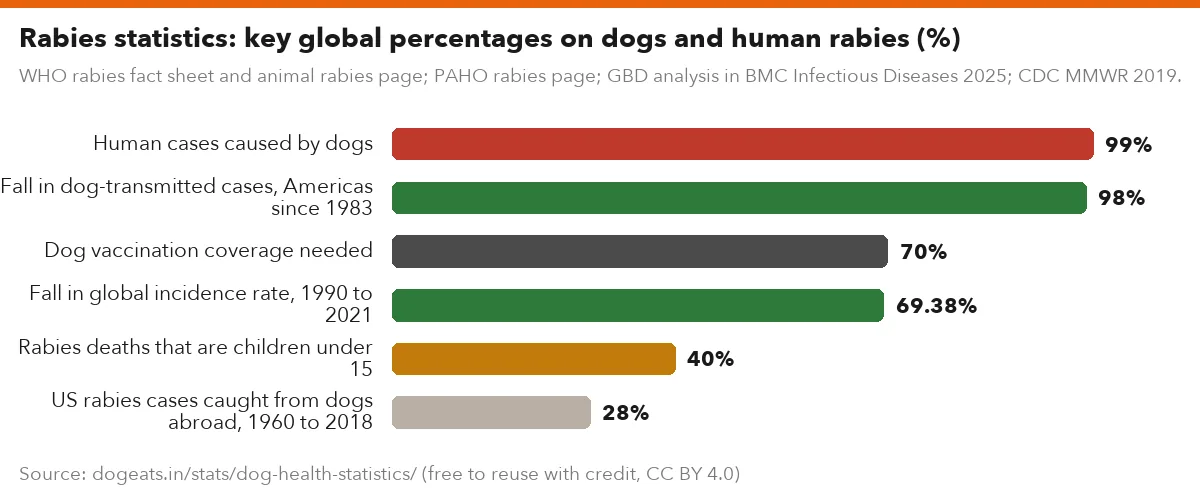
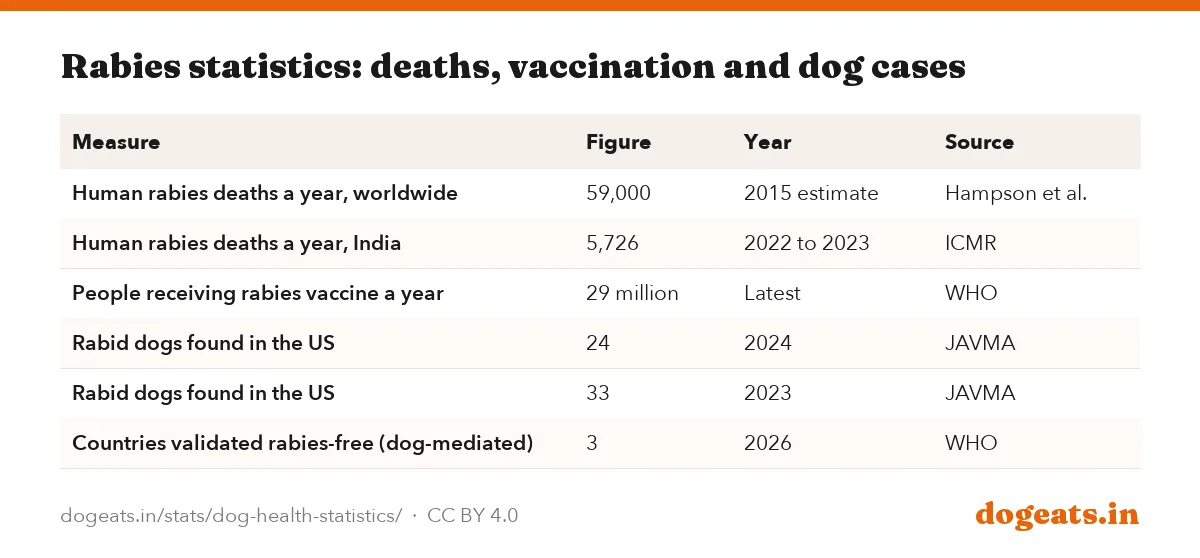
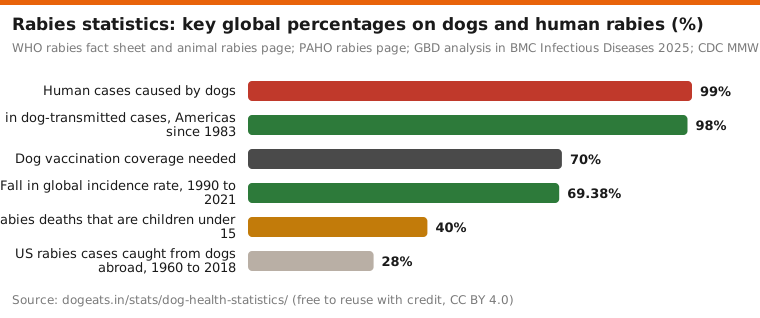
Rabies kills about 59,000 people a year, and dogs cause up to 99% of human cases. Mass dog vaccination works: the Americas have cut dog-transmitted cases by 98% since 1983. US surveillance data are in our rabies statistics report.
- 99% of human rabies cases come from dog bites and scratches, and 40% of deaths are children under 15 (WHO, Rabies fact sheet).
- Over 29 million people worldwide receive human rabies vaccine every year (WHO, Rabies fact sheet).
- 3 countries, Bhutan, Chile and Mexico, were validated for eliminating dog-mediated human rabies by September 2026 (WHO, Rabies fact sheet).
- 59,000 human deaths a year are caused by dog rabies, costing USD 8.6 billion (2015 estimate) (Hampson et al., PLOS Neglected Tropical Diseases 2015).
- Almost 100% is the fatality rate of rabies in people and animals, and dogs are the main reservoir (World Organisation for Animal Health, Rabies).
- About 98% fewer dog-transmitted human rabies cases occur in the Americas than in 1983: about 300 then, 11 in 2025 and 2026 to July (PAHO, Rabies).
- 5,726 human rabies deaths a year occur in India, by the ICMR estimate (Thangaraj et al., Lancet Infectious Diseases 2025).
- 69.38% was the fall in the global age-standardised rabies incidence rate from 1990 to 2021 (GBD rabies analysis, BMC Infectious Diseases 2025).
- 24 rabid dogs were found among 24,727 dogs tested in the US in 2024 (Rabies surveillance during 2024, JAVMA 2026).
- 28% of 125 US human rabies cases from 1960 to 2018 (36 people) came from dog bites abroad (2019 report) (CDC, MMWR Vital Signs, 2019).
- Over 50 countries gained Gavi support in 2024 to access human rabies vaccine (Gavi, the Vaccine Alliance, June 2024).
- 33 rabid dogs were found among 24,685 dogs tested in the US in 2023 (Rabies surveillance during 2023, JAVMA 2025).
- 70% of dogs in at-risk areas must be vaccinated to stop human rabies deaths; Asia and Africa often reach 30 to 50% (WHO, Animal rabies).
WHO rabies fact sheet and animal rabies page; PAHO rabies page; GBD analysis in BMC Infectious Diseases 2025; CDC MMWR 2019. Each bar measures a different thing; see the bullets for definitions.
Show the numbers
| Label | % |
|---|---|
| Human cases caused by dogs | 99% |
| Fall in dog-transmitted cases, Americas since 1983 | 98% |
| Dog vaccination coverage needed | 70% |
| Fall in global incidence rate, 1990 to 2021 | 69.38% |
| Rabies deaths that are children under 15 | 40% |
| US rabies cases caught from dogs abroad, 1960 to 2018 | 28% |
Embed this chart
| Measure | Figure | Year | Source |
|---|---|---|---|
| Human rabies deaths a year, worldwide | 59,000 | 2015 estimate | Hampson et al. |
| Human rabies deaths a year, India | 5,726 | 2022 to 2023 | ICMR |
| People receiving rabies vaccine a year | 29 million | Latest | WHO |
| Rabid dogs found in the US | 24 | 2024 | JAVMA |
| Rabid dogs found in the US | 33 | 2023 | JAVMA |
| Countries validated rabies-free (dog-mediated) | 3 | 2026 | WHO |
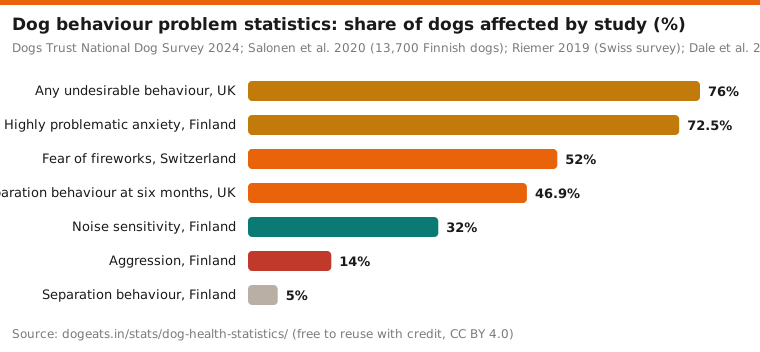
Dog behaviour problem statistics: anxiety, fear and aggression
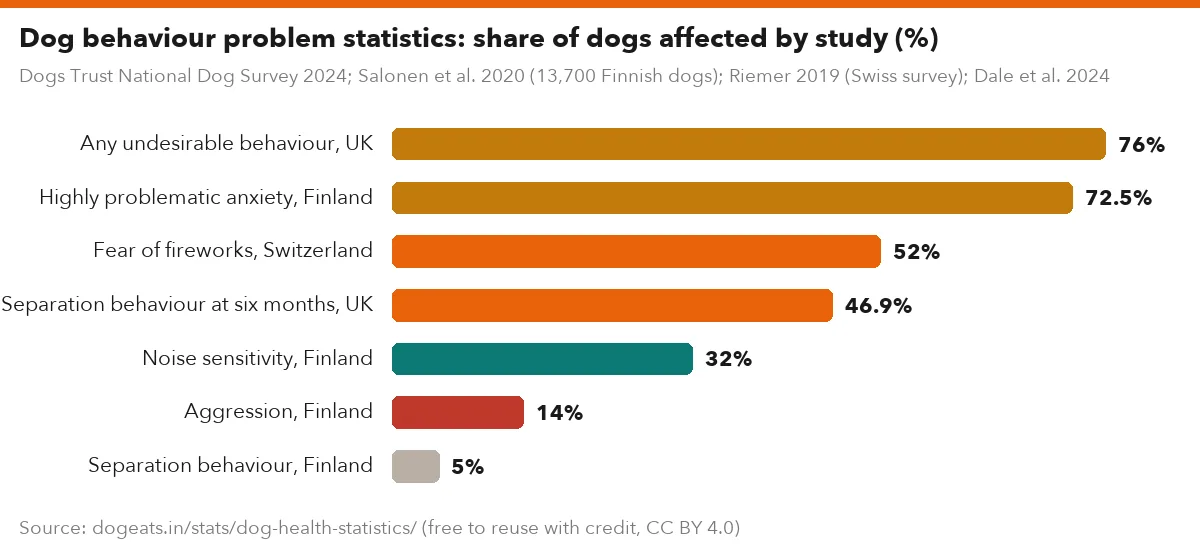
Most dogs show at least one behaviour their owners find hard, and noise fear is the most common. Behaviour problems also end lives: in one Australian study they caused about three in ten deaths of young dogs. Our dog separation anxiety and fear statistics report covers risk factors.
- 72.5% of 13,700 Finnish pet dogs showed at least one highly problematic anxiety-related behaviour (Salonen et al., Scientific Reports 2020).
- 32% of those dogs were highly fearful of at least one noise, the most common anxiety trait (Salonen et al., noise sensitivity, 2020).
- 5% of the Finnish dogs showed separation-related behaviour, and 14% showed aggression (Salonen et al., separation and aggression, 2020).
- 52% of 1,225 Swiss dogs were at least partly affected by fear of fireworks (2019 study) (Riemer, PLOS ONE 2019).
- 46.9% of six-month-old puppies in the UK Generation Pup study showed separation-related behaviour (Dale et al., Animal Welfare 2024).
- 9.9% of UK dogs developed new separation-related behaviour by October 2020, after the first lockdown (Harvey et al., Animals 2022).
- 29.7% of deaths in Australian dogs aged three and under were due to undesirable behaviour (2013 to 2018) (Yu et al., Animals 2021).
- 1.29% of UK pandemic puppies had been rehomed or sold by 21 months of age (Pandemic Puppies follow-up, PLOS ONE 2025).
- 47,444 Dog Aging Project dogs enrolled in 2020 to 2023 were scored for fear, excitability, aggression and trainability (Li et al., PLOS ONE 2025).
- 76% of UK dogs showed at least one undesirable behaviour, yet only 6.5% attended training classes (Dogs Trust, National Dog Survey 2024).
- 26% of UK dogs rarely stay calm when fireworks can be heard (Dogs Trust, National Dog Survey 2024).
Dogs Trust National Dog Survey 2024; Salonen et al. 2020 (13,700 Finnish dogs); Riemer 2019 (Swiss survey); Dale et al. 2024 (six-month-old puppies). Bars come from different surveys and definitions.
Show the numbers
| Label | % |
|---|---|
| Any undesirable behaviour, UK | 76% |
| Highly problematic anxiety, Finland | 72.5% |
| Fear of fireworks, Switzerland | 52% |
| Separation behaviour at six months, UK | 46.9% |
| Noise sensitivity, Finland | 32% |
| Aggression, Finland | 14% |
| Separation behaviour, Finland | 5% |
Embed this chart
Breed health statistics: flat-faced and purebred dogs
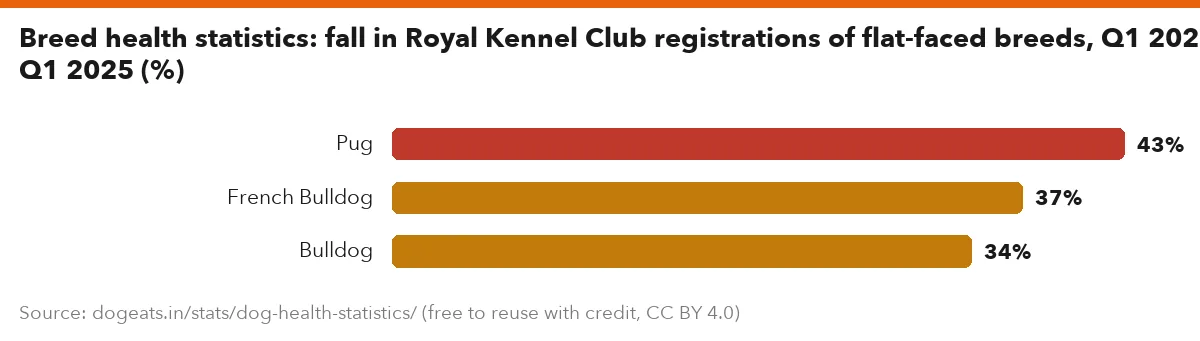
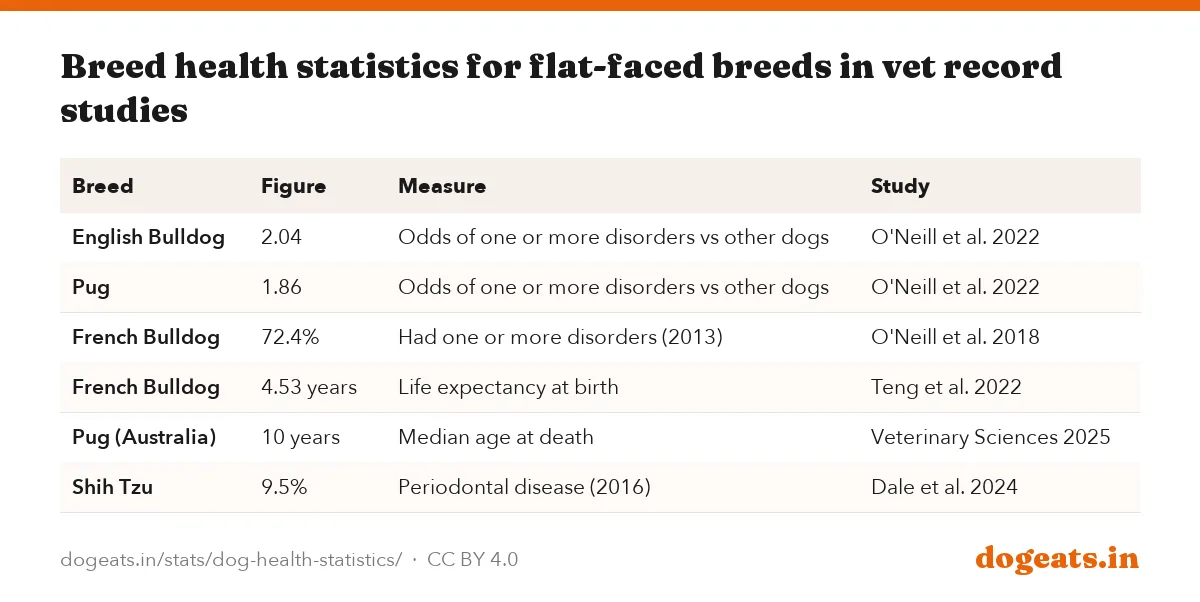
Flat-faced breeds such as Pugs, French Bulldogs and English Bulldogs carry roughly twice the odds of disease of other dogs. Demand is now falling sharply in the UK. Indian breed lifespans and health notes are in our dog breed lifespan India report.

- 10 of 30 common disorders showed different odds in flat-faced (brachycephalic) dogs than in other UK dogs (O'Neill et al., Scientific Reports 2020).
- 1.86 times the odds of at least one diagnosed disorder were found in Pugs, against other UK dogs (O'Neill et al., Canine Medicine and Genetics 2022).
- 2.04 times the odds of at least one diagnosed disorder were found in English Bulldogs (O'Neill et al., English Bulldogs study, 2022).
- 72.4% of 2,228 UK French Bulldogs had at least one disorder recorded in 2013 (O'Neill et al., Canine Genetics and Epidemiology 2018).
- 9.5% of 2,423 UK Shih Tzus had periodontal disease in 2016, their most common diagnosis (Dale et al., Canine Medicine and Genetics 2024).
- 10 years was the median age at death of Pugs under vet care in Australia (Pug mortality study, Veterinary Sciences 2025).
- 0% of 51 purebred Pugs were free of breathing problems on a grading test, against 98 of 99 Pug crosses (Animal Welfare (Cambridge), 2026).
- 4,899 UK survey participants rated less extreme versions of three flat-faced breeds higher for looks and perceived health (Beauty versus the beast, Veterinary Record 2025).
- 57% of 1,054,293 genotyped dogs carried at least one studied genetic disease variant (Donner et al., PLOS Genetics 2023).
- 10 of 24 inherited disorders were more common in purebred than mixed-breed dogs (1995 to 2010 data) (Bellumori et al., JAVMA 2013).
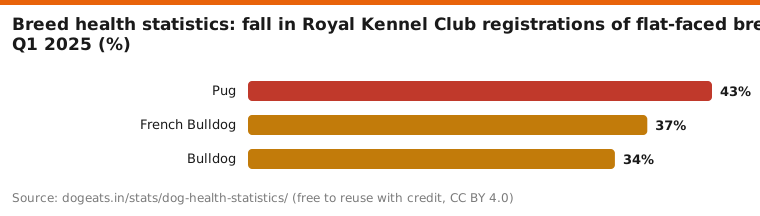
- 37% fewer French Bulldogs were registered in early 2026 than a year before; Bulldogs fell 34% and Pugs 43% (Royal Kennel Club, May 2026).
- 86.6% of disorder comparisons found no risk difference between designer crossbreeds and their parent breeds (Royal Veterinary College, August 2024).
Royal Kennel Club, May 2026 release on first-quarter registrations.
Show the numbers
| Label | % |
|---|---|
| Pug | 43% |
| French Bulldog | 37% |
| Bulldog | 34% |
Embed this chart
| Breed | Figure | Measure | Study |
|---|---|---|---|
| English Bulldog | 2.04 | Odds of one or more disorders vs other dogs | O'Neill et al. 2022 |
| Pug | 1.86 | Odds of one or more disorders vs other dogs | O'Neill et al. 2022 |
| French Bulldog | 72.4% | Had one or more disorders (2013) | O'Neill et al. 2018 |
| French Bulldog | 4.53 years | Life expectancy at birth | Teng et al. 2022 |
| Pug (Australia) | 10 years | Median age at death | Veterinary Sciences 2025 |
| Shih Tzu | 9.5% | Periodontal disease (2016) | Dale et al. 2024 |
How much do vet visits cost? Vet care spending statistics
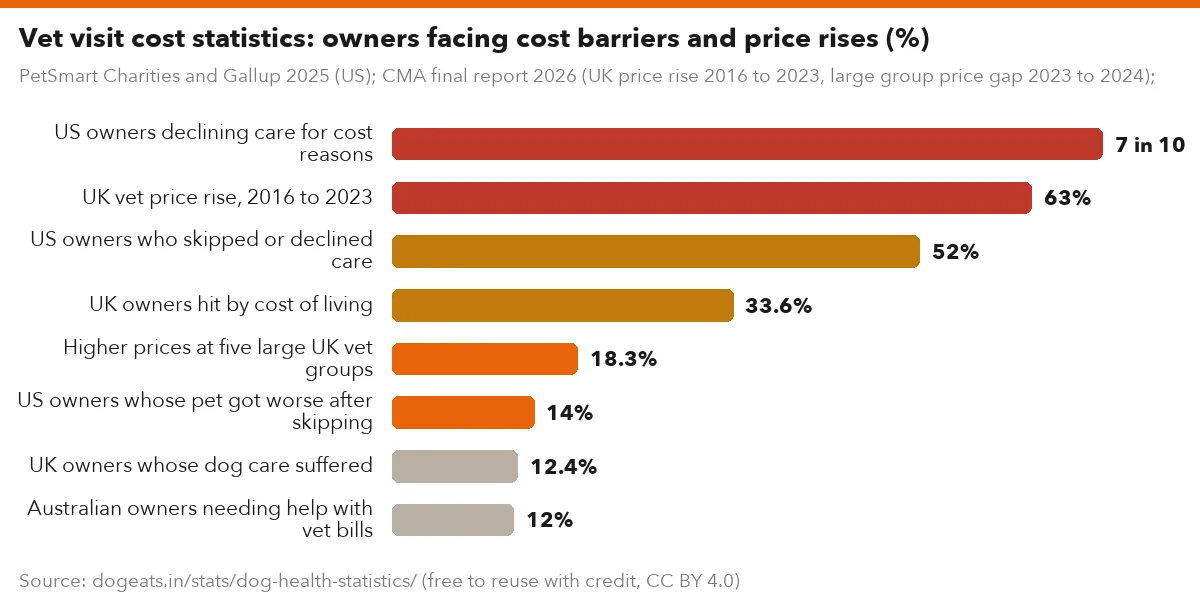
US dog-owning households spend about $595 a year on vet care, and UK vet prices rose 63% in seven years. Cost now keeps many pets from care: half of US owners have skipped or declined it. Price trends are tracked in our vet cost and pet food inflation report.
- $41.0 billion was spent on US pet vet care and product sales in 2025, out of $158 billion (American Pet Products Association, 2025).
- $595 a year was the average vet spend of US dog-owning households in 2026, against $426 for cat owners (AVMA, 2026 Pet Ownership Sourcebook).
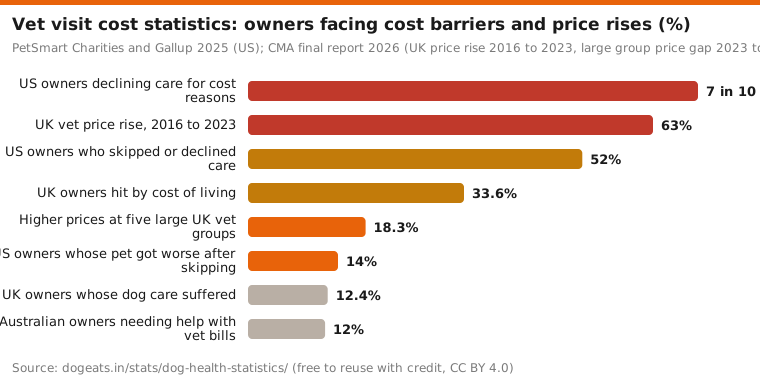
- 63% was the rise in average UK vet prices between 2016 and 2023, against 32% general inflation (CMA final report summary, March 2026).
- 18.3% higher average prices were charged by five large UK vet groups than by independent practices, January 2023 to July 2024 (CMA final report summary, March 2026).
- £6.7 billion was spent by UK pet owners on veterinary and other services in 2024 (Competition and Markets Authority, final decision, March 2026).
- 52% of US dog and cat owners have skipped or declined vet care their pet needed (PetSmart Charities and Gallup, April 2025).
- 14% of US owners who skipped vet care said their pet got worse or died (PetSmart Charities press release, 2025).
- Seven in 10 US owners who declined vet care said they could not afford it or it was not worth the cost (Gallup press release, 2025).
- $702 was the average US 30-day cost after a dog gastroenteritis diagnosis, against $265 for skin allergies (company data) (Nationwide, March 2025).
- 12% of Australian pet owners needed financial help to pay for vet care (2025 survey) (Animal Medicines Australia, Pets in Australia 2025).
- $1.9 billion (Australian) a year goes on veterinary services, second only to pet food (Animal Medicines Australia, 2025).
- 33.6% of UK dog owners said the cost-of-living crisis hit their household lifestyle, but only 12.4% said dog care suffered (Royal Veterinary College, August 2026).
PetSmart Charities and Gallup 2025 (US); CMA final report 2026 (UK price rise 2016 to 2023, large group price gap 2023 to 2024); RVC 2026; Animal Medicines Australia 2025. Bars come from different surveys and measures.
Show the numbers
| Label | % |
|---|---|
| US owners declining care for cost reasons | 7 in 10 |
| UK vet price rise, 2016 to 2023 | 63% |
| US owners who skipped or declined care | 52% |
| UK owners hit by cost of living | 33.6% |
| Higher prices at five large UK vet groups | 18.3% |
| US owners whose pet got worse after skipping | 14% |
| UK owners whose dog care suffered | 12.4% |
| Australian owners needing help with vet bills | 12% |
Embed this chart
Pet insurance claims statistics for dogs
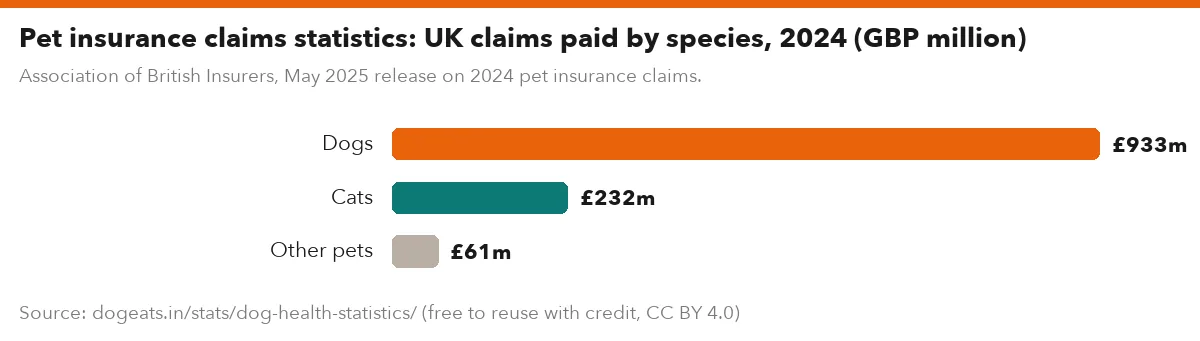
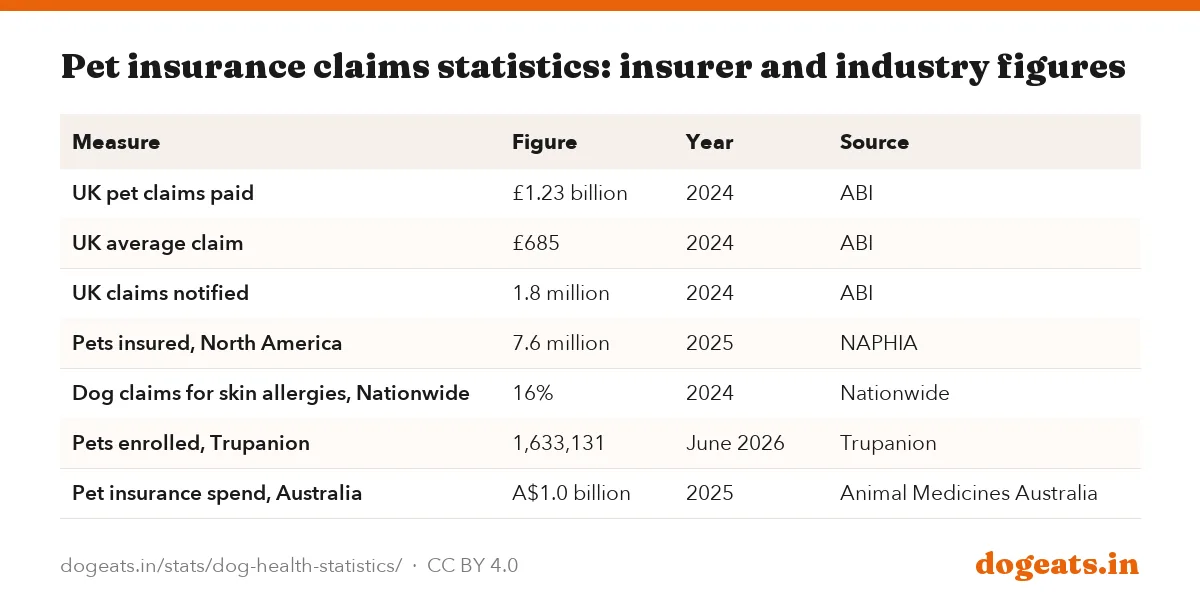
Insurers paid a record £1.23 billion in UK pet claims in 2024, and dogs took three quarters of it. Skin allergies top US dog claims year after year. Policy numbers and premiums are in our pet insurance statistics report.
- 3.3 million claims from over one million insured US dogs and cats were analysed (company data) (Nationwide press release, March 2026).
- 15th year running, skin allergies were the top insurance claim for US dogs (company data) (Nationwide 2026 claims ranking).
- 7.6 million pets were insured in North America at the end of 2025, up from 7.03 million (NAPHIA State of the Industry, June 2026).
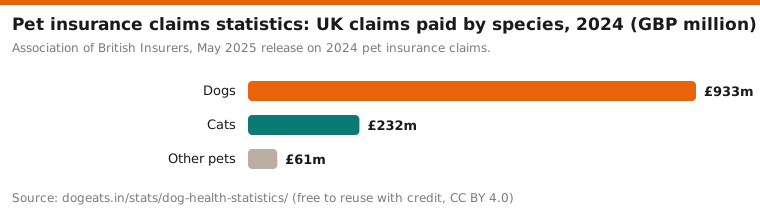
- £933 million was paid in UK pet insurance claims for dogs in 2024, against £232 million for cats (Association of British Insurers, May 2025).
- £685 was the average UK pet insurance claim in 2024, from a record 1.8 million claims (Association of British Insurers, 2025).
- 1,633,131 pets were enrolled with Trupanion at 30 June 2026, down 2% in a year (company data) (Trupanion Q2 2026 results).
- 23.8 cruciate ligament ruptures per 10,000 dog-years were claimed among about 600,000 Agria-insured Swedish dogs, 2011 to 2016 (Engdahl et al., Scientific Reports 2021).
- $1.0 billion (Australian) a year is spent on pet insurance (Animal Medicines Australia, Pets in Australia 2025).
- 16% of all Nationwide dog insurance claims in 2024 were for skin allergies (company data) (Nationwide, Itchy Pet Month guide, July 2025).
- More than 1.5 million Nationwide claims in 2023 were for the top 10 dog and cat conditions (company data) (Nationwide, April 2024).
Association of British Insurers, May 2025 release on 2024 pet insurance claims.
Show the numbers
| Label | GBP million |
|---|---|
| Dogs | £933m |
| Cats | £232m |
| Other pets | £61m |
Embed this chart
| Measure | Figure | Year | Source |
|---|---|---|---|
| UK pet claims paid | £1.23 billion | 2024 | ABI |
| UK average claim | £685 | 2024 | ABI |
| UK claims notified | 1.8 million | 2024 | ABI |
| Pets insured, North America | 7.6 million | 2025 | NAPHIA |
| Dog claims for skin allergies, Nationwide | 16% | 2024 | Nationwide |
| Pets enrolled, Trupanion | 1,633,131 | June 2026 | Trupanion |
| Pet insurance spend, Australia | A$1.0 billion | 2025 | Animal Medicines Australia |
Frequently asked questions
What is the most common health problem in dogs?
Dental disease. Periodontal disease affected 12.52% of UK dogs under vet care in one year, and skin allergies have topped Nationwide's US dog insurance claims for 15 years running.
How long do dogs live on average?
A study of 584,734 UK dogs found a median lifespan of 12.5 years. US Banfield data give a life expectancy at birth of 12.69 years, while UK giant breed dogs died at a median age of 8.94 years.
What percentage of dogs are overweight?
In 2022, 59% of dogs checked at US vet clinics were overweight or obese. UK vets estimate that 50% of dogs are overweight.
How many dogs get cancer?
About 1 in 4 dogs will develop cancer, rising to 1 in 2 for dogs aged 10 or older, according to the AVMA. The median age at cancer diagnosis is 8.8 years.
How many dogs die from heatstroke?
In UK primary care, 14.18% of heat-related illness cases in dogs were fatal in 2016. At UK emergency clinics the fatality rate was 26.56% in 2022.
How many people die of rabies from dogs each year?
Rabies kills an estimated 59,000 people a year, and dogs cause up to 99% of human cases. India alone has about 5,726 rabies deaths a year by the ICMR estimate.
How much does a vet cost per year for a dog?
US dog-owning households spend an average of $595 a year on vet care, by the AVMA's 2026 figures. UK vet prices rose 63% between 2016 and 2023.
What do dog owners claim on pet insurance most?
Skin allergies made up 16% of Nationwide dog claims in 2024. In the UK, insurers paid £933 million in dog claims in 2024, with an average claim of £685 across all pets.
Methodology and limitations
Every figure on this page comes from a page or document we opened while compiling the hub on 16 and 17 October 2026. Each bullet links its source and gives the year of the data where it differs from the publication. Figures older than three years carry their year in the bullet.
We used primary sources first. These are peer-reviewed papers read on the publisher page, PubMed or PubMed Central, plus VetCompass and university releases. Official bodies include WHO, WOAH, PAHO, CDC, FDA, AVMA and the UK competition regulator. Insurer and hospital-chain figures are labelled as company data.
Some publisher sites block automated requests. We opened those pages (Springer, MDPI, FDA, Penn Today, BC SPCA, CDC, AVMA, Animal Medicines Australia) in a browser tab. We matched each figure on the page or on the same article in PubMed Central. The ABI release sits behind a bot check, so we read its Internet Archive copy.
We rejected any figure we could not find on the page, any page that failed to load, and any number traced only to a blog or roundup. A research log with a proof quote for each figure is kept for audit. We reused figures from our live health reports only after reopening their primary sources.
Charts use the numbers in their section. Studies use different populations, years and definitions, so bars in one chart compare sources, not a single survey. We update this page monthly.
Sources
- Royal Veterinary College (VetCompass), Prevalence of commonly diagnosed disorders in UK dogs under primary veterinary care, % of dogs (2016)
- Scientific Reports, Longevity of companion dog breeds: those at risk from early death, years (2024)
- World Health Organization, Rabies fact sheet, % of human cases (2026)
- Also consulted: Royal Veterinary College (VetCompass), Prevalence of disorders recorded in dogs attending primary-care veterinary practices in England, Royal Veterinary College (VetCompass), Acute diarrhoea in dogs under primary veterinary care in the UK, Scientific Reports, Prevalence, duration and risk factors for appendicular osteoarthritis in UK dogs, Canine Medicine and Genetics, Hypothyroidism in dogs under primary veterinary care in the UK, Haryana Veterinarian (LUVAS), Hospital occurrence of canine dermatological disorders, Indian Journal of Animal Research, Epidemiology of canine dermatoses at Aizawl, Mizoram, Journal of the American Veterinary Medical Association, Trauma causes substantial years of life lost in dogs and cats, Scientific Reports, Life tables of annual life expectancy and mortality for companion dogs in the UK, Frontiers in Veterinary Science (Banfield data), Life expectancy tables for dogs and cats derived from clinical data, Canine Medicine and Genetics, Lifespan of companion dogs seen in three independent primary care veterinary clinics, Association for Pet Obesity Prevention, 2022 Pet Obesity Prevalence Survey, Association for Pet Obesity Prevention, Press release, Association for Pet Obesity Prevention, 2018 Pet Obesity Prevalence Survey, Banfield Pet Hospital (company data), New data reveals pet obesity epidemic existed long before quarantine, Preventive Veterinary Medicine, Overweight and obese body condition in about 4.9 million dogs, Journal of Small Animal Practice, Frequency, breed predisposition and demographic risk factors for overweight status in dogs in the UK, Journal of Veterinary Internal Medicine, Association between life span and body condition in neutered client-owned dogs, Journal of the American Veterinary Medical Association, Effects of diet restriction on life span and age-related changes in dogs, PDSA, PAW Report 2026, American Veterinary Medical Association, Cancer in pets, Journal of Small Animal Practice, Methods and mortality results of a health survey of purebred dogs in the UK, PLOS ONE, Age at cancer diagnosis by breed, weight, sex, and cause of death, PLOS ONE (Swiss Canine Cancer Registry), Incidence rates of the most common canine tumors, Swiss Canine Cancer Registry, PLOS ONE, Association of cancer-related mortality, age and gonadectomy in golden retriever dogs, Veterinary and Comparative Oncology, Haemangiosarcoma occurrence in the Golden Retriever Lifetime Study, Journal of the American Veterinary Medical Association (Dog Aging Project), Dog Aging Project End of Life Survey, Acta Veterinaria Scandinavica (Agria data), Mortality in over 350,000 insured Swedish dogs from 1995 to 2000, Scientific Reports, Epidemiological analysis of brain tumours in dogs in Australia 1994 to 2024, Journal of Small Animal Practice, A review of the frequency and impact of periodontal disease in dogs, BMC Veterinary Research, A longitudinal assessment of periodontal disease in Yorkshire terriers, BMC Veterinary Research, A longitudinal assessment of periodontal disease in 52 Miniature Schnauzers, Veterinarni Medicina, Prevalence, current status, and prevention of dental extractions in dogs, Animals (MDPI), Prevalence of reasons for tooth extraction in small and medium breed dogs, Merck Veterinary Manual, Dental development of dogs, Nationwide (company data), Chronic vs. Acute: The Most Frequent Diagnoses and Their Costs, Scientific Reports, Incidence and risk factors for heat-related illness (heatstroke) in UK dogs, Animals (MDPI), Dogs Don't Die Just in Hot Cars: exertional heat-related illness in UK dogs, Veterinary Sciences (MDPI), Risk factors for severe and fatal heat-related illness in UK dogs, Veterinary Record, Epidemiology of heat-related illness in dogs under UK emergency veterinary care, Australian Veterinary Journal, Incidence and risk factors of heat-related illness in dogs in Australia, Australian Veterinary Journal, Associations among daily ambient temperatures, extreme heat days and mortality in Australian dogs, Scientific Reports, Evaluation and validation of a revised VetCompass clinical grading tool for heat-related illness, BMC Veterinary Research, Prevalence of common conditions and associated mortalities of dogs, Makerere University, Archives of Virology, Viral pathogens associated with canine gastroenteritis in Hyderabad, India, Preventive Veterinary Medicine, Climatic risk factors and predictive modelling of canine parvovirus enteritis, International Journal of Biometeorology, Canine distemper epidemiology in Chennai, Microbial Pathogenesis, Acute canine leptospirosis in Chennai, Veterinary World, Detection of pathogenic Leptospira in urine of healthy dogs in Haryana, American Heartworm Society, What does the latest AHS incidence map show us, Companion Animal Parasite Council, Understanding the CAPC Forecast Maps, PLOS Neglected Tropical Diseases, Estimating the global burden of endemic canine rabies, World Organisation for Animal Health, Rabies, Pan American Health Organization, Rabies, ICMR (Lancet Infectious Diseases), Estimates of animal bites and human rabies deaths in India, BMC Infectious Diseases, Global burden and cross-country inequalities in rabies 1990 to 2021, Journal of the American Veterinary Medical Association (CDC authors), Rabies surveillance in the United States during 2024, Centers for Disease Control and Prevention, Vital Signs: Trends in Human Rabies Deaths and Exposures, Scientific Reports, Prevalence, comorbidity, and breed differences in canine anxiety in 13,700 Finnish pet dogs, PLOS ONE, Not a one-way road: severity, progression and prevention of firework fears in dogs, Animal Welfare, Canine separation-related behaviour, Animals (MDPI), Impact of changes in time left alone on separation-related behaviour in UK pet dogs, Animals (MDPI), Mortality resulting from undesirable behaviours in dogs aged three years and under in Australia, PLOS ONE (Royal Veterinary College), Lasting lockdown love? Problem behaviour and the owner-dog relationship, PLOS ONE (Dog Aging Project), Behavioral characteristics and enrollment year variability in 47,444 dogs, Scientific Reports, Unravelling the health status of brachycephalic dogs in the UK, Canine Medicine and Genetics, Health of Pug dogs in the UK: disorder predispositions and protections, Canine Medicine and Genetics, English Bulldogs in the UK: a VetCompass study of disorder predispositions, Canine Genetics and Epidemiology, Demography and disorders of the French Bulldog population under primary veterinary care in the UK, Canine Medicine and Genetics, Demography, common disorders and mortality of Shih Tzu dogs in the UK, Veterinary Sciences (MDPI), Demography and causes of mortality of Pugs under primary veterinary care in Australia, Animal Welfare (Cambridge University Press), A solution right under our nose? Crossbreeding extreme brachycephalic dogs, Veterinary Record, Beauty versus the beast: UK public prefers less-extreme body shapes, PLOS Genetics (Wisdom Panel data), Genetic prevalence and clinical relevance of canine Mendelian disease variants, Journal of the American Veterinary Medical Association, Prevalence of inherited disorders among mixed-breed and purebred dogs, American Pet Products Association, Industry Trends and Stats, American Veterinary Medical Association, US pet ownership statistics, Competition and Markets Authority, Summary of final report, veterinary services market investigation, PetSmart Charities and Gallup, New study finds more than half of US pet parents skip or decline needed veterinary care, Gallup, PetSmart Charities Gallup State of Pet Care press release, Nationwide (company data), Chronic Conditions Dominate This Year's List of Most Common Pet Health Problems, North American Pet Health Insurance Association, State of the Industry Report 2026, Association of British Insurers, Insurance payouts for pawly pets top £1 billion for third year in a row, Trupanion (company data), Q2 2026 Earnings Results, Scientific Reports (Agria data), The epidemiology of cruciate ligament rupture in an insured Swedish dog population, US Food and Drug Administration, Questions and answers: FDA work on potential causes of non-hereditary DCM in dogs, UK Pet Food, Obesity report released to tackle rising pet obesity, University of Pennsylvania, Study finds dogs fed a reduced-calorie diet live nearly two years longer, British Veterinary Association, Heatwave sparks dogs in hot cars calls as reports hit three-year high, Royal Kennel Club, Whippets surge in popularity as UK registrations jump 18% in early 2026, Gavi, the Vaccine Alliance, Gavi to boost access to life-saving human rabies vaccines in over 50 countries, Animal Medicines Australia, Pets in Australia 2025 media release, Royal Veterinary College, Living it large: health and lifespan challenges in giant breed dogs, Royal Veterinary College, Bad teeth revealed as biggest problem for pet greyhounds, Royal Veterinary College, Cavapoo and Cockapoo designer dog breeds at high risk of tick infestation, Royal Veterinary College, New RVC study explores changing dog care decisions amid rising living costs, Royal Veterinary College, New RVC research debunks belief that designer crossbreed dogs are healthier, PLOS ONE, Survival time and prognostic factors in dogs diagnosed with haemangiosarcoma in UK first opinion practice, Scientific Reports, Proportion and risk factors for death by euthanasia in dogs in the UK, Dogs Trust, National Dog Survey 2024 results, Association for Pet Obesity Prevention, 2023 pet owner survey, Association for Pet Obesity Prevention, 2025 pet owner survey, Banfield Pet Hospital (company data), Veterinary Emerging Topics Report 2020, Journal of the American Veterinary Medical Association (CDC authors), Rabies surveillance in the United States during 2023, World Health Organization, Animal rabies, Nationwide (company data), A Guide to Managing Itchy Pet Month, Nationwide (company data), Skin allergies, gastrointestinal disease among most common conditions that prompt veterinary visits, BC SPCA, BC SPCA offers safety reminder about leaving animals in hot cars, Competition and Markets Authority, CMA concludes market investigation with major reforms to veterinary sector, Companion Animal Health and Genetics (VetCompass), Giant dog breeds under primary veterinary care in the UK.
Cite, embed and download
This report, its data and its images are free to reuse under a Creative Commons Attribution 4.0 licence. Credit dogeats.in with a link to this page. Every chart has its own embed code, every table has a CSV and an image download, and the images below are ready for social posts, slides and articles.
Cite this report
Link to this report
Every chart and table as an image