Statistics hub · Updated October 2026
Dog Statistics 2026: 150+ Facts on US Dogs, Owners, Costs and Health
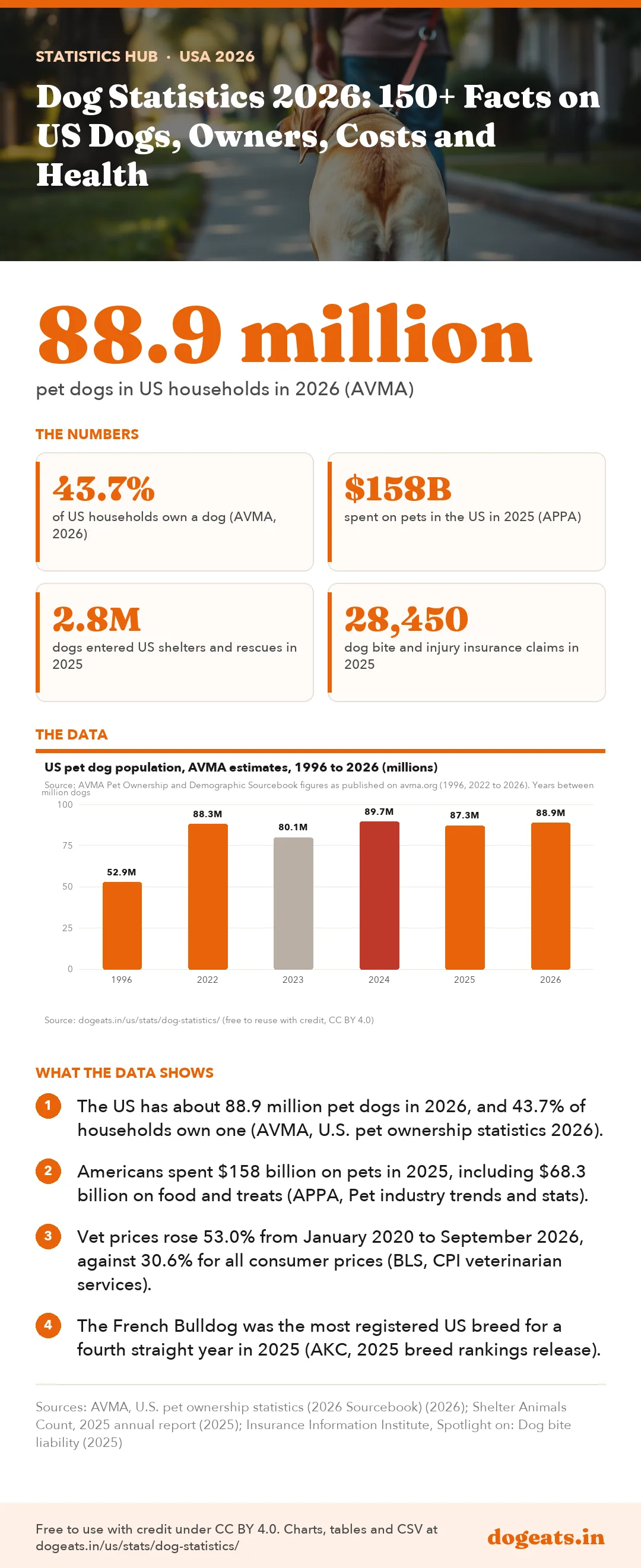
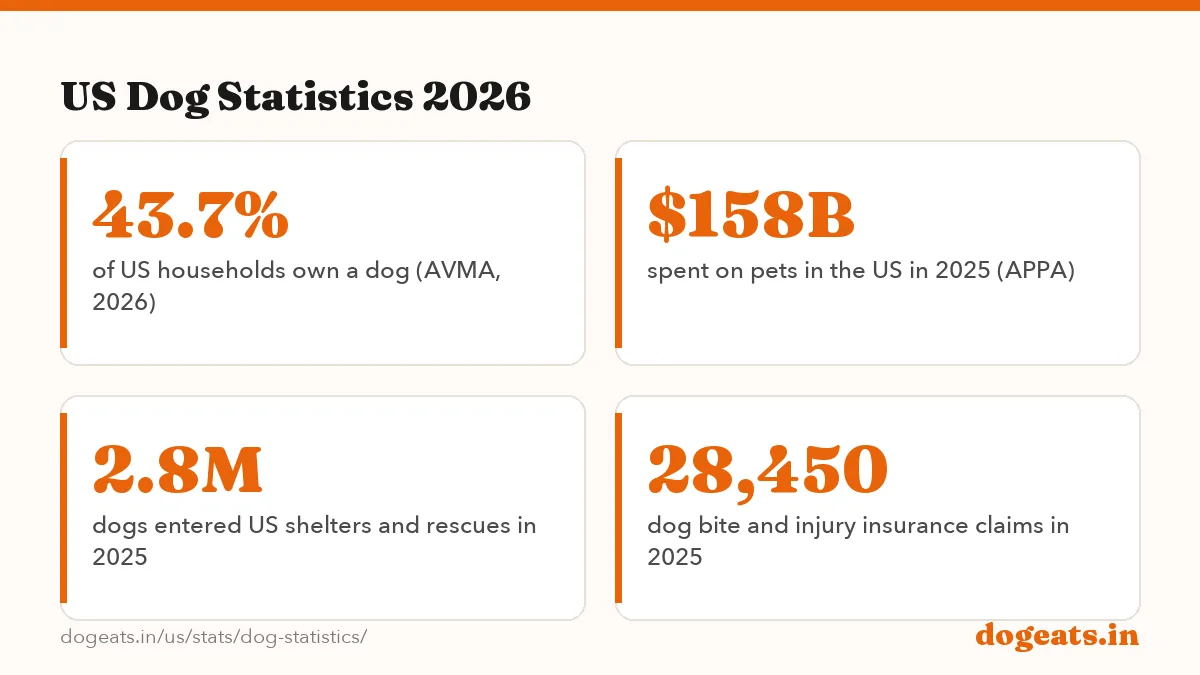
The US has about 88.9 million pet dogs in 2026, and 43.7% of households own at least one, according to the AVMA. This hub collects more than 150 dated US dog statistics, each linked to its primary source, from ownership and spending to bites, health and the law.

Key findings
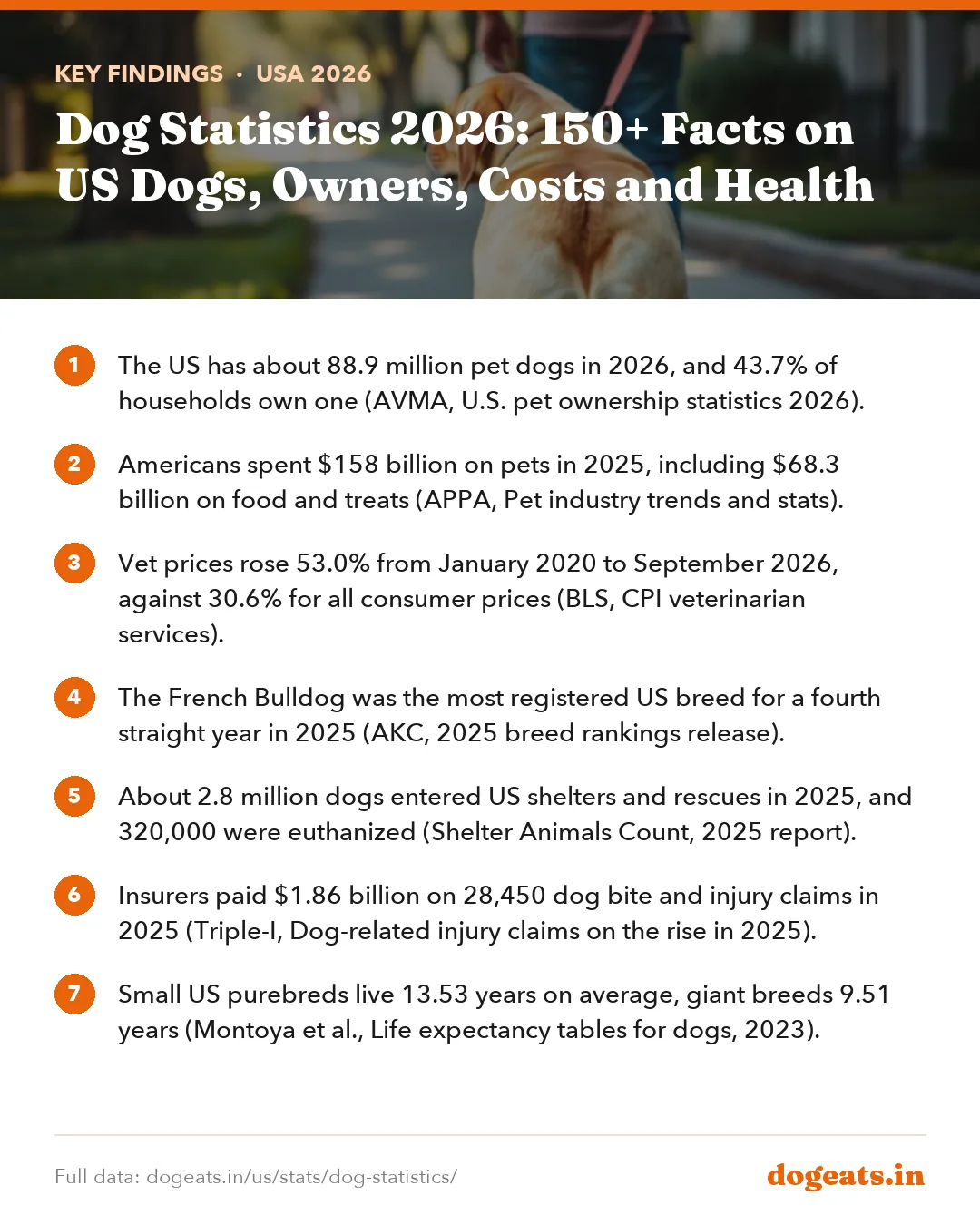
- The US has about 88.9 million pet dogs in 2026, and 43.7% of households own one (AVMA, U.S. pet ownership statistics 2026).
- Americans spent $158 billion on pets in 2025, including $68.3 billion on food and treats (APPA, Pet industry trends and stats).
- Vet prices rose 53.0% from January 2020 to September 2026, against 30.6% for all consumer prices (BLS, CPI veterinarian services).
- The French Bulldog was the most registered US breed for a fourth straight year in 2025 (AKC, 2025 breed rankings release).
- About 2.8 million dogs entered US shelters and rescues in 2025, and 320,000 were euthanized (Shelter Animals Count, 2025 report).
- Insurers paid $1.86 billion on 28,450 dog bite and injury claims in 2025 (Triple-I, Dog-related injury claims on the rise in 2025).
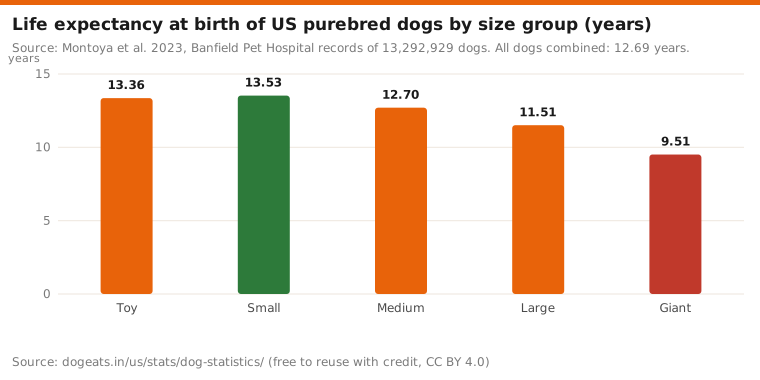
- Small US purebreds live 13.53 years on average, giant breeds 9.51 years (Montoya et al., Life expectancy tables for dogs, 2023).
- Only 24 of 24,727 dogs tested for rabies in 2024 were positive (JAVMA, Rabies surveillance in the US during 2024).
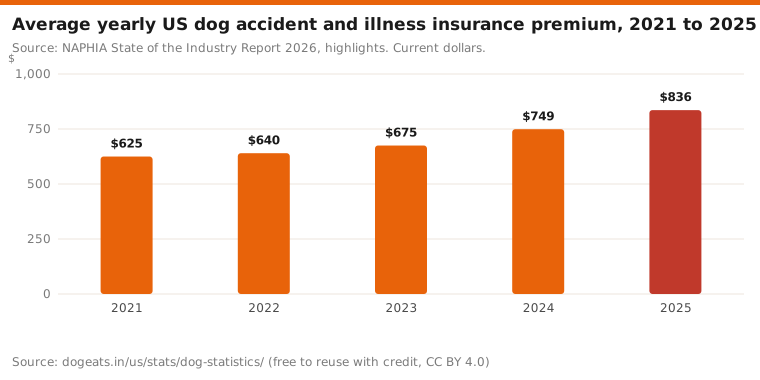
- About 5.23 million US dogs were insured at the end of 2025, and the average accident and illness premium was $836 (NAPHIA, State of the Industry 2026).
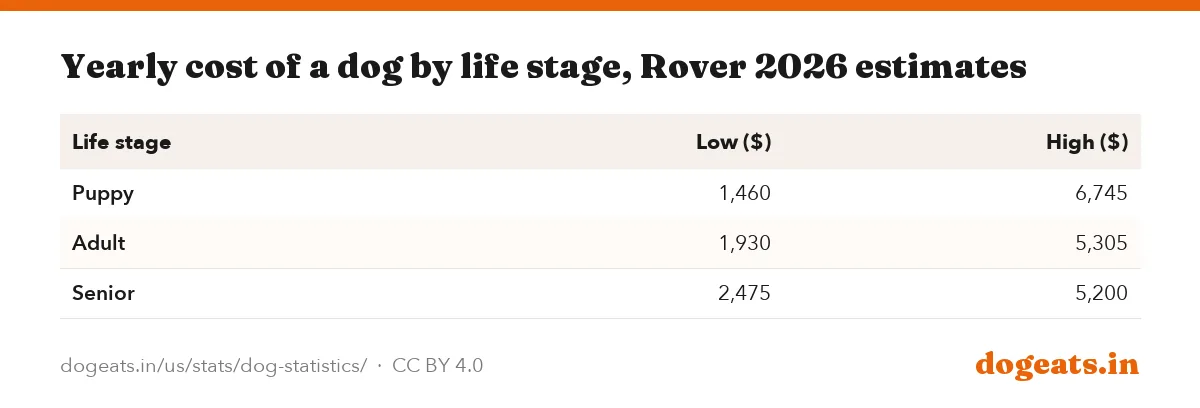
- Rover puts the yearly cost of an adult dog at $1,930 to $5,305 in 2026 (Rover, Cost of dog parenthood 2026).
How many dogs are in the US?
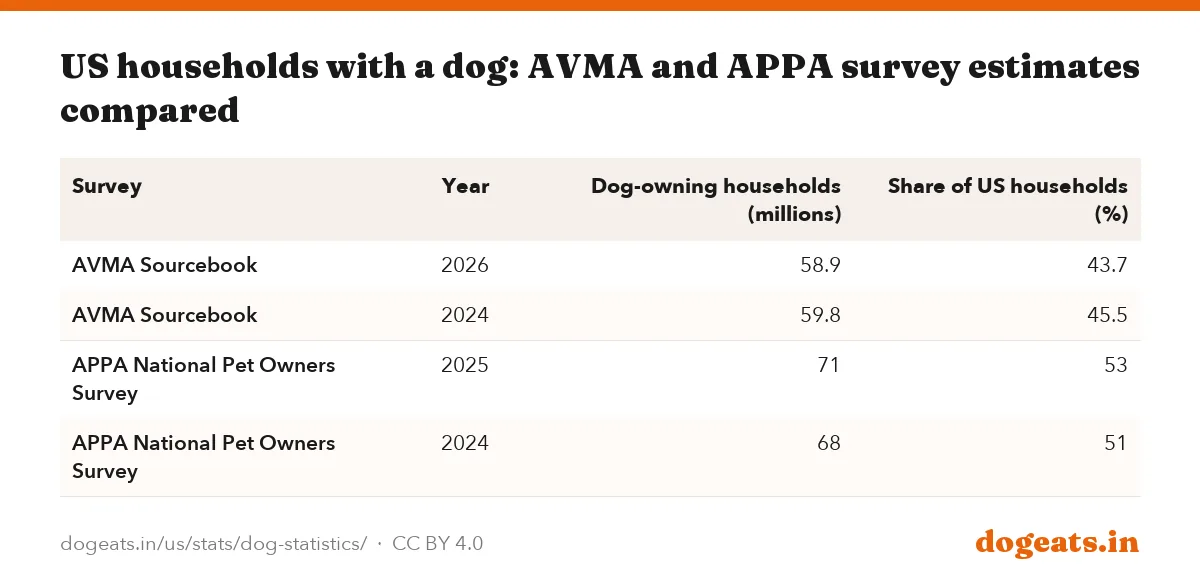
The US has about 88.9 million pet dogs in 2026, and 43.7% of households own at least one, according to the AVMA. The American Pet Products Association counts more dog homes, 71 million, because it uses a different survey. Our US dog ownership statistics report compares both series in full.
- 88.9 million pet dogs live in US households, the AVMA estimates in its 2026 Pet Ownership and Demographic Sourcebook (AVMA, U.S. pet ownership statistics 2026).
- 43.7% of US households, or 58.9 million, owned a dog in 2026, against 34.1% that owned a cat (AVMA, U.S. pet ownership statistics 2026).
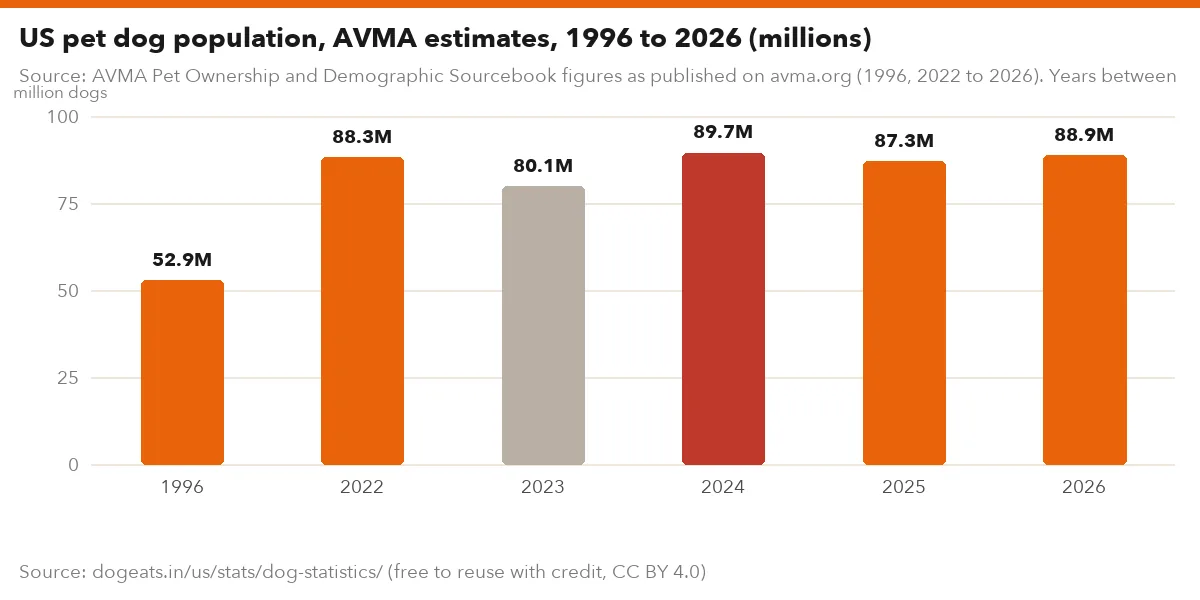
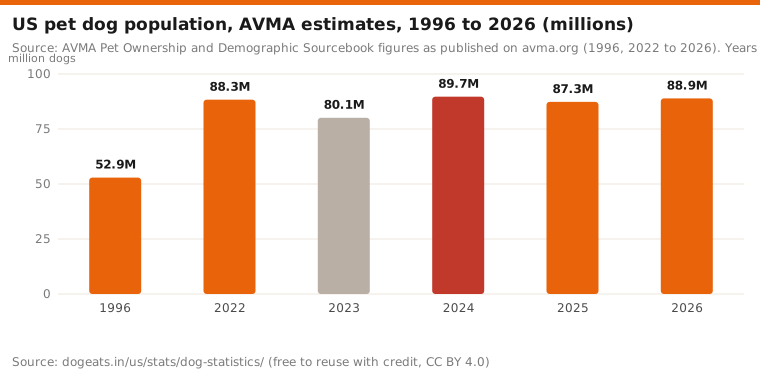
- 52.9 million pet dogs lived in the US in 1996, rising to 87.3 million by 2025 (AVMA, Chart of the month: pet population trends, December 2025).
- 89.7 million dogs in 2024 set a record in the AVMA series, after a dip to 80.1 million in 2023 (AVMA News, Pet population continues to increase, 2024).
- 45.5% of US households owned a dog in 2024, up from a low of 31.6% in 1996 (AVMA News, Pet population continues to increase, 2024).
- 71 million US households owned a dog in 2025, or 53% of all households, in APPA's National Pet Owners Survey (APPA, Dog owners are becoming smarter spenders, July 2026).
- 51% of US households, or 68 million, owned a dog in 2024 by APPA's count (APPA, 2025 State of the Industry report release, March 2025).
- 20% of US dog owners belonged to Gen Z in 2024, an 18% rise from 2023 (APPA, 2025 State of the Industry report release, March 2025).
- 62% of US adults owned a pet in 2023, and 49% of pet owners had dogs only (Pew Research Center, Americans and their pets survey, July 2023).
- 24% of US pet owners kept both dogs and cats in 2023, while 23% had cats only (Pew Research Center, Americans and their pets survey, July 2023).
- 26 pet dogs for every 100 Americans: 88.9 million dogs against 341.8 million residents in July 2025 (US Census Bureau, Vintage 2025 population estimates).
- 86.8% of dog owners had a regular veterinarian in 2024, and 74.2% had visited one in the past year (AVMA News, Pet population continues to increase, 2024).
- Four times the odds of meeting the 150-minute weekly activity guideline were found for UK dog owners in 2019 (Westgarth et al., Scientific Reports 2019).
- 62% of US pet owners said their pets provide a calming presence, in a 2024 poll of 2,200 adults (American Psychiatric Association, Healthy Minds poll, March 2024).
Source: AVMA Pet Ownership and Demographic Sourcebook figures as published on avma.org (1996, 2022 to 2026). Years between 1996 and 2022 are not shown.
Show the numbers
| Label | million dogs |
|---|---|
| 1996 | 52.9M |
| 2022 | 88.3M |
| 2023 | 80.1M |
| 2024 | 89.7M |
| 2025 | 87.3M |
| 2026 | 88.9M |
Embed this chart
| Survey | Year | Dog-owning households (millions) | Share of US households (%) |
|---|---|---|---|
| AVMA Sourcebook | 2026 | 58.9 | 43.7 |
| AVMA Sourcebook | 2024 | 59.8 | 45.5 |
| APPA National Pet Owners Survey | 2025 | 71 | 53 |
| APPA National Pet Owners Survey | 2024 | 68 | 51 |
US pet spending and dog care prices
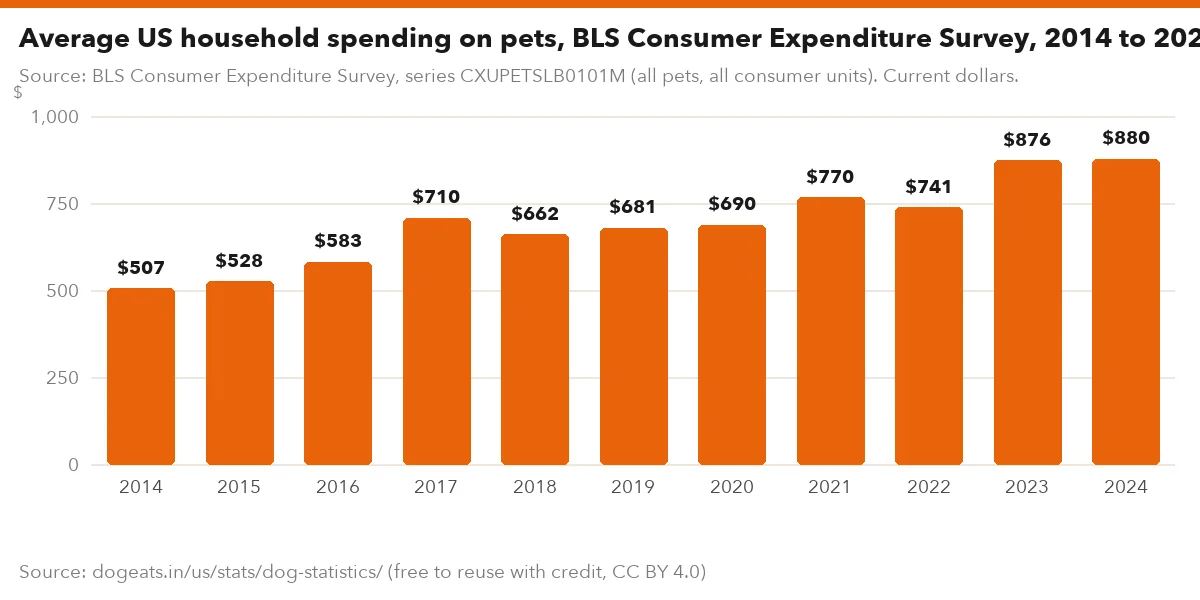
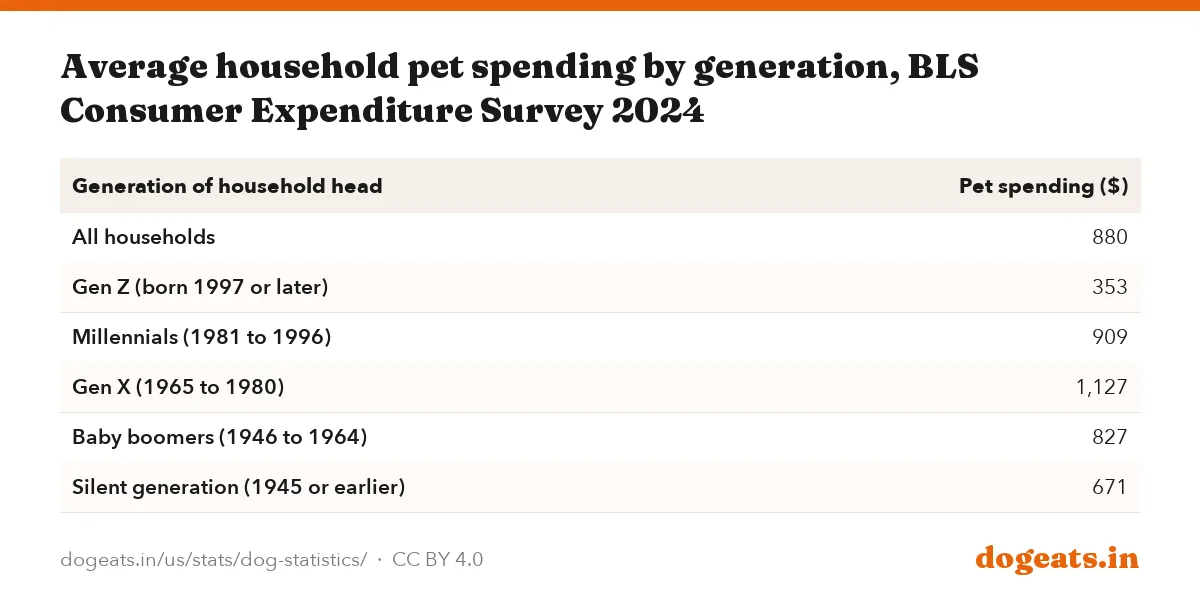
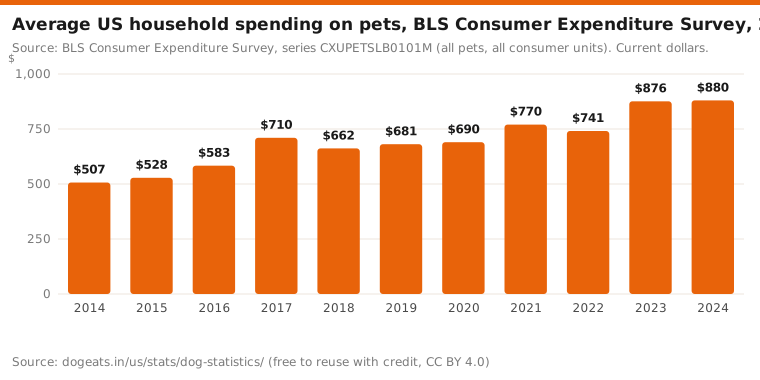
Americans spent $158 billion on pets in 2025 by APPA's estimate, and the average household spent $880 on pets in 2024 by the government count. Vet prices have risen far faster than general inflation since 2020. See our US pet industry spending report for the full category series.
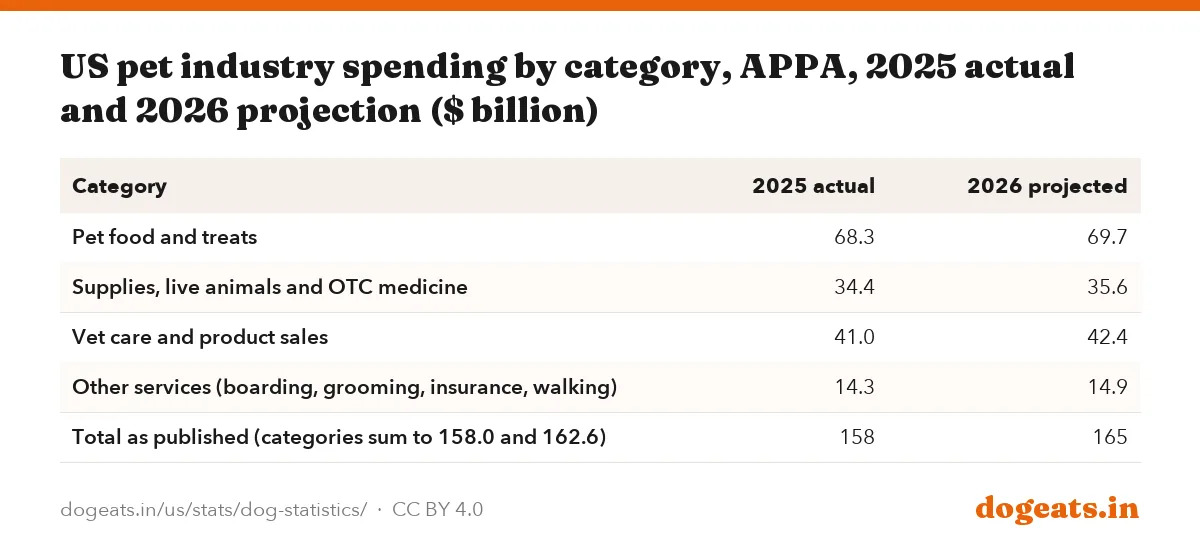
- $158 billion was spent on pets in the US in 2025, APPA's actual sales estimate for all species (APPA, Pet industry trends and stats 2025).
- $68.3 billion of that went on pet food and treats, and $41.0 billion on vet care and product sales (APPA, Pet industry trends and stats 2025).
- $165 billion in US pet spending is projected for 2026, including $14.9 billion on services such as grooming and boarding (APPA, Pet industry trends and stats 2025).
- $880 was the average US household's pet spending in 2024, up from $507 in 2014 (BLS, Consumer Expenditure Survey, pets series 2014 to 2024).
- $119.2 billion was the total US households spent on pets in 2024, by the Consumer Expenditure Survey count (BLS, Consumer Expenditure Survey, pets series 2014 to 2024).
- $1,127 a year on pets made Gen X households the top spenders in 2024; Gen Z households spent $353 (BLS, Consumer Expenditure tables by generation, 2024).
- 29% of dog owners' pet budget goes to veterinary care and 27% to food, APPA found in its 2025 survey (APPA, Dog owners are becoming smarter spenders, July 2026).
- 65% of dog owners bought chews in 2025, up 5% on the year, while average treat spending fell 11% (APPA, Dog owners are becoming smarter spenders, July 2026).
- 4.6% was the rise in US veterinarian prices in the year to September 2026, against 3.7% for all consumer prices (BLS, CPI veterinarian services, September 2026; BLS, CPI all items).
- 53.0% was the rise in veterinarian prices from January 2020 to September 2026, against 30.6% for all items (BLS, CPI veterinarian services, September 2026).
- 1.5% was the rise in pet food and treat prices in the year to September 2026 (BLS, CPI pet food and treats, September 2026).
- 3.6% was the 12-month rise in prices for pet services such as grooming and boarding, to September 2026 (BLS, CPI pet services, September 2026).
- $12.6 billion in net sales and 21.3 million active customers were reported by online retailer Chewy for fiscal 2025 (Chewy, Form 10-K for fiscal 2025).
- $5.96 billion in net sales came from Petco's roughly 1,400 US and Puerto Rico pet care centers and online channel in fiscal 2025 (Petco, Form 10-K for fiscal 2025).
- 13.0% sales growth took fresh pet food maker Freshpet to $1,102.0 million in 2025 (Freshpet, Form 10-K for 2025).
Source: BLS Consumer Expenditure Survey, series CXUPETSLB0101M (all pets, all consumer units). Current dollars.
Show the numbers
| Label | $ |
|---|---|
| 2014 | $507 |
| 2015 | $528 |
| 2016 | $583 |
| 2017 | $710 |
| 2018 | $662 |
| 2019 | $681 |
| 2020 | $690 |
| 2021 | $770 |
| 2022 | $741 |
| 2023 | $876 |
| 2024 | $880 |
Embed this chart
| Category | 2025 actual | 2026 projected |
|---|---|---|
| Pet food and treats | 68.3 | 69.7 |
| Supplies, live animals and OTC medicine | 34.4 | 35.6 |
| Vet care and product sales | 41.0 | 42.4 |
| Other services (boarding, grooming, insurance, walking) | 14.3 | 14.9 |
| Total as published (categories sum to 158.0 and 162.6) | 158 | 165 |
| Generation of household head | Pet spending ($) |
|---|---|
| All households | 880 |
| Gen Z (born 1997 or later) | 353 |
| Millennials (1981 to 1996) | 909 |
| Gen X (1965 to 1980) | 1,127 |
| Baby boomers (1946 to 1964) | 827 |
| Silent generation (1945 or earlier) | 671 |
APPA's published 2026 category projections add up to $162.6 billion, below its $165 billion headline. We show both as published.
What are the most popular dog breeds in the US?
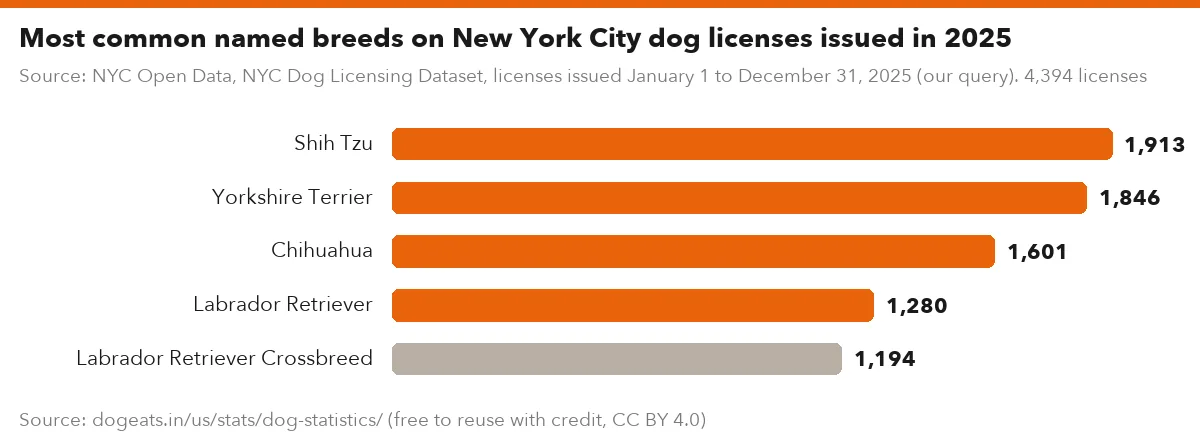
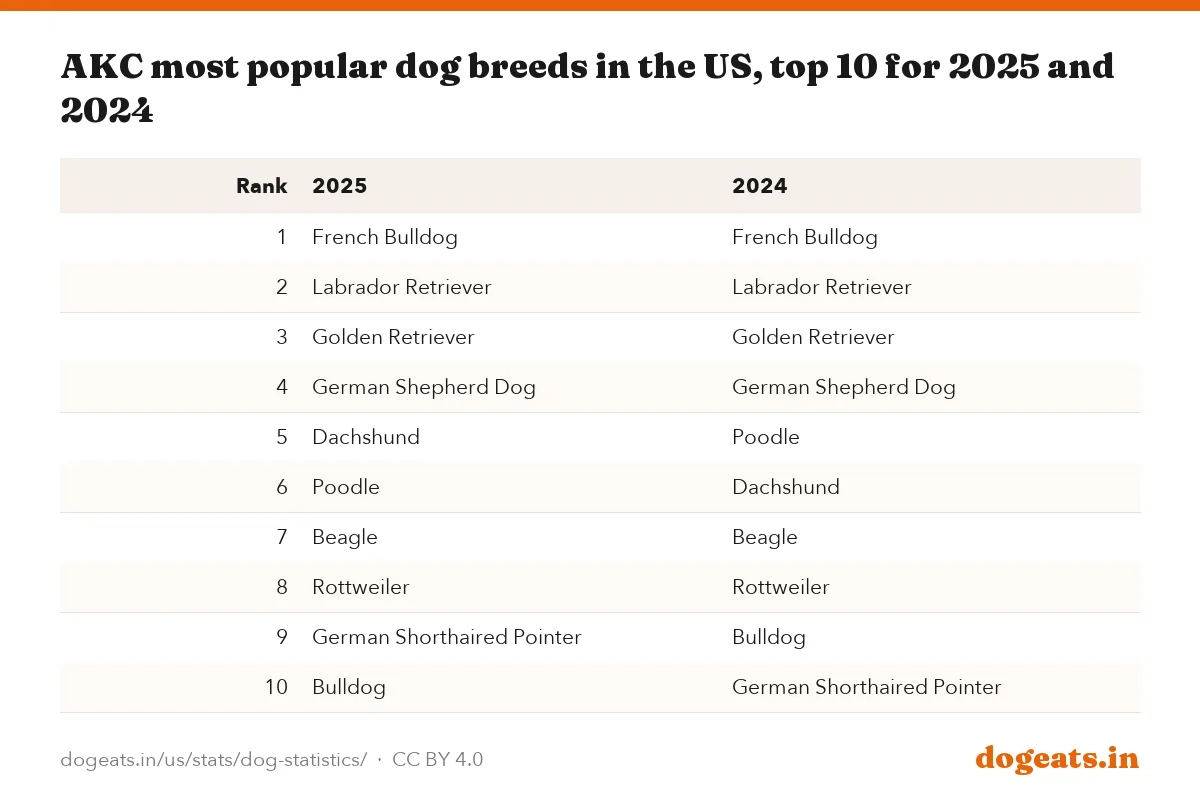
The French Bulldog has been the most registered breed with the American Kennel Club for four years running. City license records tell a different story, with Shih Tzus, Chihuahuas and Labradors common on the street. Our most popular dog breeds report tracks the AKC ranking back to 2013.
- 4 years in a row, 2022 to 2025, the French Bulldog was the most registered US breed (AKC, 2025 breed rankings release, March 2026).
- No. 5 went to the Dachshund in 2025, its first time at No. 5 since 2003 (AKC, 2025 breed rankings release, March 2026).
- No. 11 was the Cane Corso's 2025 rank, up from No. 14 in 2024 (AKC, 2025 breed rankings release, March 2026).
- 31 years at No. 1 ended for the Labrador Retriever when the French Bulldog overtook it in 2022 (AKC, 2022 breed rankings release, March 2023).
- Over 1,000% growth in French Bulldog registrations took it from 14th in 2012 to first in 2022 (AKC, 2022 breed rankings release, March 2023).
- 36 of 47 large US cities had the French Bulldog as their top AKC breed in 2025; 7 picked the Golden Retriever (AKC, Most popular dog breeds by city 2025).
- 202 breeds were counted in AKC 2025 registration statistics, out of 205 recognized since 1884 (AKC, Most popular dog breeds of 2025).
- 45,142 dog licenses were issued in New York City in 2025, and Luna was the top name with 546 (NYC Open Data, NYC Dog Licensing Dataset).
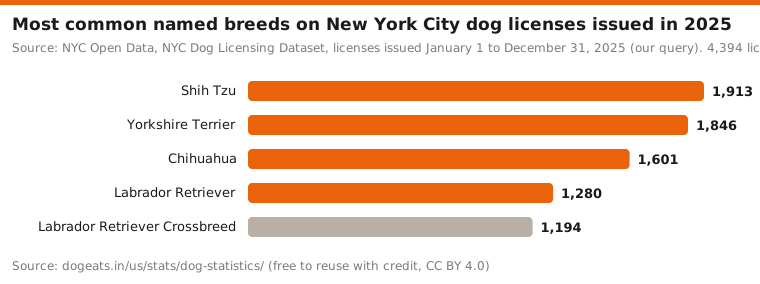
- 1,913 Shih Tzus made it the most common named breed on 2025 New York City licenses, ahead of the Yorkshire Terrier at 1,846 (NYC Open Data, NYC Dog Licensing Dataset).
- 25,617 dogs appear in Seattle's pet license data, led by 2,273 Labrador Retrievers (Seattle Open Data, Seattle Pet Licenses).
- 245 Seattle dogs are named Luna, the city's most common licensed dog name, ahead of Charlie at 176 (Seattle Open Data, Seattle Pet Licenses).
- 15 Westminster Best in Show wins make the Wire Fox Terrier the top breed, from 118 awards in 1907 to 2025 (Westminster Kennel Club, Best in Show records by breed).
- 150th Westminster show in 2026 was won by Penny, a Doberman Pinscher (Westminster Kennel Club, 2026 Best in Show).
Source: NYC Open Data, NYC Dog Licensing Dataset, licenses issued January 1 to December 31, 2025 (our query). 4,394 licenses listed the breed as Unknown and are left out.
Show the numbers
| Label | licenses |
|---|---|
| Shih Tzu | 1,913 |
| Yorkshire Terrier | 1,846 |
| Chihuahua | 1,601 |
| Labrador Retriever | 1,280 |
| Labrador Retriever Crossbreed | 1,194 |
Embed this chart
| Rank | 2025 | 2024 |
|---|---|---|
| 1 | French Bulldog | French Bulldog |
| 2 | Labrador Retriever | Labrador Retriever |
| 3 | Golden Retriever | Golden Retriever |
| 4 | German Shepherd Dog | German Shepherd Dog |
| 5 | Dachshund | Poodle |
| 6 | Poodle | Dachshund |
| 7 | Beagle | Beagle |
| 8 | Rottweiler | Rottweiler |
| 9 | German Shorthaired Pointer | Bulldog |
| 10 | Bulldog | German Shorthaired Pointer |
Dog shelter and adoption statistics
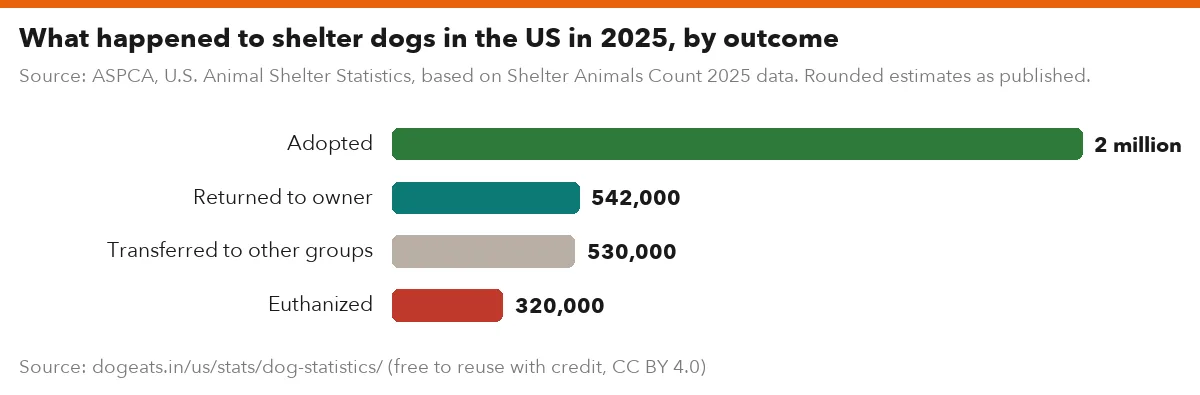
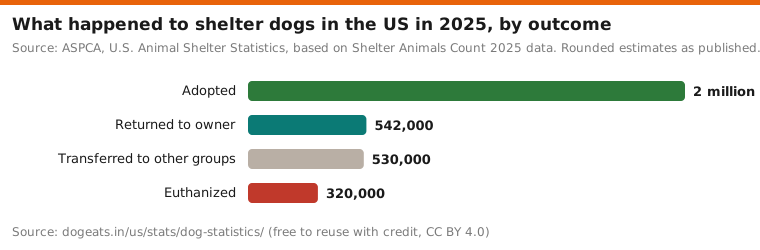
About 2.8 million dogs entered US shelters and rescues in 2025, and about 2 million were adopted, Shelter Animals Count estimates. Euthanasia fell, but large dogs still wait longest. Our dog shelter and adoption statistics report has the 10-year series.

- 2.8 million dogs entered US shelters and rescues in 2025, against 3 million cats (Shelter Animals Count, 2025 annual data report).
- 2 million shelter dogs were adopted in 2025, and the dog adoption rate rose from 55% to 57% of intakes (Shelter Animals Count, 2025 annual data report).
- 320,000 dogs were euthanized in US shelters in 2025, out of 597,000 dogs and cats (Shelter Animals Count, 2025 annual data report).
- 34% of stray dogs were returned to their owners in 2025, against 6% of stray cats (Shelter Animals Count, 2025 year-end report).
- 28% of dogs entering shelters in 2025 were puppies, 62% adults and 10% seniors, per the report chart (its text says 68% adults) (Shelter Animals Count, 2025 year-end report).
- 13,471 animal sheltering groups operate in the US: 4,100 shelters and 9,371 rescues (Shelter Animals Count, 2025 year-end report).
- 5% fewer dogs had a non-live outcome in 2025 than in 2024, while cat non-live outcomes rose 4% (Shelter Animals Count, 2025 data release).
- July 5 was the single biggest stray dog intake day nationally in each year from 2021 through 2023 (Shelter Animals Count, Stray dog intakes after July 4th).
- 542,000 shelter dogs went back to their owners in 2025 and 530,000 were transferred to other groups (ASPCA, US animal shelter statistics 2025).
- 59% of animals entering shelters in 2025 came in as strays and 30% were surrendered by owners (ASPCA, US animal shelter statistics 2025).
- 8% was the shelter euthanasia rate in 2025, down from 10% in 2019 (ASPCA, US animal shelter statistics 2025).
- 4 states were no-kill in 2025, meaning every shelter saved 90% or more: Delaware, New Hampshire, Rhode Island and Vermont (Best Friends Animal Society, 2025 state rankings release).
- 78,800 more dogs and cats would need saving in Texas to reach no-kill, the most of any state (Best Friends Animal Society, 2025 state rankings release).
- 2 out of 3 US shelters reached no-kill status in 2025, Best Friends says (Best Friends Animal Society, Pet Lifesaving Dashboard).
- 5.6% fewer dogs and cats were adopted in 2024 than in 2019, despite 4.2 million adoptions (Shelter Animals Count, 2024 year-end report).
Source: ASPCA, U.S. Animal Shelter Statistics, based on Shelter Animals Count 2025 data. Rounded estimates as published.
Show the numbers
| Label | dogs |
|---|---|
| Adopted | 2 million |
| Returned to owner | 542,000 |
| Transferred to other groups | 530,000 |
| Euthanized | 320,000 |
Embed this chart
How many dog bites happen each year in the US?
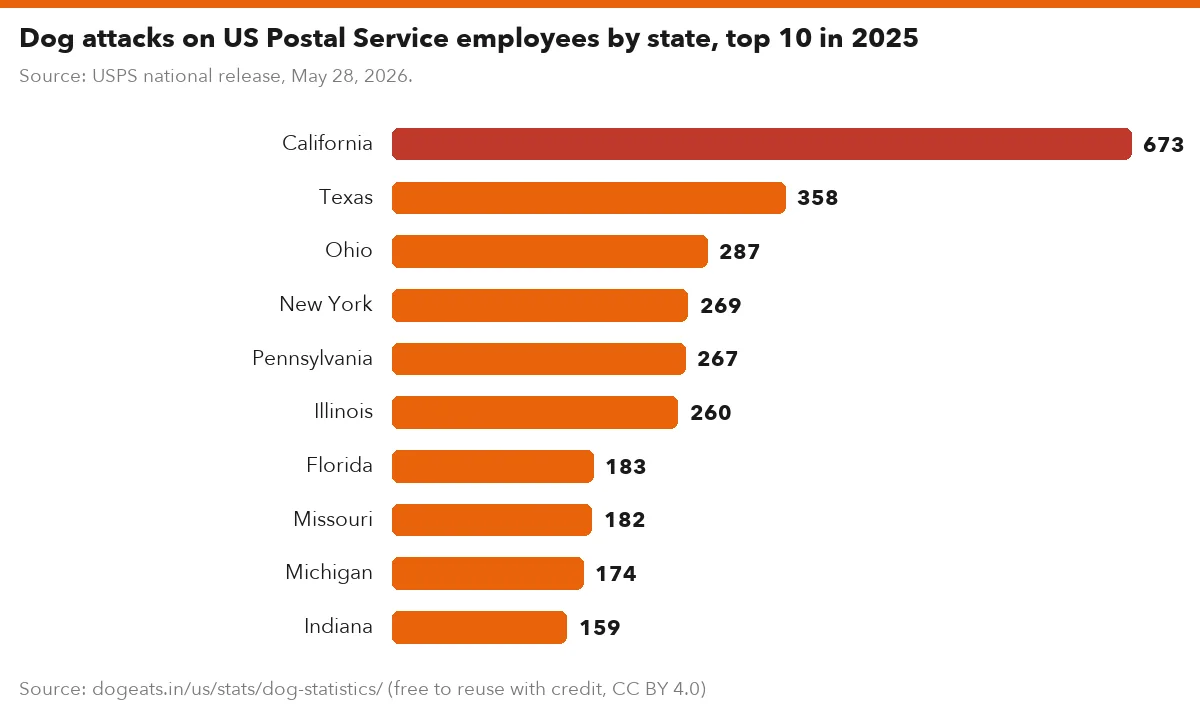
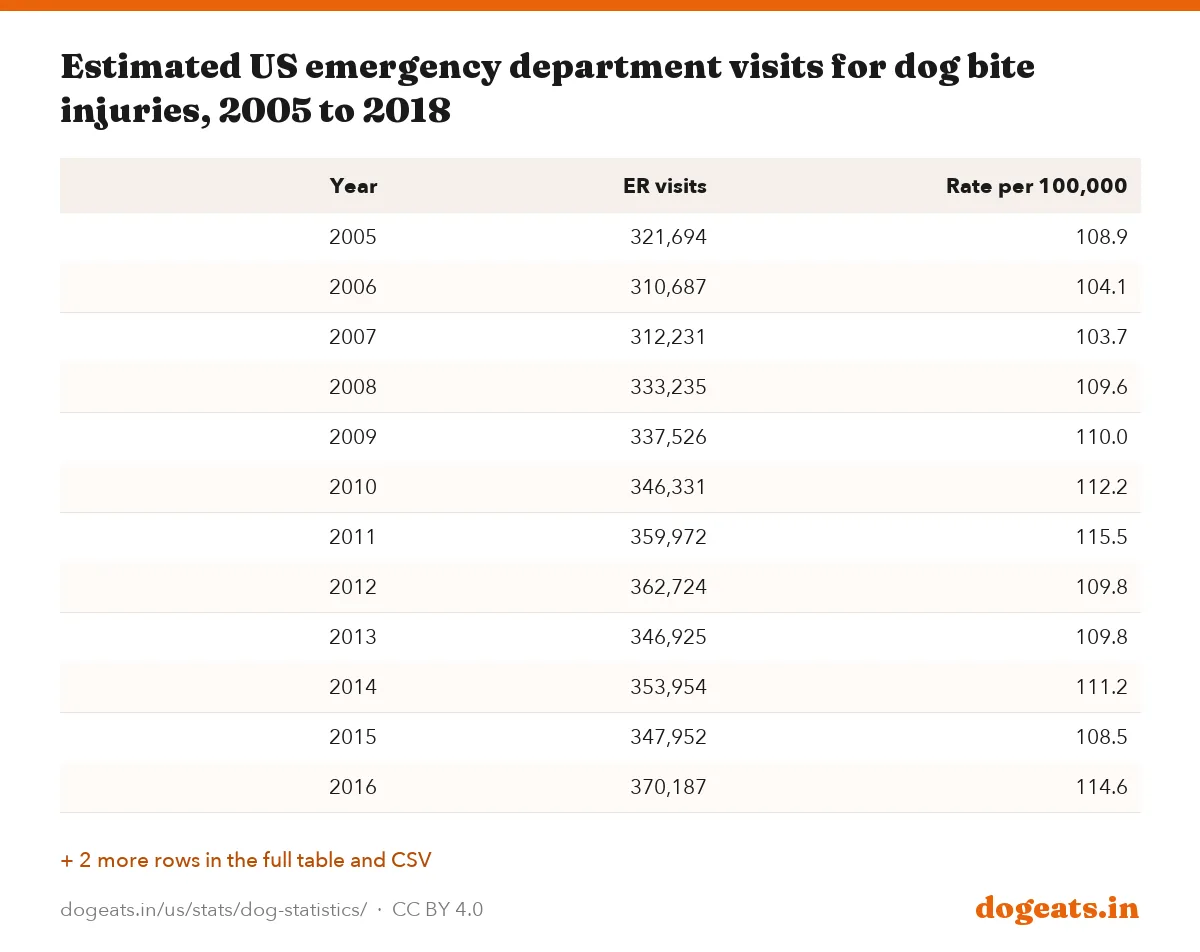
US emergency rooms treat roughly 350,000 dog bite injuries a year, and insurers paid $1.86 billion on dog injury claims in 2025. Postal workers alone reported more than 5,200 attacks, and CDC death records show 127 dog-related deaths in 2024. Our US dog bite statistics report breaks the claims down by state.
- 28,450 dog bite and dog injury claims were paid by US insurers in 2025, up 25.6% from 22,658 (Triple-I, Spotlight on dog bite liability 2026).
- 2,830 claims made California the top state in 2025, followed by Florida with 2,347 (Triple-I, Spotlight on dog bite liability 2026).
- $1.86 billion was paid on dog-related injury claims in 2025, up 18.6% from 2024 (Triple-I, Dog-related injury claims on the rise in 2025).
- $65,450 was the average cost per claim in 2025, down 5.5% on 2024 but up 97% over a decade (Triple-I, Dog-related injury claims on the rise in 2025).
- $211 million was paid by State Farm alone in 2022 on over 3,285 dog-related injury claims (State Farm, When good dogs have bad days, April 2023).
- More than 5,200 dog attacks on Postal Service employees were reported in 2025 (USPS, Top cities and states for dog attacks, May 2026).
- 70 attacks on mail carriers made Los Angeles the top city in 2025; Dallas had 50 (USPS, Top cities and states for dog attacks, May 2026).
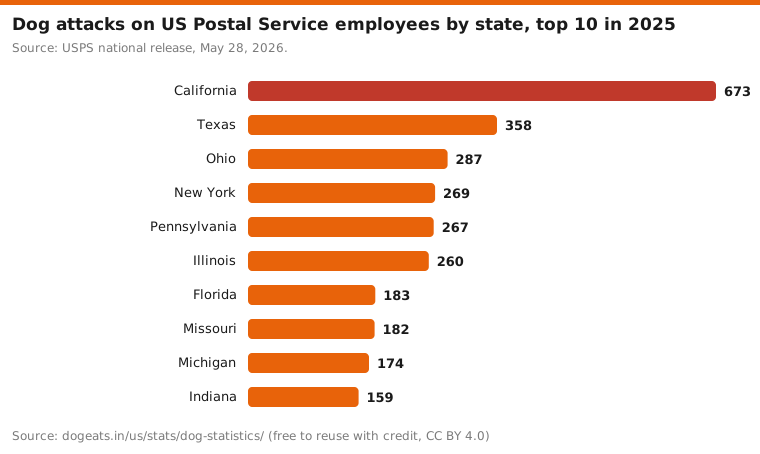
- 673 attacks on postal workers put California first among states in 2025; Texas had 358 (USPS, Top cities and states for dog attacks, May 2026).
- 349,961 emergency room visits for dog bites were estimated for 2018, a rate of 107.0 per 100,000 people (Tuckel and Milczarski, Changing epidemiology of dog bite injuries, 2020).
- 202.9 ER visits per 100,000 a year made children aged 5 to 9 the age group most often bitten (Tuckel and Milczarski, Changing epidemiology of dog bite injuries, 2020).
- 118,800 children and teens were treated in emergency rooms for dog bites in 2017, down from 181,090 in 2001 (Basco et al., Public Health Reports 2020).
- 468 people died from being bitten or struck by a dog from 2011 to 2021, with a high of 81 in 2021 (CDC, MMWR QuickStats, September 2023).
- 127 people died from dog bites or strikes in 2024, up from 35 in 2018; 2025 had 126 provisional deaths (CDC WONDER, deaths 2018 to 2024; CDC WONDER provisional, 2026).
- 80.5% of 256 US dog bite deaths in 2000 to 2009 involved four or more preventable factors (Patronek et al., JAVMA 2013).
- 4.7 million dog bites occurred in the US in 1994, the most recent estimate CDC cited in a 2003 report (CDC, MMWR on nonfatal dog bite injuries, 2003).
Source: USPS national release, May 28, 2026.
Show the numbers
| Label | attacks |
|---|---|
| California | 673 |
| Texas | 358 |
| Ohio | 287 |
| New York | 269 |
| Pennsylvania | 267 |
| Illinois | 260 |
| Florida | 183 |
| Missouri | 182 |
| Michigan | 174 |
| Indiana | 159 |
Embed this chart
| Year | ER visits | Rate per 100,000 |
|---|---|---|
| 2005 | 321,694 | 108.9 |
| 2006 | 310,687 | 104.1 |
| 2007 | 312,231 | 103.7 |
| 2008 | 333,235 | 109.6 |
| 2009 | 337,526 | 110.0 |
| 2010 | 346,331 | 112.2 |
| 2011 | 359,972 | 115.5 |
| 2012 | 362,724 | 109.8 |
| 2013 | 346,925 | 109.8 |
| 2014 | 353,954 | 111.2 |
| 2015 | 347,952 | 108.5 |
| 2016 | 370,187 | 114.6 |
| 2017 | 354,154 | 108.9 |
| 2018 | 349,961 | 107.0 |
The ER series comes from the federal NEISS-AIP injury sample, as analyzed by Tuckel and Milczarski; no newer national estimate has been published.
Dog health and lifespan statistics
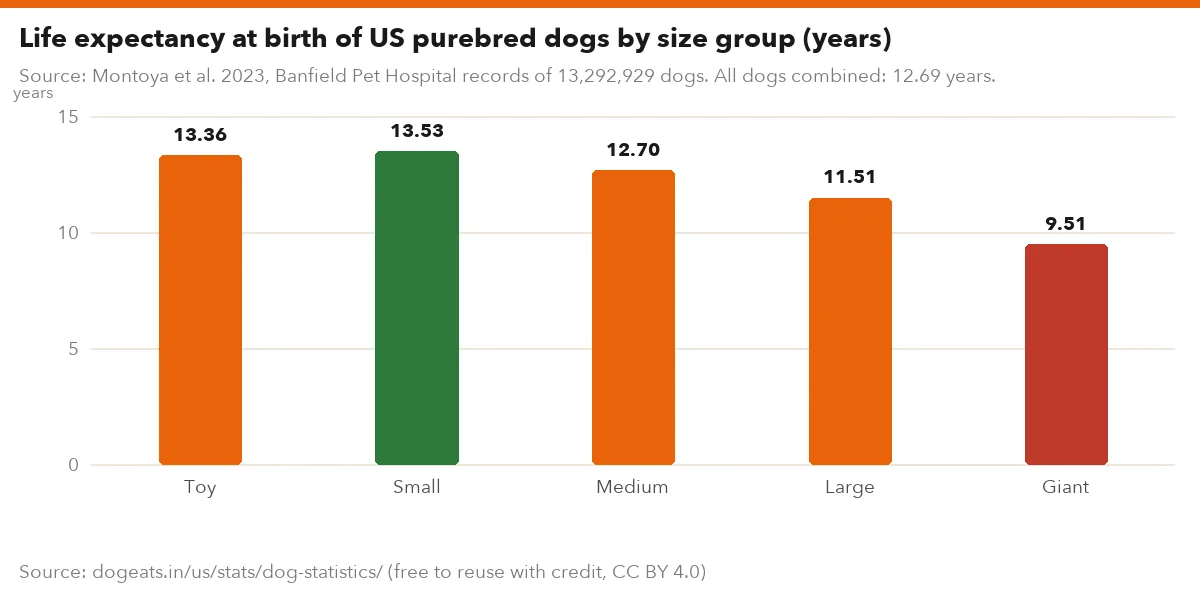
The average US dog lives about 12.7 years, but giant breeds average under 10 and obese dogs lose more than a year. Cancer was the cause of death owners named most often in a Dog Aging Project study. Read our dog lifespan by breed report for breed tables.

- 12.69 years is the life expectancy at birth of US dogs, in Banfield records on 13,292,929 dogs (Montoya et al., Life expectancy tables for dogs, 2023).
- 13.53 years is the life expectancy of small purebred dogs, against 9.51 years for giant breeds (Montoya et al., Life expectancy tables for dogs, 2023).
- 11.71 years was the life expectancy of obese dogs, against 13.14 years for overweight dogs (Montoya et al., Life expectancy tables for dogs, 2023).
- 59% of dogs were overweight or obese in the 2022 clinic survey of the Association for Pet Obesity Prevention (APOP, 2022 pet obesity prevalence survey).
- 37% of dog owners described their dog as above ideal weight in 2025 (APOP, 2025 owner survey).
- 108% was the rise in the share of Banfield dogs diagnosed overweight or obese, from 16% in 2011 to 34% in 2020 (Banfield Pet Hospital, Pet obesity release, June 2021).
- 1 in 4 dogs will develop cancer during their life, rising to 1 in 2 for dogs aged 10 or older (AVMA, Cancer in pets).
- 8.8 years was the median age at cancer diagnosis among 3,452 dogs with cancer (Rafalko et al., PLOS ONE 2023).
- 11 years was the median cancer diagnosis age for dogs of 2.5 to 5 kg, against 5 years at 75 kg or more (Rafalko et al., PLOS ONE 2023).
- 29.7% of 646 Dog Aging Project dogs that died had cancer as the cause their owners named (McNulty et al., Dog Aging Project end of life survey, JAVMA 2026).
- 54,903 dogs were enrolled in the Dog Aging Project as of October 6, 2026 (Dog Aging Project, enrollment counter, October 2026).
- 3,044 Golden Retrievers enrolled in the Golden Retriever Lifetime Study from June 2012 to April 2015 (Labadie et al., GRLS cohort profile, PLOS ONE 2022).
- 13.7 years was the median life span of overweight Yorkshire Terriers, against 16.2 years at normal weight (Salt et al., Journal of Veterinary Internal Medicine 2019).
- 20,970 dogs seen at three US clinics over one year formed a lifespan study; 7.3% died that year (Urfer et al., Lifespan of companion dogs in three US clinics, 2020).
Source: Montoya et al. 2023, Banfield Pet Hospital records of 13,292,929 dogs. All dogs combined: 12.69 years.
Show the numbers
| Label | years |
|---|---|
| Toy | 13.36 |
| Small | 13.53 |
| Medium | 12.70 |
| Large | 11.51 |
| Giant | 9.51 |
Embed this chart
Dog poisoning and pet food safety
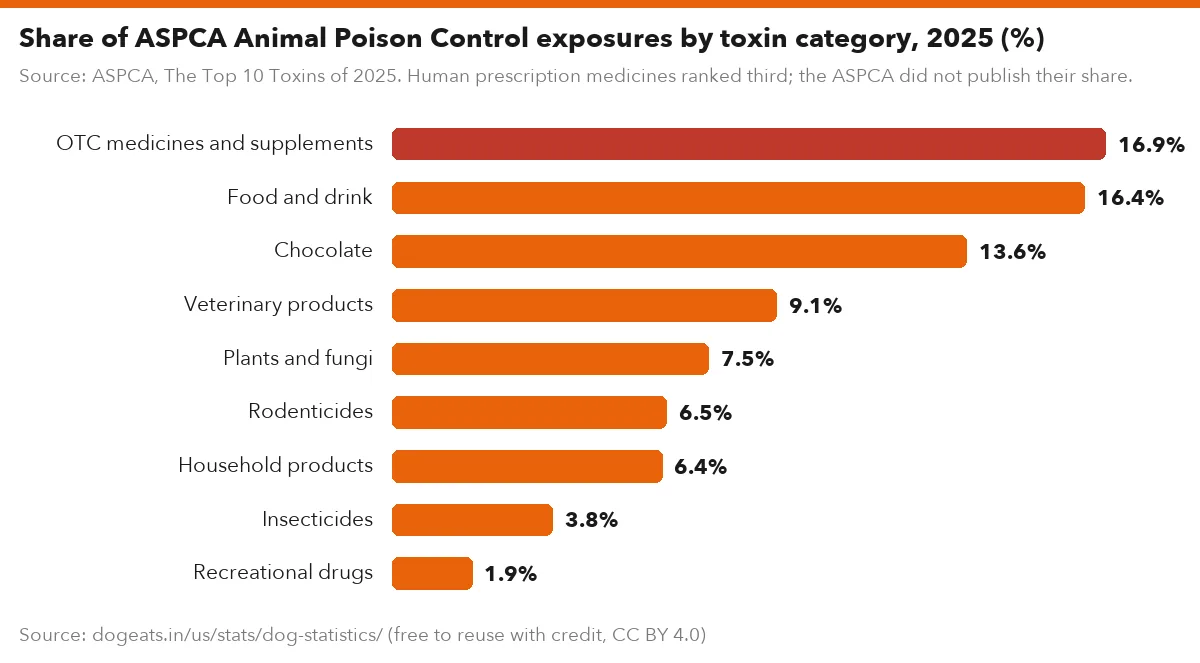
Medicines, human food and chocolate cause the most pet poisoning calls in the US. The ASPCA logged over 376,000 exposure items in 2025. Our top pet toxins report ranks every category from 2015 on.
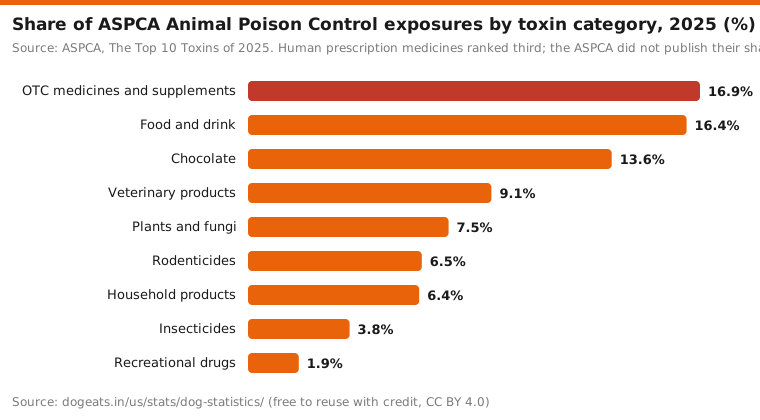
- Over 376,000 items that pets swallowed or touched were the subject of ASPCA Poison Control calls in 2025 (ASPCA, Top 10 toxins of 2025).
- 16.9% of exposures involved over-the-counter medicines and supplements, the top category in 2025 (ASPCA, Top 10 toxins of 2025).
- 13.6% of 2025 exposures involved chocolate, fourth on the list; food and drink was second at 16.4% (ASPCA, Top 10 toxins of 2025).
- More than 451,000 calls reached the ASPCA Animal Poison Control Center in 2024, up nearly 4% (ASPCA, Poison control call volume release, March 2025).
- Top 3 dog poisons at Pet Poison Helpline in 2025 were chocolate, grapes and raisins, and bromethalin rat bait (Pet Poison Helpline, Top 10 pet poisons of 2025).
- 108% more xylitol poisoning calls reached Pet Poison Helpline in 2020 than in 2015 (Pet Poison Helpline, Xylitol poisonings doubled).
- 10 to 60 minutes after a dog eats xylitol, blood sugar can drop sharply, the FDA warns (FDA, Paws off xylitol consumer update).
- More than 110 pets had died after eating aflatoxin-tainted Sportmix pet food by January 21, 2021 (FDA, Sportmix aflatoxin alert, 2021).
- 515 reports of dilated cardiomyopathy in dogs reached FDA from January 2014 to April 2019 (FDA, Investigation into diets and canine DCM).
- 7 people in 7 states fell ill in a Salmonella Kiambu outbreak linked to dry dog food in 2023 (CDC, Salmonella outbreak linked to dry dog food, 2023).
- 16.5% of ASPCA exposures in 2024 involved over-the-counter medicines and supplements, the top category that year (ASPCA, Official top 10 toxins of 2024).
Source: ASPCA, The Top 10 Toxins of 2025. Human prescription medicines ranked third; the ASPCA did not publish their share.
Show the numbers
| Label | % |
|---|---|
| OTC medicines and supplements | 16.9% |
| Food and drink | 16.4% |
| Chocolate | 13.6% |
| Veterinary products | 9.1% |
| Plants and fungi | 7.5% |
| Rodenticides | 6.5% |
| Household products | 6.4% |
| Insecticides | 3.8% |
| Recreational drugs | 1.9% |
Embed this chart
Rabies, parasites and infectious disease in US dogs
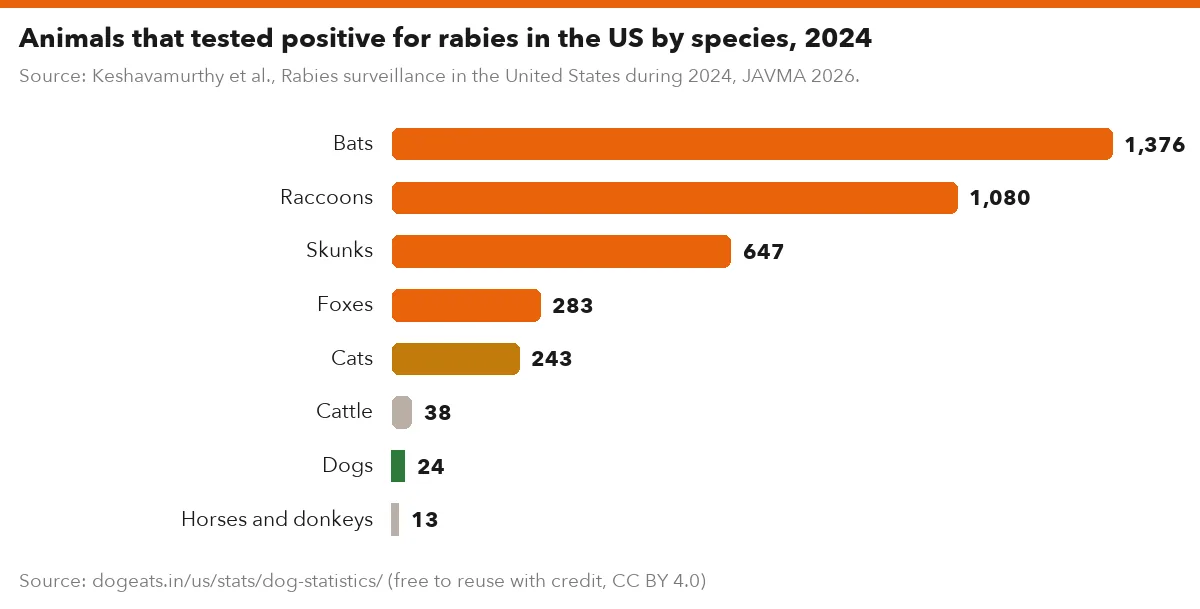
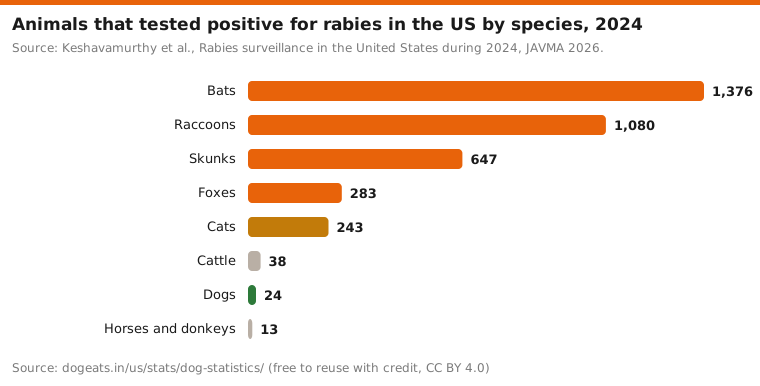
Rabid dogs are now rare in the US: 24 tested positive in 2024, against 1,376 bats. Imported dogs and moving parasites are the newer risks. Our rabies statistics report covers cases back to 2012.
- 3,834 animals tested positive for rabies in the US in 2024, and 91.4% were wildlife (Keshavamurthy et al., Rabies surveillance in the US during 2024, JAVMA).
- 24 dogs tested positive for rabies in 2024, out of 24,727 dogs tested (Keshavamurthy et al., Rabies surveillance in the US during 2024, JAVMA).
- 243 rabid cats made cats the most common rabid domestic animal in 2024, about 10 times the dog count (Keshavamurthy et al., Rabies surveillance in the US during 2024, JAVMA).
- 100,000 Americans get rabies post-exposure shots each year, and 1.4 million seek care for a possible exposure (CDC, Rabies in the United States).
- 70% of 89 US-acquired human rabies cases from 1960 to 2018 were traced to bats (CDC, MMWR Vital Signs on human rabies, 2019).
- 36 US human rabies cases from 1960 to 2018 were caused by dog bites abroad (CDC, MMWR Vital Signs on human rabies, 2019).
- 1 million dogs enter the US each year by CDC estimate, about 100,000 from countries at high risk for dog rabies (Federal Register, CDC dog importation rule, May 2024).
- 6 months of travel history sets a dog's CDC entry rules, in force since August 1, 2024 (Federal Register, dog import rule, 2024; CDC, Bringing a dog into the US).
- 59% of vets in the 2025 heartworm survey said local rates held steady; Texas topped the state list for the first time (American Heartworm Society, 2025 incidence survey).
- June 8, 2026: USDA confirmed New Mexico's first New World screwworm case, in a dog from Lea County (USDA APHIS, Screwworm case in a dog, June 2026).
- $11,000 to $14,000 per person is the typical cost of a course of rabies post-exposure shots, CDC says (CDC, Health Advisory HAN-00533, September 2026).
Source: Keshavamurthy et al., Rabies surveillance in the United States during 2024, JAVMA 2026.
Show the numbers
| Label | cases |
|---|---|
| Bats | 1,376 |
| Raccoons | 1,080 |
| Skunks | 647 |
| Foxes | 283 |
| Cats | 243 |
| Cattle | 38 |
| Dogs | 24 |
| Horses and donkeys | 13 |
Embed this chart
Pet insurance statistics for dogs
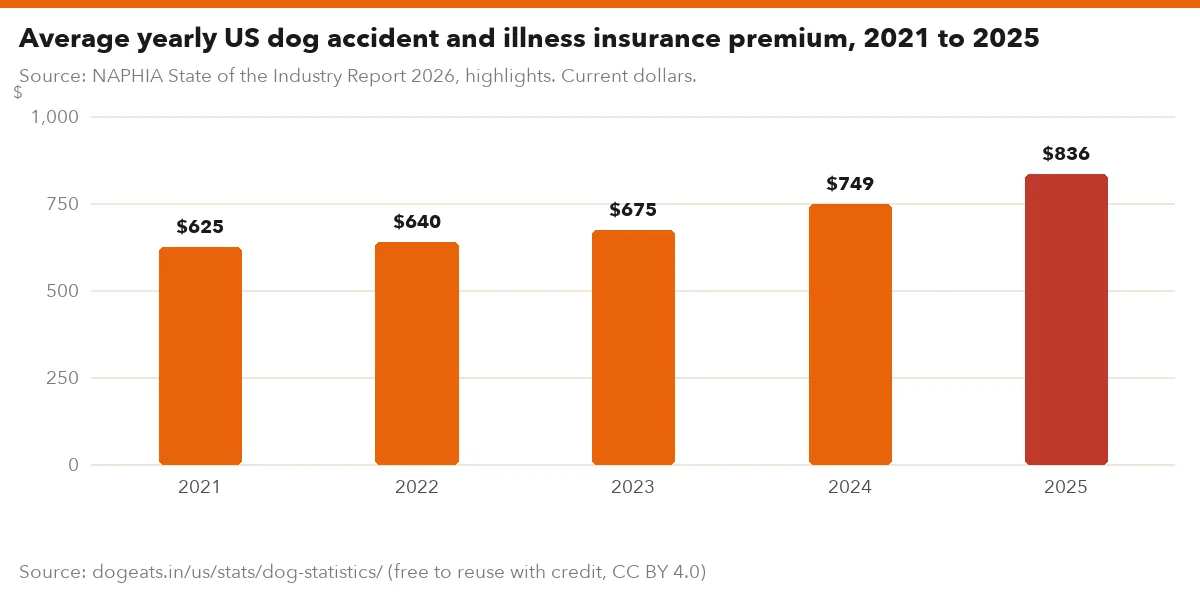
About 5.23 million US dogs were insured at the end of 2025, roughly 6% of the pet dog population. Premiums for dogs rose by double digits in both 2024 and 2025. See our pet insurance statistics report for state shares.
- 5.23 million US dogs were insured at the end of 2025, up 6.8% from 2024 (NAPHIA, State of the Industry 2026 highlights).
- About $5.7 billion in US pet insurance premium was in force at the end of 2025, up 19.7% on the year (NAPHIA, State of the Industry 2026 highlights).
- $836 a year was the average dog accident and illness premium in 2025, up 11.5%; accident-only cover averaged $190 (NAPHIA, State of the Industry 2026 highlights).
- 7.6 million pets were insured across North America at the end of 2025, up 8.5% from 7.03 million (NAPHIA, Industry data 2026).
- 5.46% of US dogs were insured at the end of 2024, against 2.04% of cats (NAPHIA, State of the Industry 2025 release).
- 91% of North America's insured pets were in the US in 2024, and 9% in Canada (NAPHIA, State of the Industry 2025 release).
- 1,647,565 pets were enrolled with insurer Trupanion at the end of 2025, down from 1,677,570 a year earlier (Trupanion, Form 10-K for 2025).
- $80.79 a month was Trupanion's average subscription revenue per pet in 2025, up from $72.98 (Trupanion, Form 10-K for 2025).
- 2022 was the year state insurance regulators adopted the NAIC Pet Insurance Model Act (NAIC, Pet insurance topic page).
- January 1, 2024: Colorado barred home insurers from refusing or pricing cover by dog breed (Colorado Revised Statutes 10-4-110.8).
- 2023: Minnesota law banned homeowner insurers from discriminating by dog breed (Minnesota Statutes 65A.303).
- $69,272 was the average US dog bite liability claim paid in 2024, up from $58,545 in 2023 (Triple-I and State Farm, 2024 dog injury claims release, April 2025).
Veterinarians and vet workforce numbers
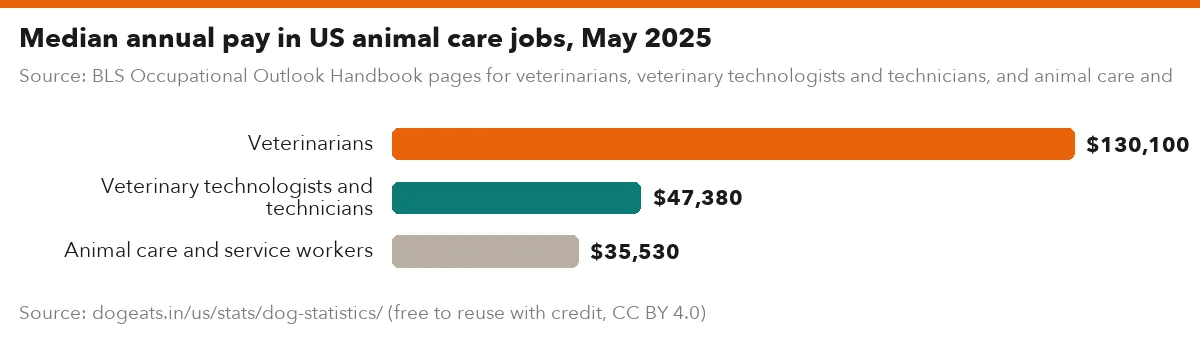
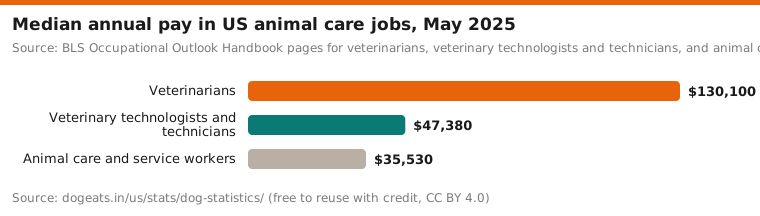
The AVMA counts 133,475 US veterinarians, and payroll data show 91,100 vet jobs. Federal projections call for 9% job growth to 2035. Our veterinarians by state report ranks every state per resident.
- $130,100 was the median annual pay of US veterinarians in May 2025 (BLS, Occupational Outlook Handbook: Veterinarians).
- 91,100 veterinarian jobs existed in the US in 2025, and BLS projects 9% growth to 2035 (BLS, Occupational Outlook Handbook: Veterinarians).
- About 3,100 openings for veterinarians are projected each year from 2025 to 2035 (BLS, Occupational Outlook Handbook: Veterinarians).
- 131,400 veterinary technologist and technician jobs existed in 2025, with projected growth of 9% to 2035 (BLS, Occupational Outlook Handbook: Veterinary technicians).
- $47,380 was the median annual pay of veterinary technologists and technicians in 2025 (BLS, Occupational Outlook Handbook: Veterinary technicians).
- 133,475 veterinarians were counted in the US at the end of 2025 by the AVMA (AVMA, US veterinarian numbers 2025).
- 91,889 of those veterinarians were women, or 68.8% of the AVMA count (AVMA, US veterinarian numbers 2025).
- Up to $40,000 a year of student debt can be repaid for vets who serve three years in a USDA shortage area (USDA NIFA, Veterinary Medicine Loan Repayment Program).
- About 300 full-service vet hospitals and about 1,600 weekly Vetco clinics ran inside Petco's network in January 2026 (Petco, Form 10-K for fiscal 2025).
Source: BLS Occupational Outlook Handbook pages for veterinarians, veterinary technologists and technicians, and animal care and service workers.
Show the numbers
| Label | $ |
|---|---|
| Veterinarians | $130,100 |
| Veterinary technologists and technicians | $47,380 |
| Animal care and service workers | $35,530 |
Embed this chart
How much does it cost to own a dog in the US?
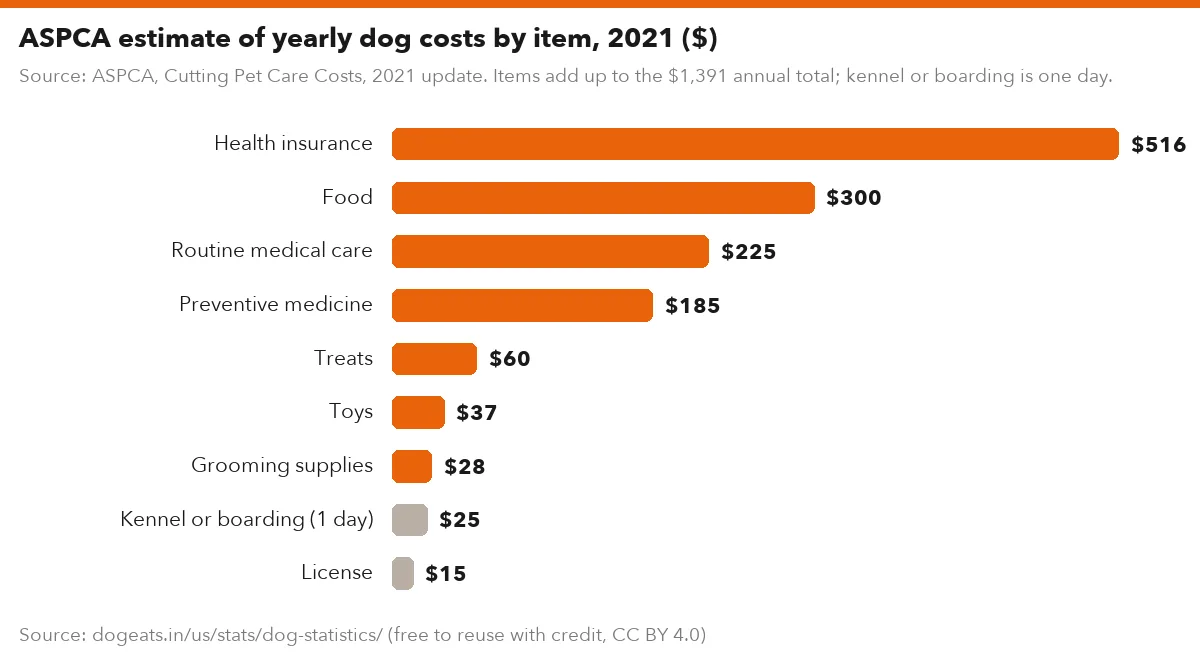
A dog costs roughly $1,400 to $5,300 a year in the US, depending on the estimate, size and age. The ASPCA's 2021 budget is the low end; Rover's 2026 survey runs higher. Our cost of owning a dog report updates those budgets for inflation.
- $1,930 to $5,305 a year is Rover's 2026 estimate for the cost of an adult dog (Rover, Cost of dog parenthood 2026).
- $1,195 to $4,650 is Rover's 2026 range for the upfront cost of bringing a dog home (Rover, Cost of dog parenthood 2026).
- $19,840 to $58,875 is Rover's lifetime cost range, from a small breed to a large breed (Rover, Cost of dog parenthood 2026).
- $62 a night was the average Rover dog boarding price in New York in October 2026 (Rover, Dog boarding in New York, October 2026).
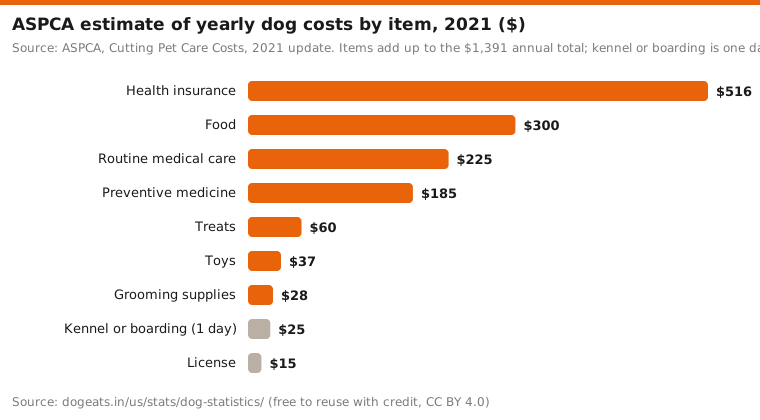
- $1,391 a year is the ASPCA's 2021 estimate of a dog's running costs; the first year costs $3,221 (ASPCA, Cutting pet care costs, 2021 update).
- $516 for health insurance is the largest single line in the ASPCA's 2021 annual dog budget (ASPCA, Cutting pet care costs, 2021 update).
- $595 a year was the average dog-owning household's spending on vet care in 2026 (AVMA, U.S. pet ownership statistics 2026).
- $17.08 an hour was the median pay of animal care and service workers in 2025, across 413,000 jobs (BLS, Occupational Outlook Handbook: Animal care workers).
Source: ASPCA, Cutting Pet Care Costs, 2021 update. Items add up to the $1,391 annual total; kennel or boarding is one day.
Show the numbers
| Label | $ |
|---|---|
| Health insurance | $516 |
| Food | $300 |
| Routine medical care | $225 |
| Preventive medicine | $185 |
| Treats | $60 |
| Toys | $37 |
| Grooming supplies | $28 |
| Kennel or boarding (1 day) | $25 |
| License | $15 |
Embed this chart
| Life stage | Low ($) | High ($) |
|---|---|---|
| Puppy | 1,460 | 6,745 |
| Adult | 1,930 | 5,305 |
| Senior | 2,475 | 5,200 |
Dog laws: breed rules, pet stores, hot cars and custody
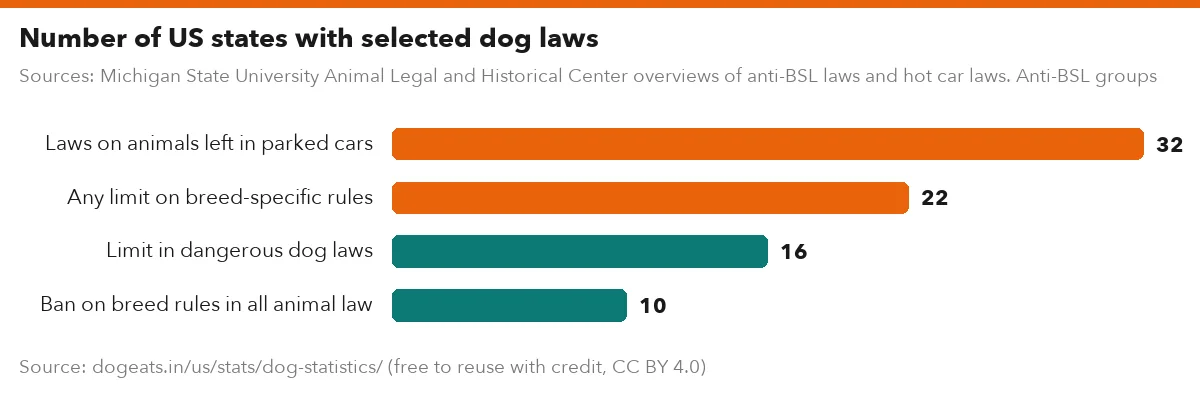
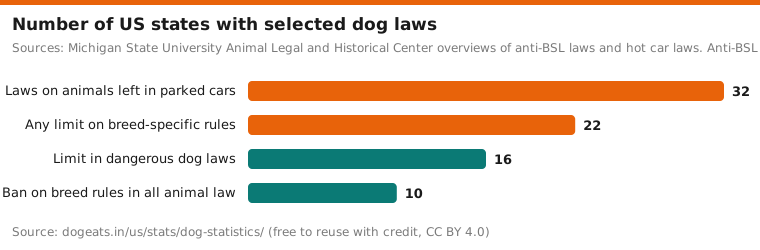
Dog law in the US is mostly state law, so the rules change at every border. About 22 states limit breed bans and 32 have hot car laws. Our breed-specific laws by state report lists every statute.
- About 22 states limit breed-specific legislation; 10 bar it in all animal rules and 16 in dangerous dog laws (Animal Legal and Historical Center, States that prohibit BSL).
- 32 states and DC have laws on companion animals left in parked vehicles (Animal Legal and Historical Center, Hot car laws map).
- October 1, 2023: Florida's law took effect removing the exemption that kept older local breed ordinances alive (Florida Senate, CS/HB 941 and SB 942 (2023)).
- 1989: Minnesota barred cities from defining dangerous dogs solely by breed (Minnesota Session Laws 1989, chapter 37).
- 2019: Washington limited local breed bans, under RCW 16.08.110 (Washington State Legislature, RCW 16.08.110).
- December 15, 2022: New York's ban on dog, cat and rabbit sales in pet shops was signed into law (New York State Senate, Bill S1130 (2021 to 2022)).
- Section 19-703 of Maryland's business code bars retail pet stores from selling cats or dogs (Maryland Code, Business Regulation 19-703).
- January 1, 2028: Colorado pet stores must stop selling dogs and cats, under a state session law (Colorado General Assembly, 2026 session law on pet store sales).
- Under Section 12-558.02, Arizona shields people who use reasonable force to free a dog or cat from a locked, unattended car (Arizona Revised Statutes 12-558.02).
- Subsection 15 of New York divorce law tells courts to weigh a companion animal's best interest when awarding it (New York Domestic Relations Law 236).
- April 21, 2023: DC Law 24-346 amended the DC Code so judges can order a party to care for a pet during a divorce (DC Code 16-910).
- 7 factors guide Maine judges, who must award a companion animal to only one spouse, under a 2021 law (Maine Revised Statutes 19-A, section 953).
Sources: Michigan State University Animal Legal and Historical Center overviews of anti-BSL laws and hot car laws. Anti-BSL groups overlap, so 10 and 16 do not add to 22.
Show the numbers
| Label | states |
|---|---|
| Laws on animals left in parked cars | 32 |
| Any limit on breed-specific rules | 22 |
| Limit in dangerous dog laws | 16 |
| Ban on breed rules in all animal law | 10 |
Embed this chart
Dogs in rentals, parks and air travel
Most US renters now have pets, and more than half of rental listings accept them. Dog parks have spread fast in big cities, while airlines tightened rules on emotional support animals in 2021.
- 58% of US renters had pets, up from 46% in 2019, Zillow reported in July 2025 (Zillow, Saying yes to pets pays off for landlords, July 2025).
- 57% of Zillow rental listings allowed pets in 2024, and those listings drew 9% more views (Zillow, Saying yes to pets pays off for landlords, July 2025).
- January 11, 2021: US airlines could stop treating emotional support animals as service animals, under a DOT rule (Federal Register, DOT service animal rule, December 2020).
- 751,000 emotional support animals flew on US airlines in 2017, an industry estimate cited in the DOT rule (Federal Register, DOT service animal rule, December 2020).
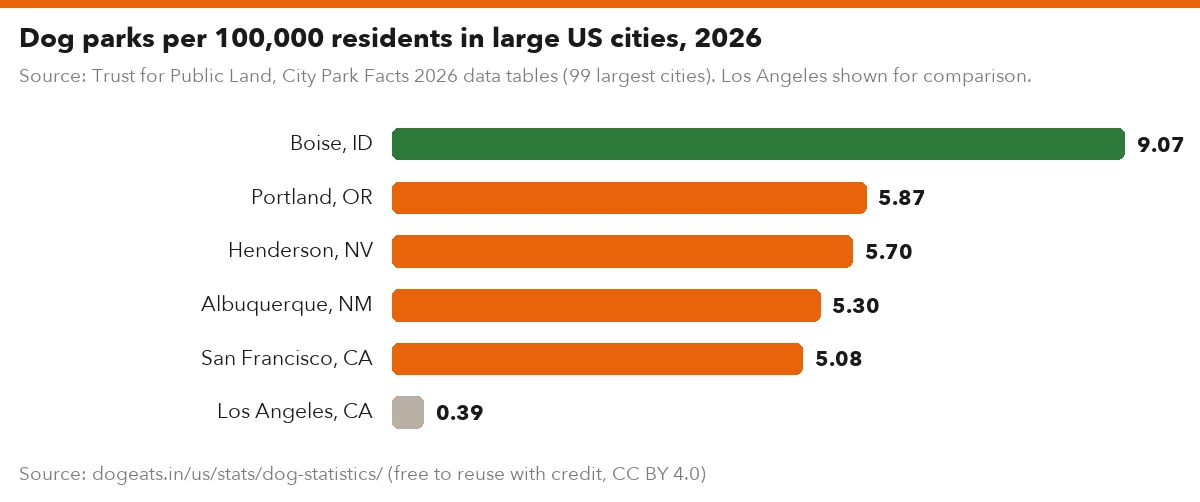
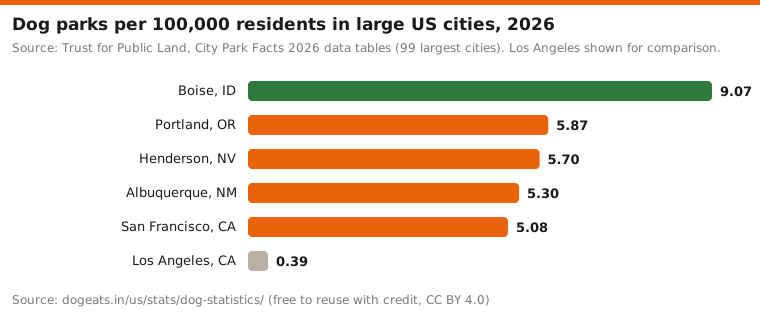
- 1,067 off-leash dog parks served the 99 largest US cities in 2026, Trust for Public Land counts (Trust for Public Land, City Park Facts 2026 data tables).
- 9.07 dog parks per 100,000 residents put Boise first among large cities; Los Angeles had 0.39 (Trust for Public Land, City Park Facts 2026 data tables).
- $2,500 or two months' rent, whichever is greater, is North Dakota's cap on a pet security deposit (North Dakota Century Code 47-16).
- Half a month's rent is the most a Kansas landlord can add as a pet deposit (Kansas Statutes 58-2550).
Source: Trust for Public Land, City Park Facts 2026 data tables (99 largest cities). Los Angeles shown for comparison.
Show the numbers
| Label | per 100,000 |
|---|---|
| Boise, ID | 9.07 |
| Portland, OR | 5.87 |
| Henderson, NV | 5.70 |
| Albuquerque, NM | 5.30 |
| San Francisco, CA | 5.08 |
| Los Angeles, CA | 0.39 |
Embed this chart
Frequently asked questions
How many dogs are in the US in 2026?
The AVMA estimates 88.9 million pet dogs in US households in 2026. It works out to about 26 dogs for every 100 Americans.
What percentage of US households have a dog?
The AVMA puts it at 43.7% of households in 2026, or 58.9 million homes. APPA's survey gives a higher 53% for 2025.
What is the most popular dog breed in the US?
The French Bulldog has topped AKC registrations every year from 2022 to 2025. The Labrador Retriever is second, after 31 years at No. 1.
How many dogs are adopted from shelters each year?
About 2 million dogs were adopted from US shelters and rescues in 2025. Adoptions equaled 57% of the 2.8 million dogs that came in.
How many dog bites happen in the US each year?
About 350,000 people a year visit an ER for a dog bite, based on 2018 estimates. Insurers paid 28,450 dog injury claims in 2025, and CDC death records show 127 deaths in 2024.
How long do dogs live in the US?
US dogs have a life expectancy at birth of about 12.7 years. Small breeds average 13.5 years and giant breeds about 9.5.
How much does a dog cost per year in the US?
Estimates run from $1,391 a year (ASPCA, 2021) to $1,930 to $5,305 for an adult dog (Rover, 2026). Vet care alone averages $595 per dog-owning home.
How many dogs have pet insurance in the US?
About 5.23 million US dogs were insured at the end of 2025. Insured dogs equal roughly 6% of the 88.9 million pet dogs.
Methodology and limitations
We compiled this hub on 16 October 2026 from primary sources only. These are federal agencies such as CDC, BLS, Census, FDA and USDA, city open data, peer-reviewed papers and original surveys. We also used SEC filings, state statutes and releases from the groups that collect the data.
Every statistic was taken from a page we opened in this session, with the number, unit, population and year checked on the page. Where a source was blocked to scripts, we opened it in a browser. Figures reused from our live US reports were traced back and re-opened at the original source.
We rejected numbers we could only find in roundups, blogs or press coverage, numbers whose source page failed to load, and figures we could not match exactly. Data run from 1994 to October 2026; anything older than three years carries its year in the bullet.
Counts from city license data (New York City and Seattle) and the Trust for Public Land tables are our own queries or sums of the published files, as noted. Percentages we computed are rounded once from unrounded inputs. We plan to update this hub monthly.
Sources
- AVMA, U.S. pet ownership statistics (2026 Sourcebook) (2026), Cited inline in the ownership section
- Shelter Animals Count, 2025 annual report (2025), Cited inline in the shelters section
- Insurance Information Institute, Spotlight on: Dog bite liability (2025), Cited inline in the bites section
- Also consulted: AVMA, Chart of the month: Pet population trends and what they mean (1996), AVMA, Pet population continues to increase while pet spending declines (2024), American Pet Products Association, America's Dog Owners Are Becoming Smarter Spenders (2025), American Pet Products Association, APPA releases 2025 State of the Industry report (2024), Pew Research Center, About half of U.S. pet owners say their pets are as much a part of their family as a human member (2023), US Census Bureau (population); AVMA (dogs), Population growth slows (Vintage 2025 estimates) (2025-2026), American Pet Products Association, Industry trends and stats (2025), US Bureau of Labor Statistics, Consumer Expenditure Survey, Pets (CXUPETSLB0101M) (2024), US Bureau of Labor Statistics, CE Table 2602, Generation of reference person, 2024 (2024), US Bureau of Labor Statistics, CPI-U Veterinarian services (CUUR0000SS62054); CPI-U All items (Sep 2026), US Bureau of Labor Statistics, CPI-U All items (CUUR0000SA0) (Sep 2026), US Bureau of Labor Statistics, CPI-U Pet food and treats (CUUR0000SS61031) (Sep 2026), US Bureau of Labor Statistics, CPI-U Pet services (CUUR0000SS62053) (Sep 2026), Chewy, Inc., Form 10-K, fiscal year ended February 1, 2026 (FY2025), Petco Health and Wellness Company, Form 10-K, fiscal year ended January 31, 2026 (FY2025), Freshpet, Inc., Form 10-K, year ended December 31, 2025 (2025), American Kennel Club, French Bulldog remains most popular pup for the fourth year (2025), American Kennel Club, French Bulldog knocks Labrador Retriever out of number one spot (2022), American Kennel Club, Most popular dog breeds by city 2025 (2025), American Kennel Club, Most popular dog breeds of 2025 (2025), NYC Department of Health and Mental Hygiene, NYC Dog Licensing Dataset (nu7n-tubp) (2025), City of Seattle, Seattle Pet Licenses (jguv-t9rb) (2015-2026), Westminster Kennel Club, Best in Show records by breed (1907-2025), Westminster Kennel Club, 2026 Best in Show (2026), Shelter Animals Count, 2025 Year-End Report (2025), Shelter Animals Count, Shelter Animals Count releases 2025 annual data report (2025), Shelter Animals Count, Stray dog intakes spike after July 4th (2021-2023), ASPCA, U.S. Animal Shelter Statistics (2025), Best Friends Animal Society, New data reveals state rankings for saving dogs and cats in shelters (2025), Best Friends Animal Society, Animal Shelter Statistics Dashboard (2025), Insurance Information Institute, Dog-related injury claims on the rise in 2025 (2025), State Farm, When good dogs have bad days who pays? (2022), US Postal Service, Postal Service names top cities and states for dog attacks on mail carriers (2025), Tuckel P, Milczarski W (PMC), The changing epidemiology of dog bite injuries in the United States, 2005-2018 (2018), Basco AN, McCormack ER, Basco WT (PMC), Evaluation of dog bite injuries in children treated in US emergency departments, 2001-2017 (2017), CDC NCHS, QuickStats: Deaths resulting from being bitten or struck by a dog, 2011-2021 (2011-2021), Patronek GJ et al., JAVMA, Co-occurrence of potentially preventable factors in 256 dog bite-related fatalities (2000-2009), CDC, Nonfatal dog bite-related injuries treated in hospital emergency departments, 2001 (1994), Montoya M et al. (PMC), Life expectancy tables for dogs and cats derived from clinical data (2013-2019), Association for Pet Obesity Prevention, 2022 U.S. Pet Obesity Prevalence Survey (2022), Association for Pet Obesity Prevention, 2025 survey (2025), Banfield Pet Hospital, New data reveals pet obesity epidemic continues (2011-2020), AVMA, Cancer in pets (current), Rafalko JM et al., Age at cancer diagnosis by breed, weight, sex, and cancer type (2023), McNulty KE et al., JAVMA, Dog Aging Project End of Life Survey (2026), Dog Aging Project, Home page enrollment counter (2026), Labadie J et al., Cohort profile: The Golden Retriever Lifetime Study (2012-2015), Westgarth C et al., Scientific Reports, Dog owners are more likely to meet physical activity guidelines (2019), American Psychiatric Association, Pets offer mental health support to their owners (2024), ASPCA Animal Poison Control Center, The Top 10 Toxins of 2025 (2025), ASPCA, ASPCA sees increase in number of calls to Animal Poison Control Center (2024), Pet Poison Helpline, Top 10 Pet Poisons of 2025 (2025), Pet Poison Helpline, Xylitol pet poisoning cases more than doubled (2015-2020), US Food and Drug Administration, Paws Off Xylitol; It's Dangerous for Dogs (current), US Food and Drug Administration, FDA alert: certain lots of Sportmix pet food recalled (2021), US Food and Drug Administration, FDA investigation into potential link between certain diets and canine DCM (2014-2019), CDC, Salmonella outbreak linked to dry dog food (Kiambu) (2023), JAVMA / CDC rabies surveillance, Rabies surveillance in the United States during 2024 (2024), CDC, Protecting public health from rabies (current), CDC, Vital Signs: Trends in human rabies deaths and exposures (1960-2018), CDC via Federal Register, Control of communicable diseases; importation of dogs and cats (2024), CDC, Bringing a dog into the United States (2024), American Heartworm Society, What does the latest AHS incidence map show us? (2025), USDA APHIS, USDA confirms first case of New World screwworm in a dog in Lea County, New Mexico (2026), North American Pet Health Insurance Association, State of the Industry Report 2026, highlights (2025), North American Pet Health Insurance Association, Industry data (2025), North American Pet Health Insurance Association, NAPHIA State of the Industry Report 2025 news release (2024), Trupanion, Inc., Form 10-K, year ended December 31, 2025 (2025), National Association of Insurance Commissioners, Pet Insurance (2022), State of Colorado, C.R.S. 10-4-110.8 (16) (2024), State of Minnesota, Minn. Stat. 65A.303 Homeowner's liability insurance; dogs (2023), US Bureau of Labor Statistics, Occupational Outlook Handbook, Veterinarians (2025), US Bureau of Labor Statistics, Occupational Outlook Handbook, Veterinary Technologists and Technicians (2025), AVMA, U.S. veterinarian numbers (2025), USDA National Institute of Food and Agriculture, Veterinary Medicine Loan Repayment Program (2026), Rover (company survey), How much does a dog cost? (2026), Rover, Dog boarding in New York (2026), ASPCA, Cutting Pet Care Costs (2021 update) (2021), US Bureau of Labor Statistics, Occupational Outlook Handbook, Animal Care and Service Workers (2025), Zillow, Saying yes to pets pays off for landlords (2025), Michigan State University Animal Legal and Historical Center, Overview of states that prohibit breed-specific legislation (current), Michigan State University Animal Legal and Historical Center, Map of states that have laws to protect animals in parked cars (current), Florida Senate, SB 942 (2023) (2023), State of Minnesota, Laws of Minnesota 1989, chapter 37 (1989), Washington State Legislature, RCW 16.08.110 (2019), New York State Senate, Senate Bill S1130 (2022), Maryland General Assembly, Business Regulation 19-703 (current), Colorado General Assembly, Session law on pet store sales of dogs and cats (2028), Arizona State Legislature, A.R.S. 12-558.02 (current), New York State Senate, Domestic Relations Law 236 (current), Council of the District of Columbia, D.C. Code 16-910 (2023), Maine Legislature, 19-A M.R.S. 953 (2021), US Department of Transportation via Federal Register, Traveling by air with service animals (final rule) (2021), Trust for Public Land, City Park Facts 2026, Amenities and Facilities tables (2026), North Dakota Legislative Branch, N.D. Cent. Code ch. 47-16 (current), Kansas Office of Revisor of Statutes, K.S.A. 58-2550 (current), CDC, Health Alert Network advisory HAN-00533 (2026), Salt C et al. (PMC), Association between life span and body condition in neutered client-owned dogs (2019), Urfer SR et al. (PMC), Lifespan of companion dogs seen in three independent primary care veterinary clinics in the United States (2020), ASPCA Animal Poison Control Center, The Official Top 10 Toxins of 2024 (2024), Shelter Animals Count, 2024 Annual Analysis (2024), Insurance Information Institute, US dog-related injury claim payouts hit $1.57 billion in 2024 (2024), CDC WONDER, Multiple Cause of Death 2018 to 2024 (2026), CDC WONDER, Provisional Mortality Statistics (October 2026).
Cite, embed and download
This report, its data and its images are free to reuse under a Creative Commons Attribution 4.0 licence. Credit dogeats.in with a link to this page. Every chart has its own embed code, every table has a CSV and an image download, and the images below are ready for social posts, slides and articles.
Cite this report
Link to this report
Every chart and table as an image