Data report · Updated October 2026
Raw dog food statistics: how often raw diets test positive for Salmonella and Listeria, and how many dogs eat them
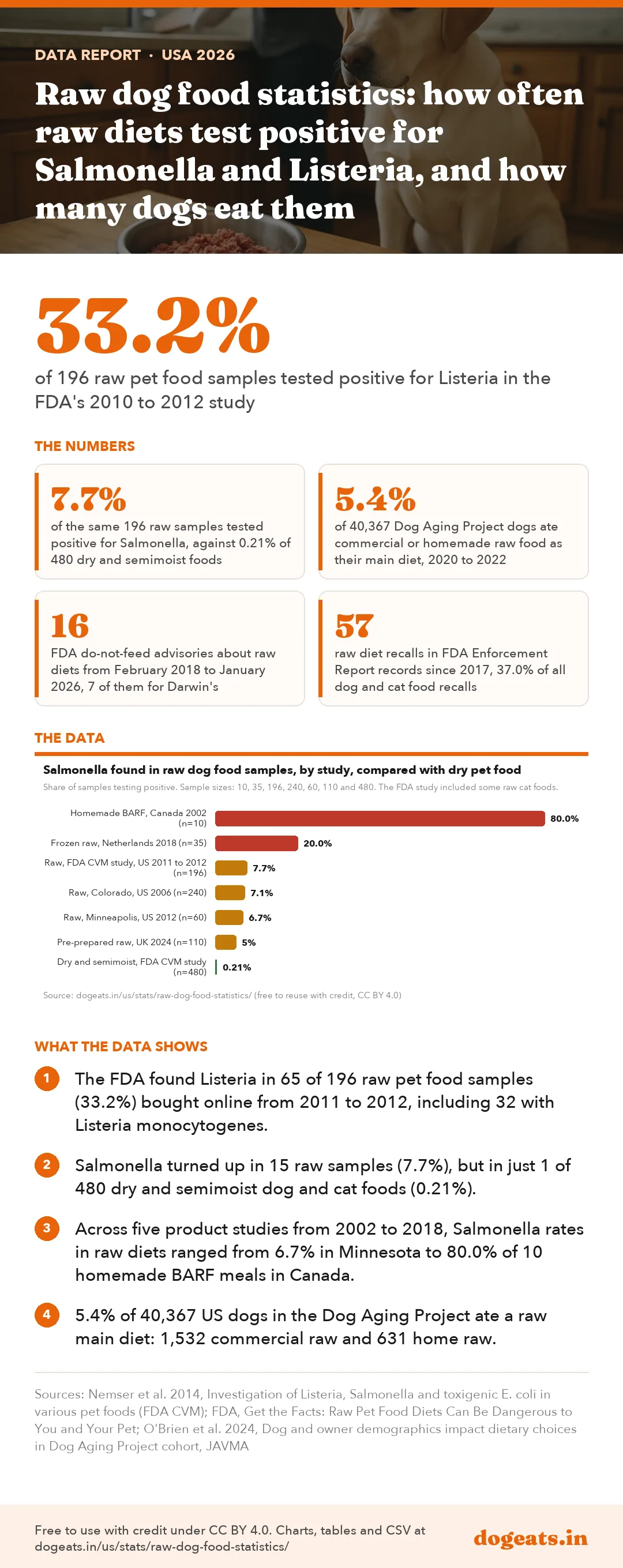
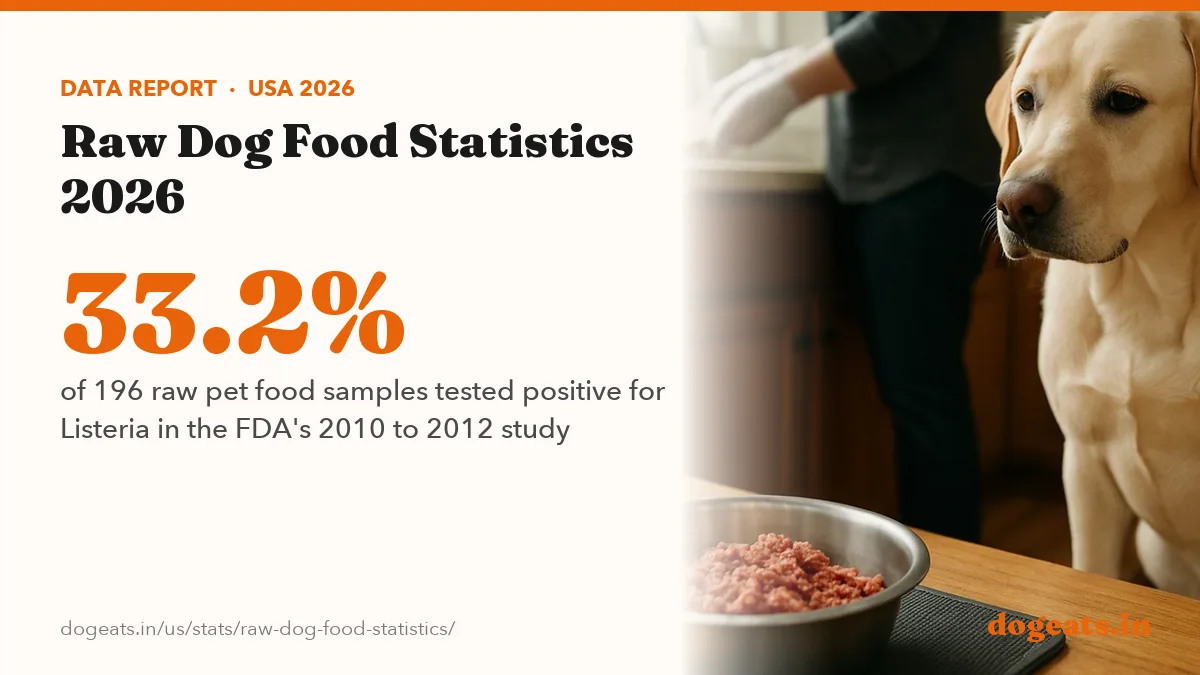
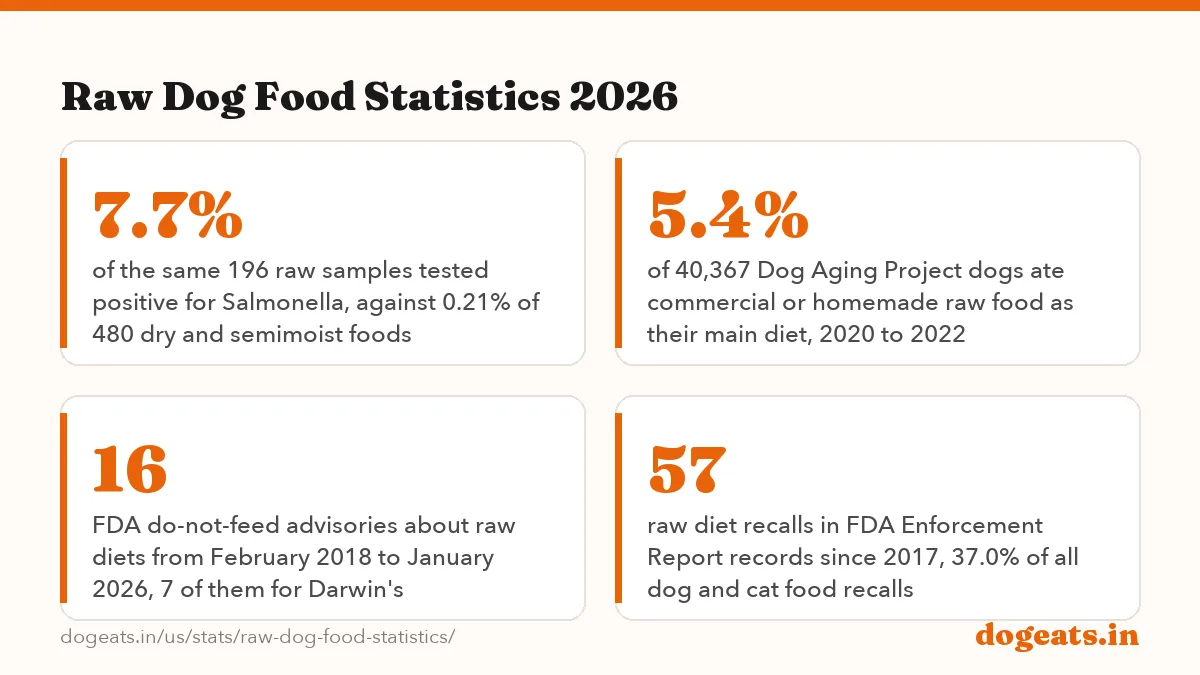
In the FDA's 2010 to 2012 pet food testing study, 33.2% of 196 raw dog and cat food samples carried Listeria and 7.7% carried Salmonella. Dry and semimoist foods in the same study had a 0.21% Salmonella rate. About 5.4% of 40,367 US dogs in the Dog Aging Project ate raw food as their main diet, and the FDA has issued 16 raw diet advisories since 2018.
Key findings
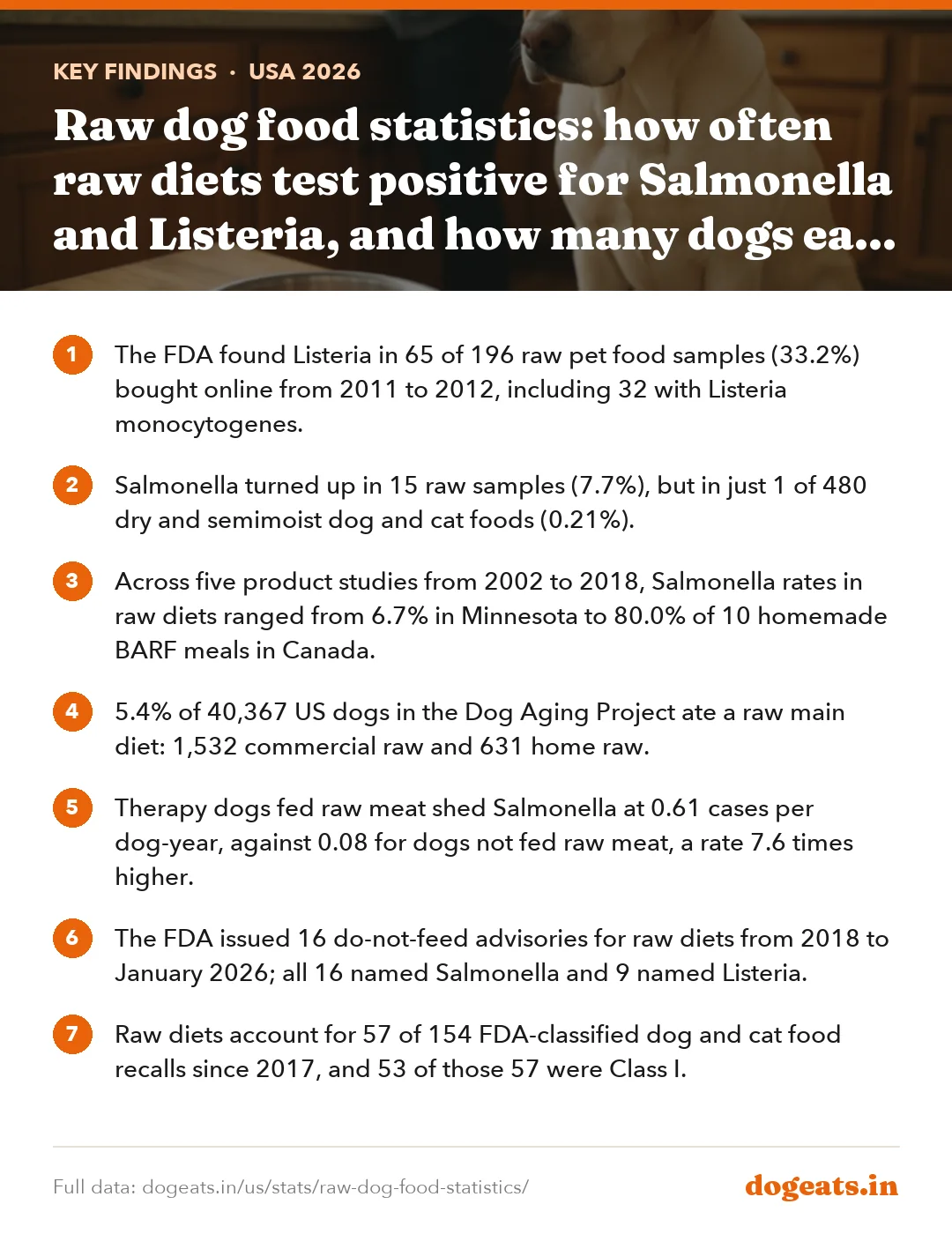
- The FDA found Listeria in 65 of 196 raw pet food samples (33.2%) bought online from 2011 to 2012, including 32 with Listeria monocytogenes.
- Salmonella turned up in 15 raw samples (7.7%), but in just 1 of 480 dry and semimoist dog and cat foods (0.21%).
- Across five product studies from 2002 to 2018, Salmonella rates in raw diets ranged from 6.7% in Minnesota to 80.0% of 10 homemade BARF meals in Canada.
- 5.4% of 40,367 US dogs in the Dog Aging Project ate a raw main diet: 1,532 commercial raw and 631 home raw.
- Therapy dogs fed raw meat shed Salmonella at 0.61 cases per dog-year, against 0.08 for dogs not fed raw meat, a rate 7.6 times higher.
- The FDA issued 16 do-not-feed advisories for raw diets from 2018 to January 2026; all 16 named Salmonella and 9 named Listeria.
- Raw diets account for 57 of 154 FDA-classified dog and cat food recalls since 2017, and 53 of those 57 were Class I.
- Intact dogs were more than twice as likely as neutered dogs to eat raw food: 11.7% against 4.6%.
How often does raw dog food contain Salmonella or Listeria?
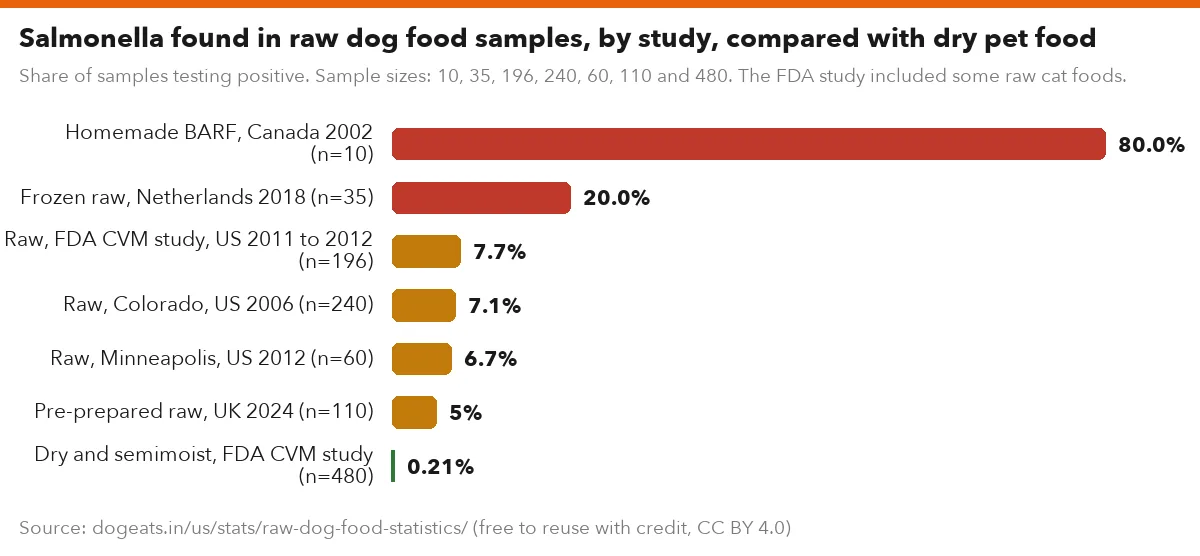
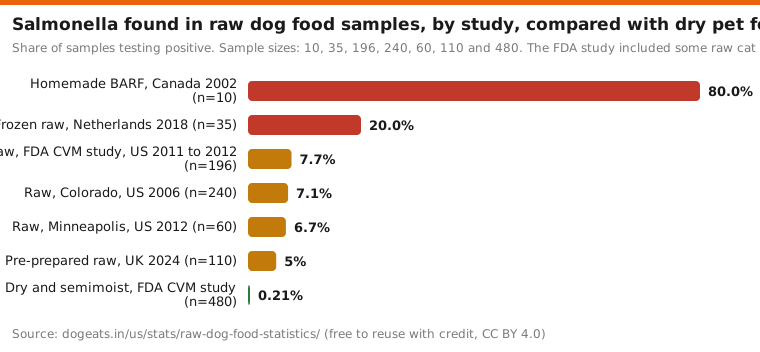
Every lab study of raw pet food we found reported Salmonella in some samples. The share ranges from 5% to 80.0%, depending on the country, the product and the size of the study.
The largest US set is the FDA's own. Its Center for Veterinary Medicine tested 196 raw dog and cat foods bought online from October 2011 to July 2012. Salmonella was in 15 of them, or 7.7%.
Two earlier US studies found similar rates. Colorado State University researchers recovered Salmonella from 17 of 240 raw diet samples (7.1%). A University of Minnesota team found it in 4 of 60 raw diets sold in Minneapolis and St. Paul stores (6.7%).
European numbers run higher. A Utrecht University study of 35 frozen raw diets from eight Dutch brands found Salmonella in 7 (20.0%) and Listeria monocytogenes in 19 (54.3%).
Share of samples testing positive. Sample sizes: 10, 35, 196, 240, 60, 110 and 480. The FDA study included some raw cat foods. Morgan 2024 reports a rounded 5%.
Show the numbers
| Label | % |
|---|---|
| Homemade BARF, Canada 2002 (n=10) | 80.0% |
| Frozen raw, Netherlands 2018 (n=35) | 20.0% |
| Raw, FDA CVM study, US 2011 to 2012 (n=196) | 7.7% |
| Raw, Colorado, US 2006 (n=240) | 7.1% |
| Raw, Minneapolis, US 2012 (n=60) | 6.7% |
| Pre-prepared raw, UK 2024 (n=110) | 5% |
| Dry and semimoist, FDA CVM study (n=480) | 0.21% |
Embed this chart
| Study | Country | Raw samples | Salmonella (%) | Other findings |
|---|---|---|---|---|
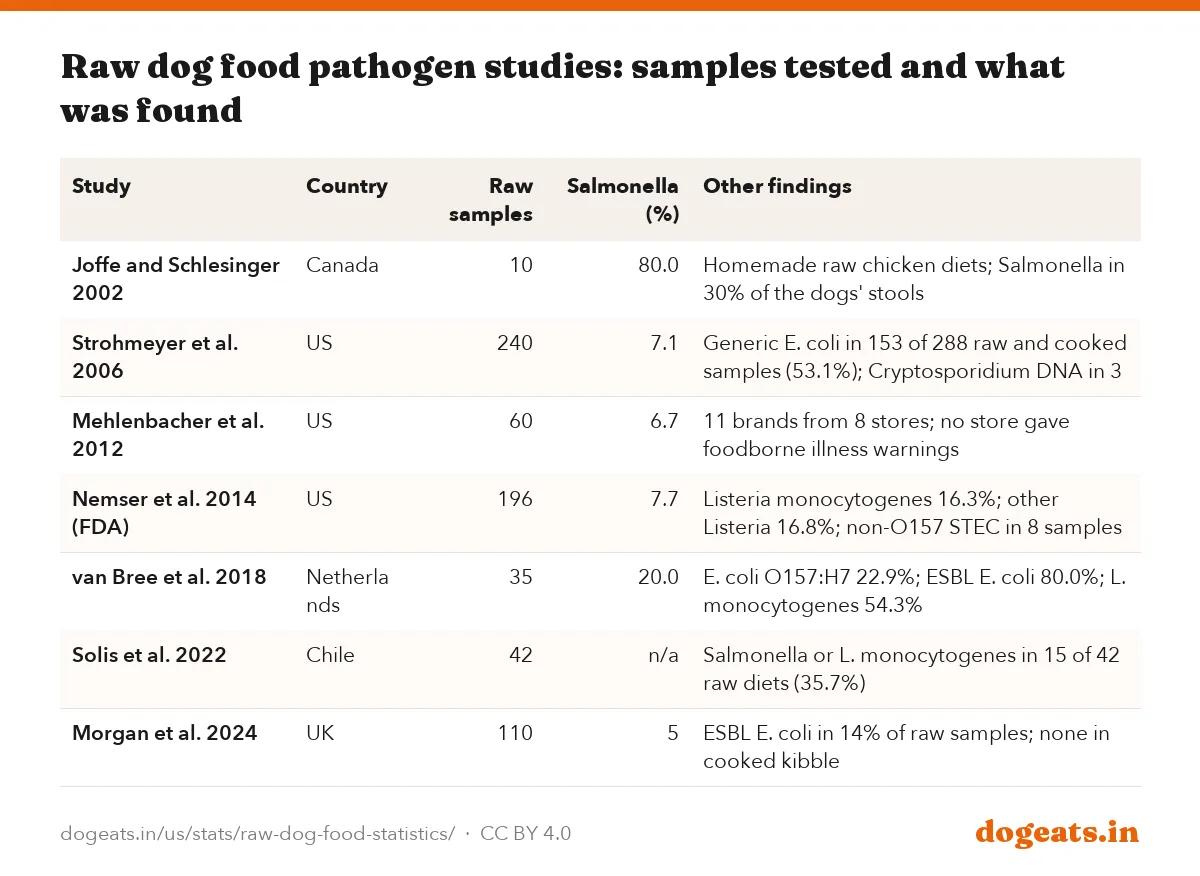
| Joffe and Schlesinger 2002 | Canada | 10 | 80.0 | Homemade raw chicken diets; Salmonella in 30% of the dogs' stools |
| Strohmeyer et al. 2006 | US | 240 | 7.1 | Generic E. coli in 153 of 288 raw and cooked samples (53.1%); Cryptosporidium DNA in 3 |
| Mehlenbacher et al. 2012 | US | 60 | 6.7 | 11 brands from 8 stores; no store gave foodborne illness warnings |
| Nemser et al. 2014 (FDA) | US | 196 | 7.7 | Listeria monocytogenes 16.3%; other Listeria 16.8%; non-O157 STEC in 8 samples |
| van Bree et al. 2018 | Netherlands | 35 | 20.0 | E. coli O157:H7 22.9%; ESBL E. coli 80.0%; L. monocytogenes 54.3% |
| Solis et al. 2022 | Chile | 42 | n/a | Salmonella or L. monocytogenes in 15 of 42 raw diets (35.7%) |
| Morgan et al. 2024 | UK | 110 | 5 | ESBL E. coli in 14% of raw samples; none in cooked kibble |
Sample size matters here. The 80% figure comes from just 10 homemade meals. The FDA, Colorado and Minnesota studies tested 496 raw samples between them, and all three landed between 6% and 8%.
Dry food is the comparison point. The FDA found Salmonella in 1 of 480 dry and semimoist samples, a dry cat food. The Colorado team found none in the 48 dry and canned dog food samples it cultured.
For a history of how these findings turn into product actions, see our US pet food recalls report.
What the FDA's raw pet food testing found
The FDA study ran from October 2010 to July 2012. Six labs in the Food Emergency Response Network did the testing for the agency's Veterinary Laboratory Investigation and Response Network.
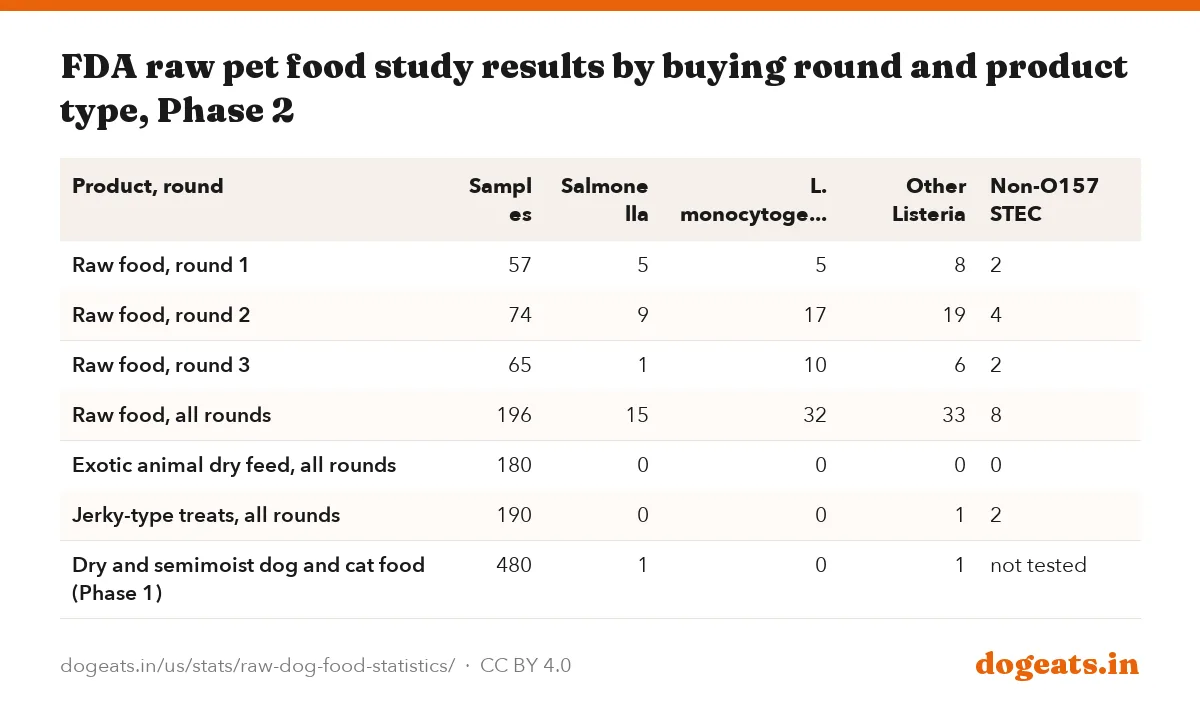
Phase 1 covered 480 dry and semimoist dog and cat foods bought in local stores. Phase 2 covered raw foods, exotic animal feeds and jerky-type treats bought online. Raw foods were mostly frozen tubes of ground meat.
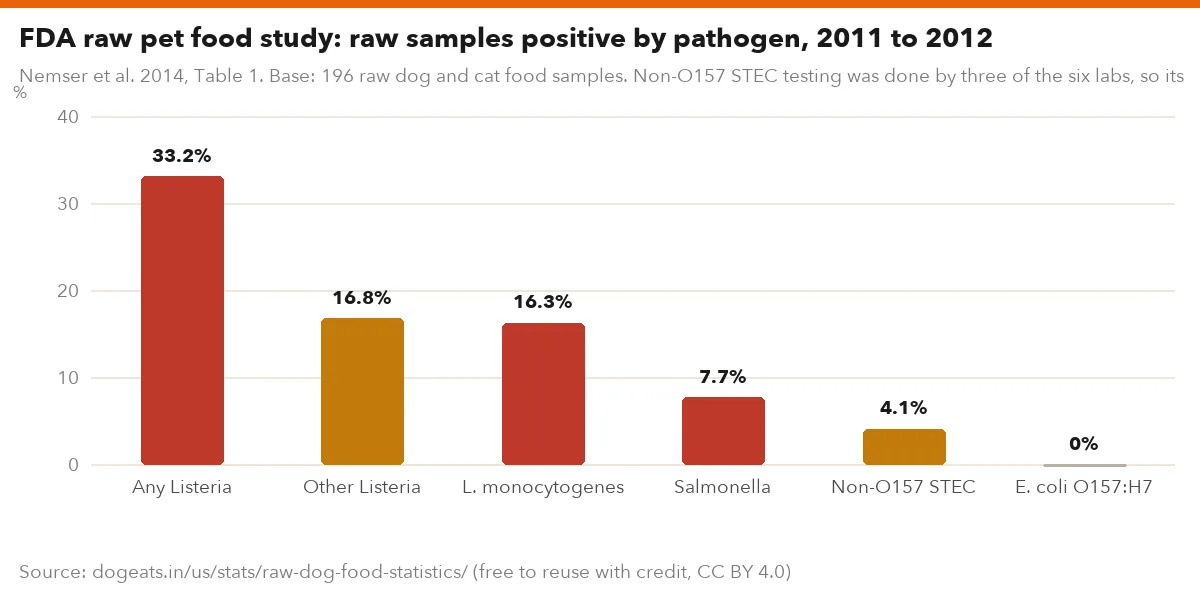
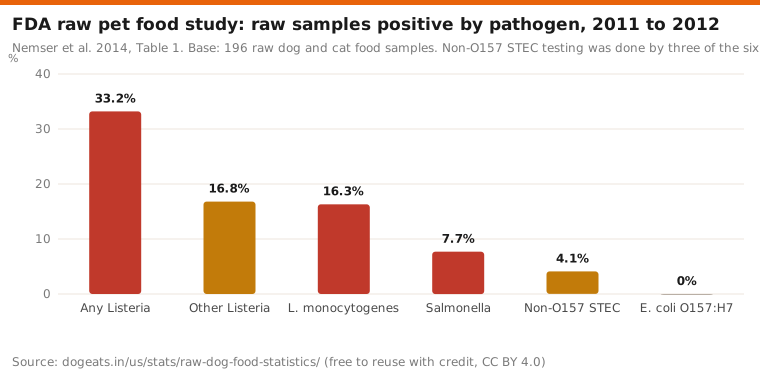
Raw food carried almost every positive result. Listeria monocytogenes was in 32 raw samples (16.3%), and other Listeria species were in 33 more (16.8%). Exotic dry feeds had no positives at all.
Listeria monocytogenes showed up 2.1 times as often as Salmonella in the raw samples. Rates also moved a lot between buying rounds, from 8.8% to 23.0% for L. monocytogenes.
Nemser et al. 2014, Table 1. Base: 196 raw dog and cat food samples. Non-O157 STEC testing was done by three of the six labs, so its true rate may be higher.
Show the numbers
| Label | % |
|---|---|
| Any Listeria | 33.2% |
| Other Listeria | 16.8% |
| L. monocytogenes | 16.3% |
| Salmonella | 7.7% |
| Non-O157 STEC | 4.1% |
| E. coli O157:H7 | 0% |
Embed this chart
| Product, round | Samples | Salmonella | L. monocytogenes | Other Listeria | Non-O157 STEC |
|---|---|---|---|---|---|
| Raw food, round 1 | 57 | 5 | 5 | 8 | 2 |
| Raw food, round 2 | 74 | 9 | 17 | 19 | 4 |
| Raw food, round 3 | 65 | 1 | 10 | 6 | 2 |
| Raw food, all rounds | 196 | 15 | 32 | 33 | 8 |
| Exotic animal dry feed, all rounds | 180 | 0 | 0 | 0 | 0 |
| Jerky-type treats, all rounds | 190 | 0 | 0 | 1 | 2 |
| Dry and semimoist dog and cat food (Phase 1) | 480 | 1 | 0 | 1 | not tested |
The paper's Table 1 adds up to 566 Phase 2 samples, while its text says 576. The FDA's summary page lists 190 exotic feed samples where the table shows 180. The raw count of 196 is the same in both.
The study was not regulatory surveillance. Brands were blinded, and no recalls followed from it. The FDA used it to plan later testing and to warn consumers.
FDA advisories and recalls involving raw dog food
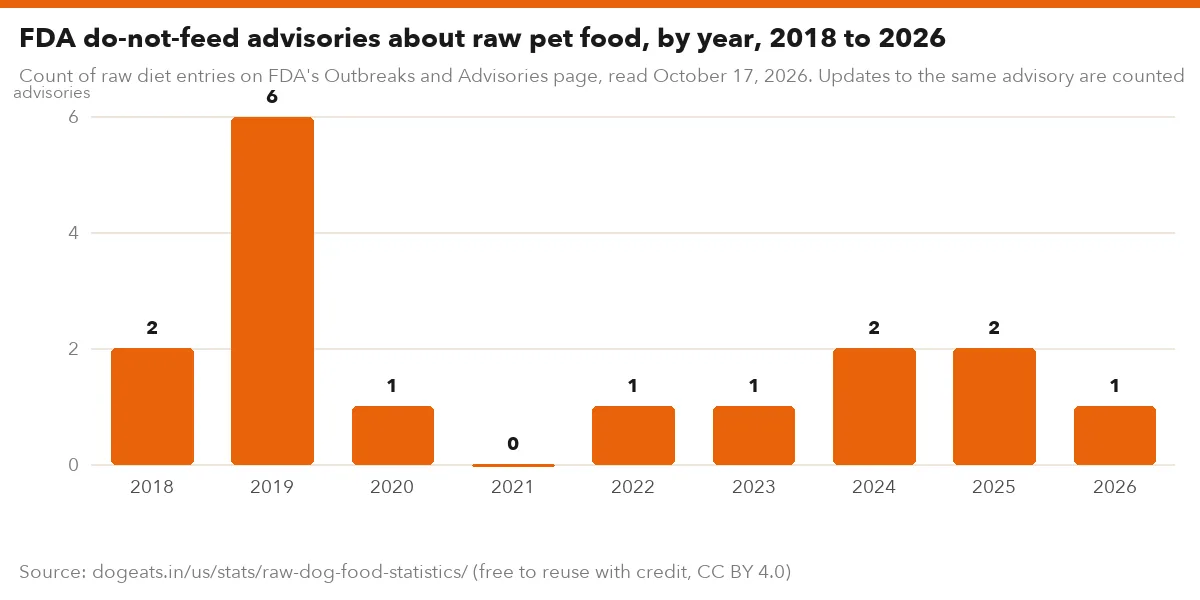
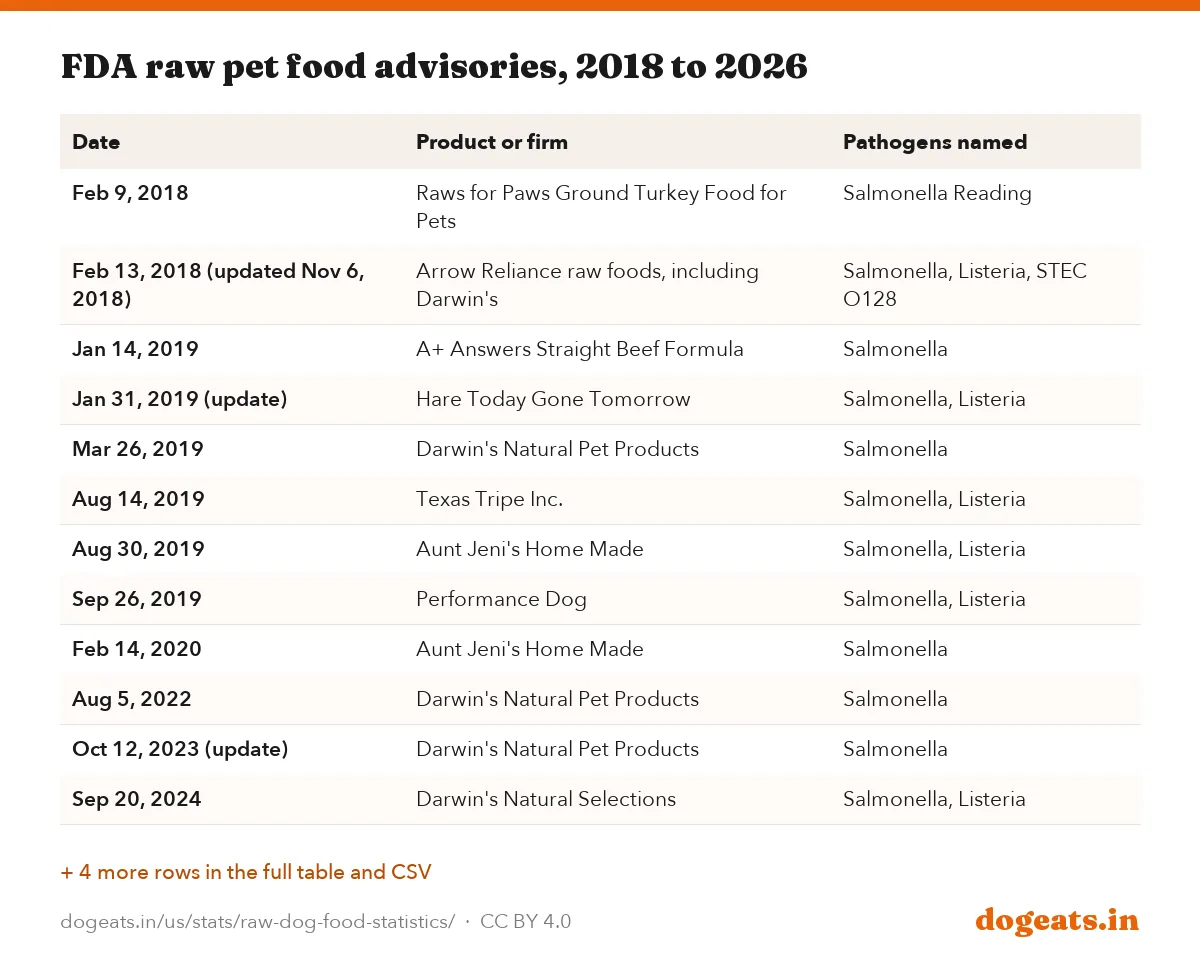
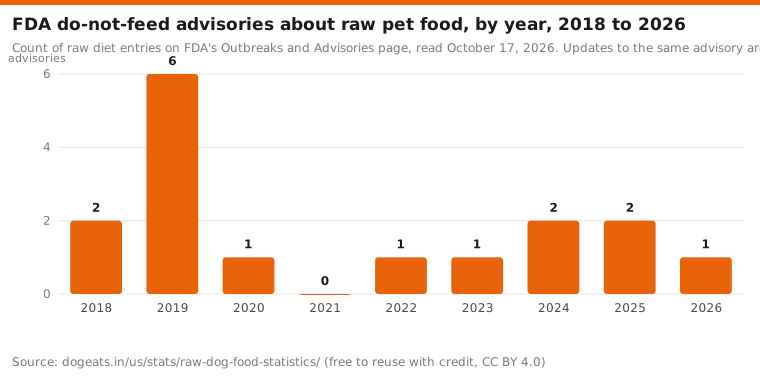
The FDA has posted 16 do-not-feed advisories about raw pet diets since February 2018, by our count of its Outbreaks and Advisories page. The busiest year was 2019, with 6.
One company dominates the list. Darwin's Natural Pet Products, made by Arrow Reliance, appears in 7 of the 16 advisories, from 2018 to September 2025.
Salmonella is named in all 16 advisories and Listeria in 9. Two also named Shiga toxin-producing E. coli: O128 for Arrow Reliance in 2018 and O157:H7 for Darwin's in July 2025.
The newest case is Raaw Energy, a frozen raw dog food. Connecticut and New Jersey agriculture labs found pathogens in all eight unopened samples they tested. By May 22, 2026, the recall had grown to more than 180 lots.
Count of raw diet entries on FDA's Outbreaks and Advisories page, read October 17, 2026. Updates to the same advisory are counted once, by first date shown. 2026 runs to October 17.
Show the numbers
| Label | advisories |
|---|---|
| 2018 | 2 |
| 2019 | 6 |
| 2020 | 1 |
| 2021 | 0 |
| 2022 | 1 |
| 2023 | 1 |
| 2024 | 2 |
| 2025 | 2 |
| 2026 | 1 |
Embed this chart
| Date | Product or firm | Pathogens named |
|---|---|---|
| Feb 9, 2018 | Raws for Paws Ground Turkey Food for Pets | Salmonella Reading |
| Feb 13, 2018 (updated Nov 6, 2018) | Arrow Reliance raw foods, including Darwin's | Salmonella, Listeria, STEC O128 |
| Jan 14, 2019 | A+ Answers Straight Beef Formula | Salmonella |
| Jan 31, 2019 (update) | Hare Today Gone Tomorrow | Salmonella, Listeria |
| Mar 26, 2019 | Darwin's Natural Pet Products | Salmonella |
| Aug 14, 2019 | Texas Tripe Inc. | Salmonella, Listeria |
| Aug 30, 2019 | Aunt Jeni's Home Made | Salmonella, Listeria |
| Sep 26, 2019 | Performance Dog | Salmonella, Listeria |
| Feb 14, 2020 | Aunt Jeni's Home Made | Salmonella |
| Aug 5, 2022 | Darwin's Natural Pet Products | Salmonella |
| Oct 12, 2023 (update) | Darwin's Natural Pet Products | Salmonella |
| Sep 20, 2024 | Darwin's Natural Selections | Salmonella, Listeria |
| Sep 23, 2024 | Answers Pet Food | Salmonella, Listeria |
| Jul 29, 2025 | Darwin's Natural Pet Products | E. coli O157:H7, Salmonella |
| Sep 24, 2025 | Darwin's BioLogics | Salmonella, Listeria |
| Jan 23, 2026 | Raaw Energy | Listeria, Salmonella, Campylobacter |
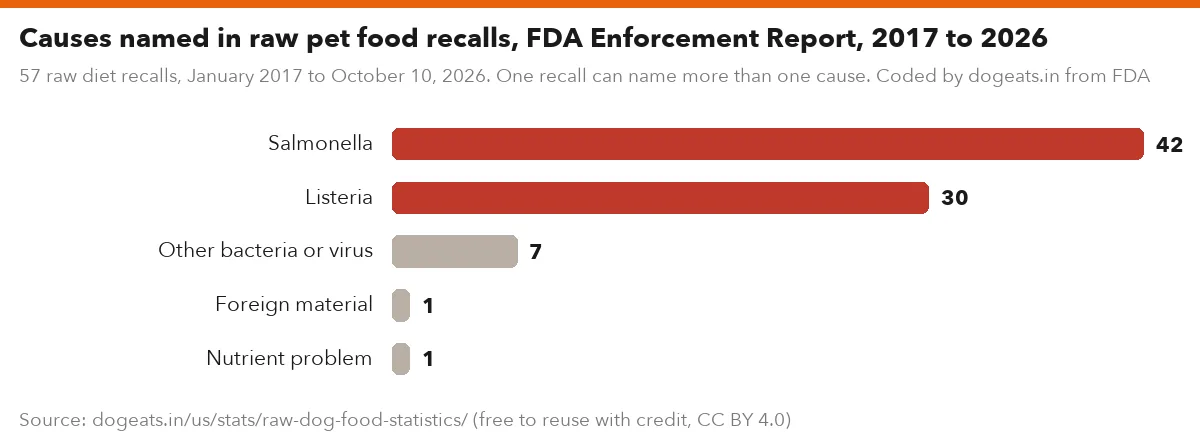
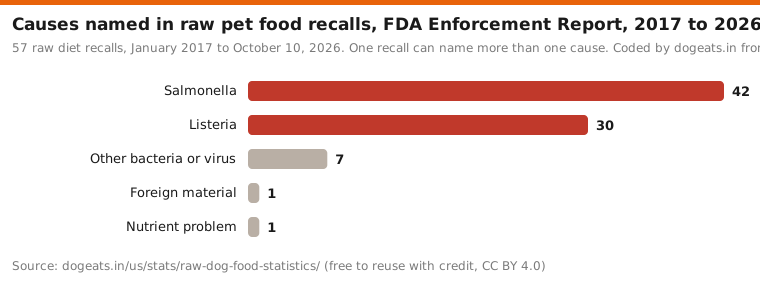
57 raw diet recalls, January 2017 to October 10, 2026. One recall can name more than one cause. Coded by dogeats.in from FDA Enforcement Report records.
Show the numbers
| Label | recalls |
|---|---|
| Salmonella | 42 |
| Listeria | 30 |
| Other bacteria or virus | 7 |
| Foreign material | 1 |
| Nutrient problem | 1 |
Embed this chart
| Who the product was for | Raw recalls | Share (%) |
|---|---|---|
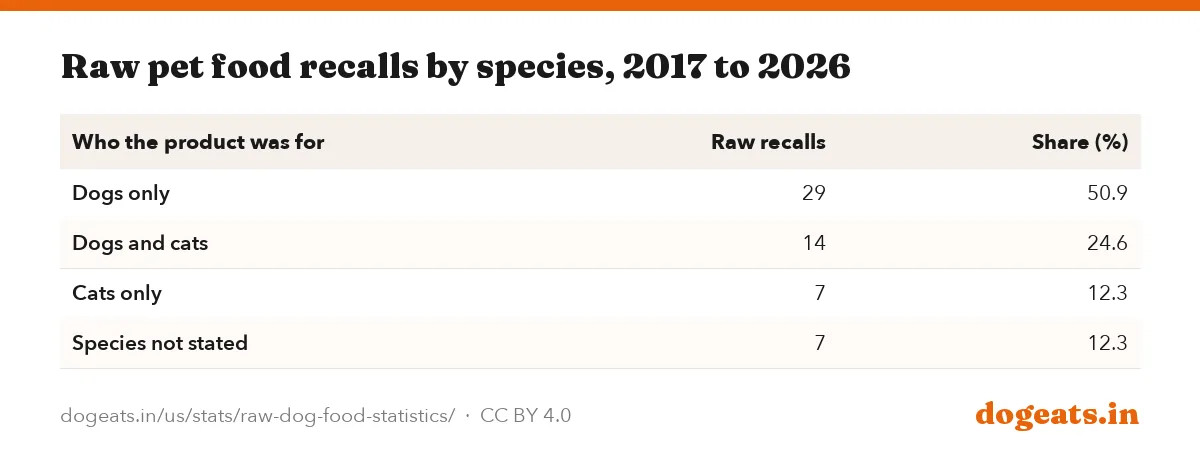
| Dogs only | 29 | 50.9 |
| Dogs and cats | 14 | 24.6 |
| Cats only | 7 | 12.3 |
| Species not stated | 7 | 12.3 |
Recalls tell the same story from another angle. FDA Enforcement Report records list 57 raw diet recalls of dog and cat food from 2017 to October 10, 2026. They make up 37.0% of all 154 pet food recalls in the period.
Salmonella was named in 73.7% of raw recalls and Listeria in 52.6%. 53 of the 57 were Class I, the FDA's most serious category. 43 were for dogs or for dogs and cats (75.4%).
Raw recalls have picked up again: 9 in 2025 and 10 in 2026 so far, after 1 in 2023. Bird flu is a newer worry. On January 17, 2025, the FDA told cat and dog food makers using uncooked poultry or cattle materials to add H5N1 to their food safety plans.
The FDA linked H5N1 cases in cats in California, Colorado, Oregon and Washington to contaminated food. It said the virus had not been found in US dogs.
Raw-fed dogs shed more Salmonella and resistant E. coli
Contaminated food is one risk. Dogs that eat it can also carry the bacteria and pass them in their stool, often without looking sick.
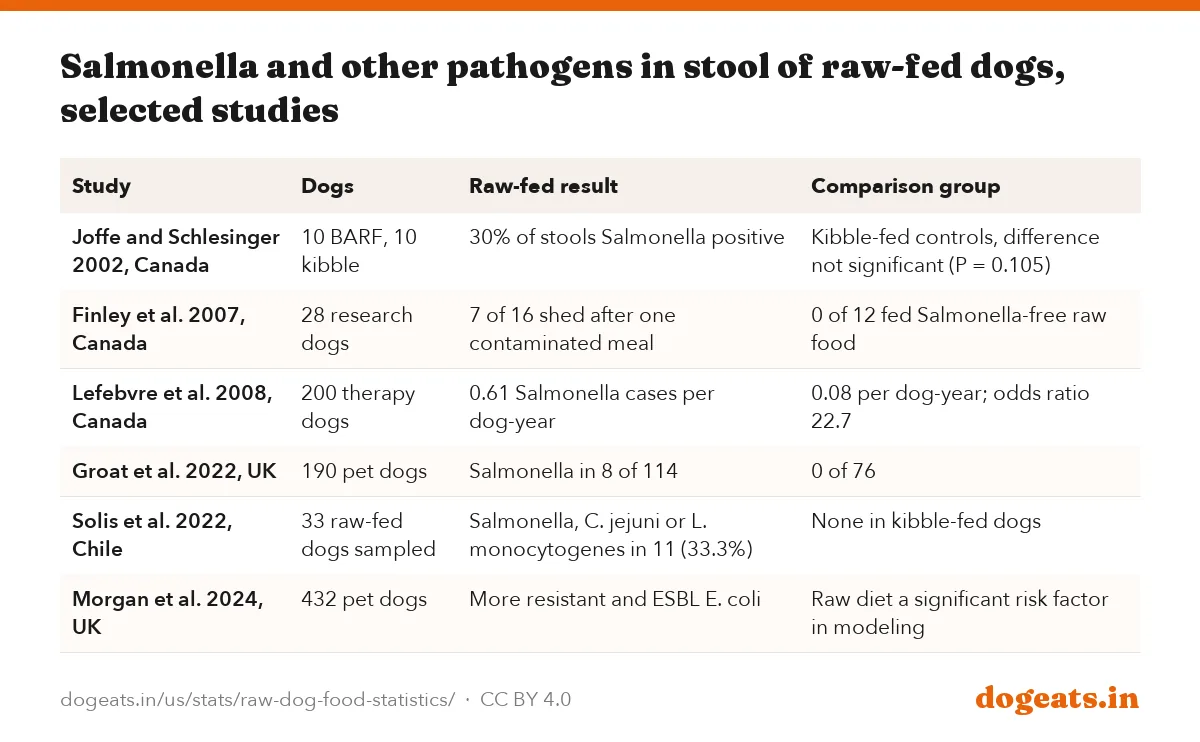
In a feeding trial run by the Public Health Agency of Canada, 7 of 16 dogs fed one Salmonella-contaminated raw meal shed Salmonella within 1 to 7 days (43.8%). None of the 12 dogs fed clean raw food did, and no dog showed signs of illness.
A University of Guelph study followed 200 therapy dogs for a year. The 40 dogs fed raw meat shed Salmonella at 0.61 cases per dog-year, against 0.08 for the rest. After adjusting for other factors, raw-fed dogs had 22.7 times the odds of a positive test.
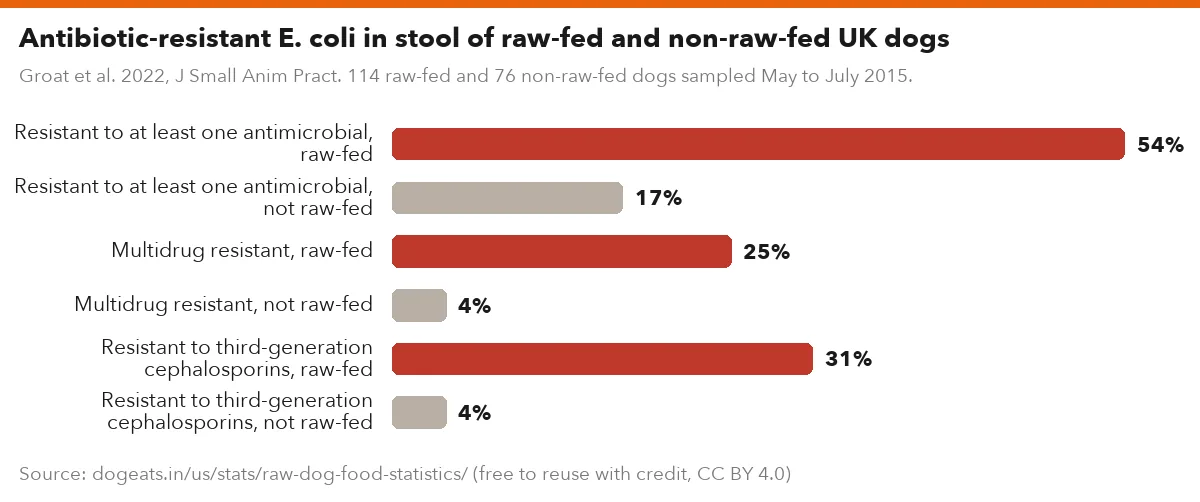
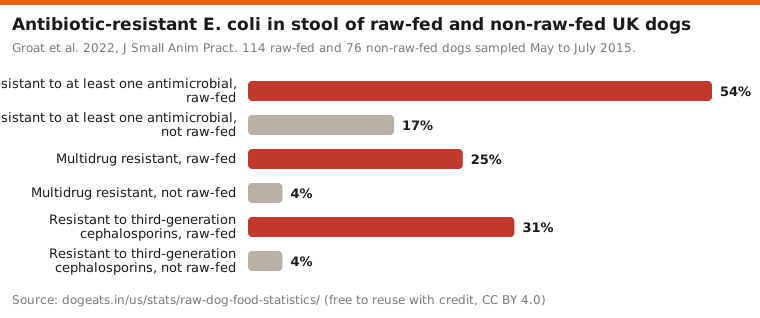
A University of Liverpool study found Salmonella in 8 of 114 raw-fed UK dogs (7.0%) and in none of 76 dogs on other diets. Resistant E. coli was also far more common in the raw-fed group.
Groat et al. 2022, J Small Anim Pract. 114 raw-fed and 76 non-raw-fed dogs sampled May to July 2015.
Show the numbers
| Label | % |
|---|---|
| Resistant to at least one antimicrobial, raw-fed | 54% |
| Resistant to at least one antimicrobial, not raw-fed | 17% |
| Multidrug resistant, raw-fed | 25% |
| Multidrug resistant, not raw-fed | 4% |
| Resistant to third-generation cephalosporins, raw-fed | 31% |
| Resistant to third-generation cephalosporins, not raw-fed | 4% |
Embed this chart
| Study | Dogs | Raw-fed result | Comparison group |
|---|---|---|---|
| Joffe and Schlesinger 2002, Canada | 10 BARF, 10 kibble | 30% of stools Salmonella positive | Kibble-fed controls, difference not significant (P = 0.105) |
| Finley et al. 2007, Canada | 28 research dogs | 7 of 16 shed after one contaminated meal | 0 of 12 fed Salmonella-free raw food |
| Lefebvre et al. 2008, Canada | 200 therapy dogs | 0.61 Salmonella cases per dog-year | 0.08 per dog-year; odds ratio 22.7 |
| Groat et al. 2022, UK | 190 pet dogs | Salmonella in 8 of 114 | 0 of 76 |
| Solis et al. 2022, Chile | 33 raw-fed dogs sampled | Salmonella, C. jejuni or L. monocytogenes in 11 (33.3%) | None in kibble-fed dogs |
| Morgan et al. 2024, UK | 432 pet dogs | More resistant and ESBL E. coli | Raw diet a significant risk factor in modeling |
The resistance gap in the Liverpool data is wide. Multidrug-resistant E. coli was found in 25% of raw-fed dogs and 4% of the others. For third-generation cephalosporin resistance the split was 31% against 4%.
A larger 2024 follow-up from the same group sampled 432 UK dogs and reached the same result. Raw meat diets were a significant risk factor for carrying resistant E. coli.
Can raw dog food make people sick?
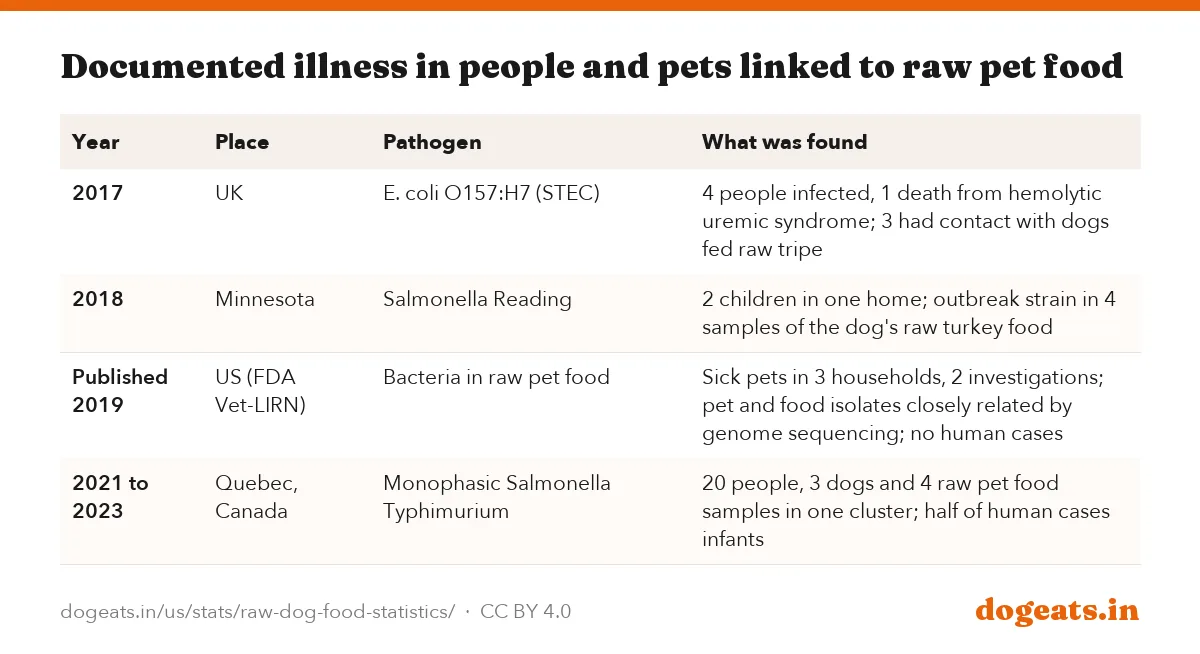
Yes. Several documented cases were traced by genome sequencing. The best documented clusters involve Salmonella and Shiga toxin-producing E. coli, and young children appear in two of them.
In February 2018 the FDA linked Raws for Paws Ground Turkey Food for Pets to Salmonella Reading in two children in one Minnesota household. The same strain was in four samples of the food used to feed the family dog.
In Quebec, a 2021 to 2023 cluster of drug-resistant Salmonella included 20 human cases, 3 dogs and 4 raw pet food samples. Half the human cases were infants, and raw-fed dogs were the main source identified.
| Year | Place | Pathogen | What was found |
|---|---|---|---|
| 2017 | UK | E. coli O157:H7 (STEC) | 4 people infected, 1 death from hemolytic uremic syndrome; 3 had contact with dogs fed raw tripe |
| 2018 | Minnesota | Salmonella Reading | 2 children in one home; outbreak strain in 4 samples of the dog's raw turkey food |
| Published 2019 | US (FDA Vet-LIRN) | Bacteria in raw pet food | Sick pets in 3 households, 2 investigations; pet and food isolates closely related by genome sequencing; no human cases |
| 2021 to 2023 | Quebec, Canada | Monophasic Salmonella Typhimurium | 20 people, 3 dogs and 4 raw pet food samples in one cluster; half of human cases infants |
Confirmed cases are rare compared with the number of raw-fed pets. An online survey published in 2021 of 5,611 raw-feeding households in 62 countries found 31 with possible or probable transmission (0.55%), and none confirmed by lab tests.
That survey has limits worth stating. It relied on owners' own reports, recruited people who already fed raw, and one author co-founded a pet food company.
Public health agencies treat the risk as real. The FDA says people who feed raw diets may face a higher risk of Salmonella and Listeria infection.
How many dogs eat raw food in the US?
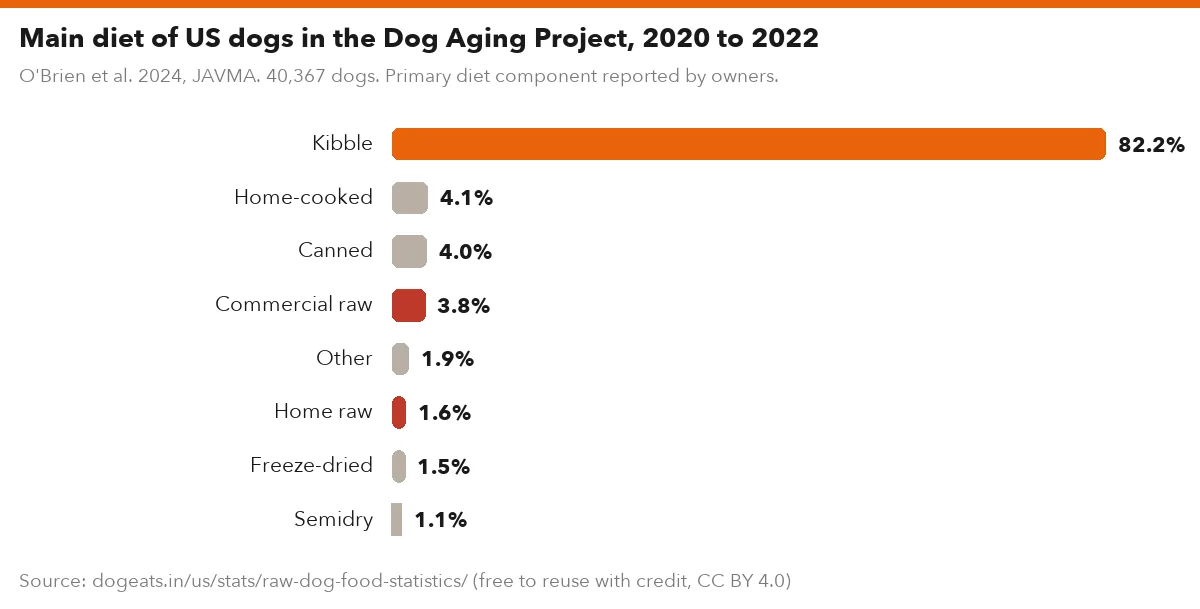
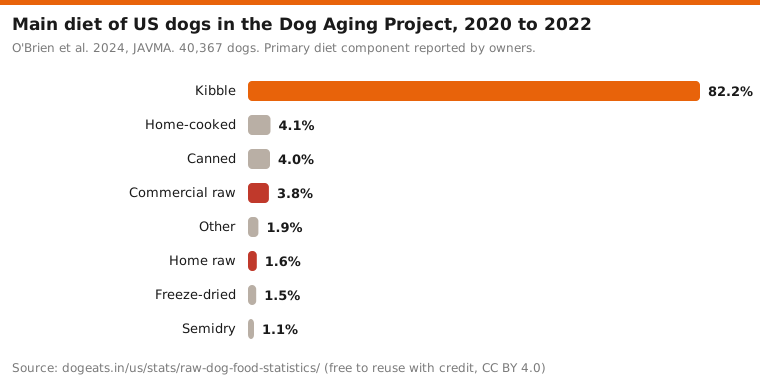
About 1 in 19 US dogs eats raw food as its main diet, based on the largest survey available. In the Dog Aging Project, 2,163 of 40,367 dogs (5.4%) had a commercial or homemade raw main diet from 2020 to 2022.
Kibble dominated, with 33,164 dogs (82.2%). Commercial raw (3.8%) was about as common as canned food (4.0%) or home-cooked food (4.1%).
A second Dog Aging Project analysis of 27,478 dogs put raw feeders at 1,290, or 4.7%. It found commercial raw diets were tied to higher odds of owner-reported respiratory disease (adjusted odds ratio 1.7), a link the authors call hypothesis-generating.
O'Brien et al. 2024, JAVMA. 40,367 dogs. Primary diet component reported by owners.
Show the numbers
| Label | % |
|---|---|
| Kibble | 82.2% |
| Home-cooked | 4.1% |
| Canned | 4.0% |
| Commercial raw | 3.8% |
| Other | 1.9% |
| Home raw | 1.6% |
| Freeze-dried | 1.5% |
| Semidry | 1.1% |
Embed this chart
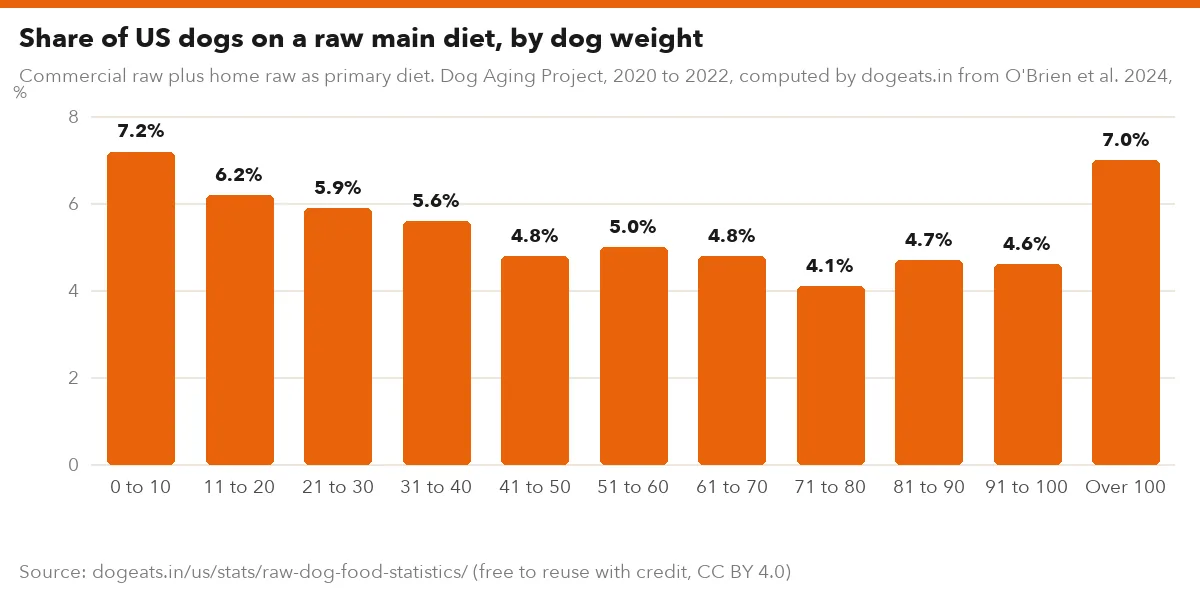
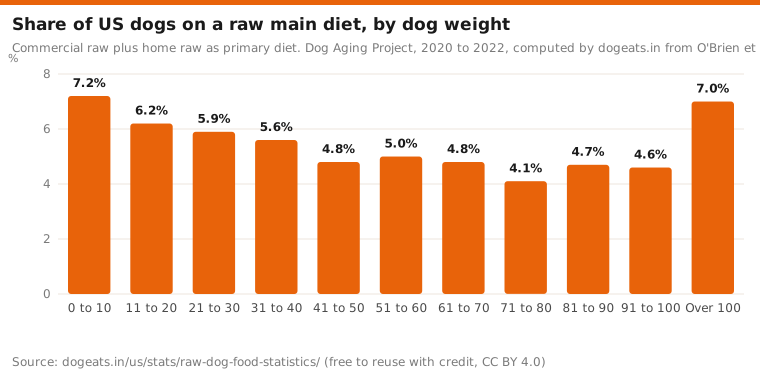
Commercial raw plus home raw as primary diet. Dog Aging Project, 2020 to 2022, computed by dogeats.in from O'Brien et al. 2024, Table 3.
Show the numbers
| Label | % |
|---|---|
| 0 to 10 | 7.2% |
| 11 to 20 | 6.2% |
| 21 to 30 | 5.9% |
| 31 to 40 | 5.6% |
| 41 to 50 | 4.8% |
| 51 to 60 | 5.0% |
| 61 to 70 | 4.8% |
| 71 to 80 | 4.1% |
| 81 to 90 | 4.7% |
| 91 to 100 | 4.6% |
| Over 100 | 7.0% |
Embed this chart
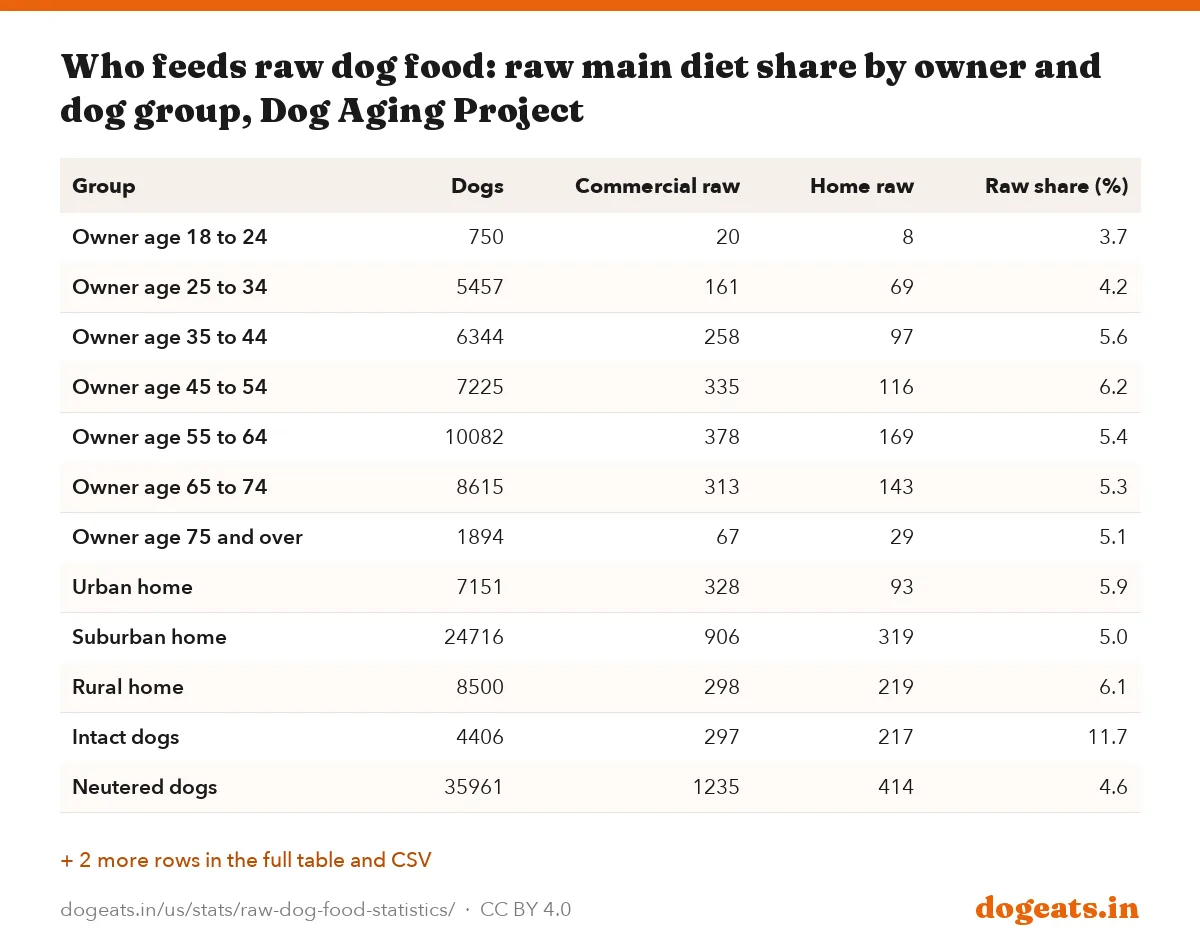
| Group | Dogs | Commercial raw | Home raw | Raw share (%) |
|---|---|---|---|---|
| Owner age 18 to 24 | 750 | 20 | 8 | 3.7 |
| Owner age 25 to 34 | 5457 | 161 | 69 | 4.2 |
| Owner age 35 to 44 | 6344 | 258 | 97 | 5.6 |
| Owner age 45 to 54 | 7225 | 335 | 116 | 6.2 |
| Owner age 55 to 64 | 10082 | 378 | 169 | 5.4 |
| Owner age 65 to 74 | 8615 | 313 | 143 | 5.3 |
| Owner age 75 and over | 1894 | 67 | 29 | 5.1 |
| Urban home | 7151 | 328 | 93 | 5.9 |
| Suburban home | 24716 | 906 | 319 | 5.0 |
| Rural home | 8500 | 298 | 219 | 6.1 |
| Intact dogs | 4406 | 297 | 217 | 11.7 |
| Neutered dogs | 35961 | 1235 | 414 | 4.6 |
| Income Under $20,000 | 742 | 28 | 12 | 5.4 |
| Income $180,000 and over | 7601 | 379 | 106 | 6.4 |
Raw feeding peaks at both ends of the weight scale: 7.2% of dogs under 11 lb and 7.0% of dogs over 100 lb. The low point is 4.1% for dogs of 71 to 80 lb.
Intact dogs were raw-fed at 11.7%, against 4.6% for neutered dogs. Purebreds made up 1,391 of the 2,163 raw-fed dogs (64.3%).
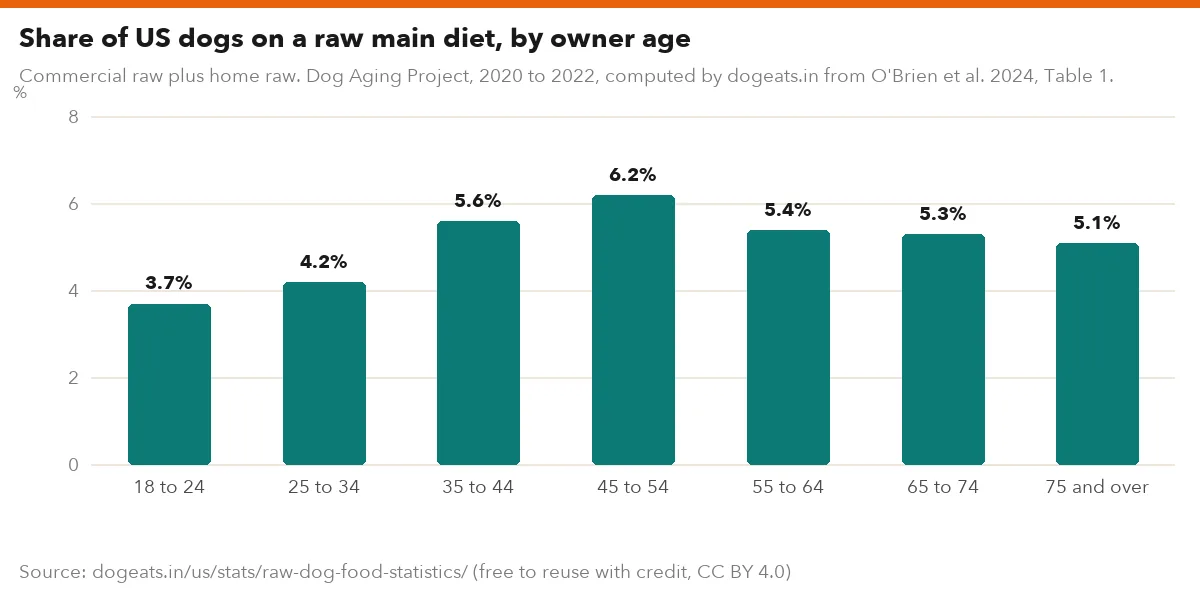
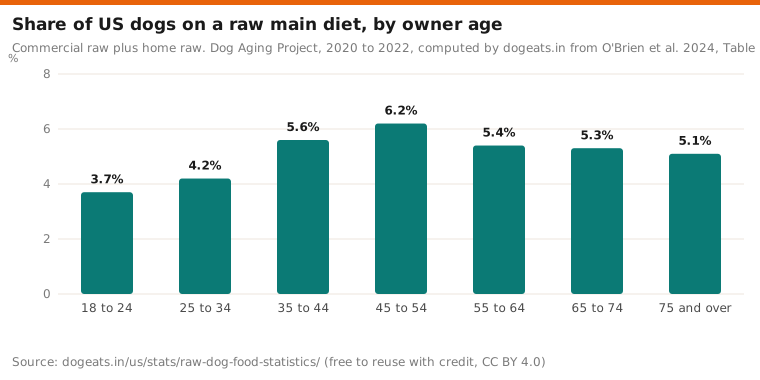
Home raw diets were more than twice as common in rural homes (2.6%) as in suburban ones (1.3%). Owners aged 18 to 24 were the least likely to feed raw, at 3.7%.
Some dog jobs stand out. 17 of 112 agility dogs (15.2%) and 9 of 61 breeding dogs (14.8%) ate raw. 30 of 387 service dogs (7.8%) ate commercial raw, even though the AVMA and AAHA discourage raw feeding.
Broader household numbers are in our US dog ownership statistics.
Raw feeding surveys: what owners do and know
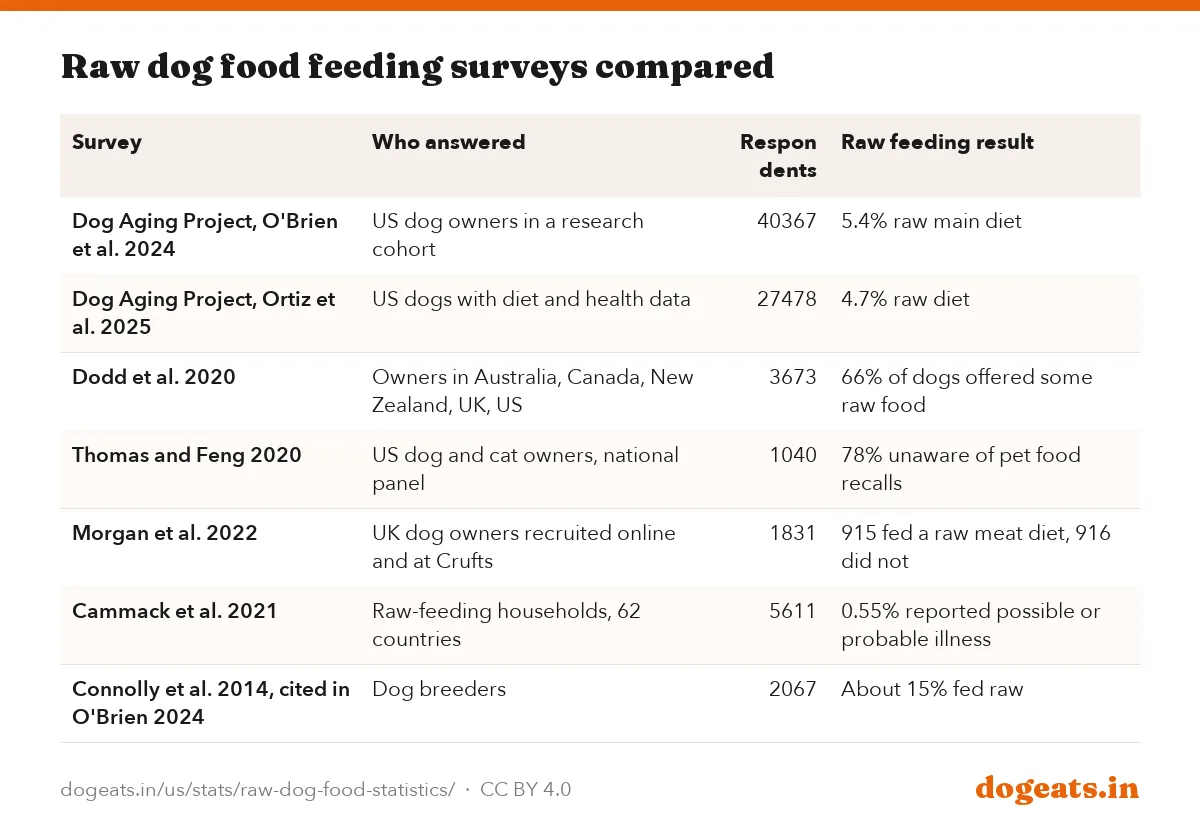
Online surveys of keen owners report much higher raw feeding than the Dog Aging Project. A 2020 study of 3,673 English-speaking owners in five countries found 66% of dogs were offered some raw food.
The same survey found 79% of dogs got conventional commercial food, but only 13% got it exclusively. Those figures describe people who chose to answer a feeding survey, not all owners.
Food safety awareness is low. A 2020 Purdue University survey of 1,040 US dog and cat owners found 78% were unaware of pet food recalls or outbreaks. Only 58% washed their hands after feeding their pets.

Commercial raw plus home raw. Dog Aging Project, 2020 to 2022, computed by dogeats.in from O'Brien et al. 2024, Table 1.
Show the numbers
| Label | % |
|---|---|
| 18 to 24 | 3.7% |
| 25 to 34 | 4.2% |
| 35 to 44 | 5.6% |
| 45 to 54 | 6.2% |
| 55 to 64 | 5.4% |
| 65 to 74 | 5.3% |
| 75 and over | 5.1% |
Embed this chart
| Survey | Who answered | Respondents | Raw feeding result |
|---|---|---|---|
| Dog Aging Project, O'Brien et al. 2024 | US dog owners in a research cohort | 40367 | 5.4% raw main diet |
| Dog Aging Project, Ortiz et al. 2025 | US dogs with diet and health data | 27478 | 4.7% raw diet |
| Dodd et al. 2020 | Owners in Australia, Canada, New Zealand, UK, US | 3673 | 66% of dogs offered some raw food |
| Thomas and Feng 2020 | US dog and cat owners, national panel | 1040 | 78% unaware of pet food recalls |
| Morgan et al. 2022 | UK dog owners recruited online and at Crufts | 1831 | 915 fed a raw meat diet, 916 did not |
| Cammack et al. 2021 | Raw-feeding households, 62 countries | 5611 | 0.55% reported possible or probable illness |
| Connolly et al. 2014, cited in O'Brien 2024 | Dog breeders | 2067 | About 15% fed raw |
Owners who feed raw tend to take advice from different places. In a UK survey of 1,831 owners, raw feeders were less likely to cite a vet and more likely to cite social media, friends and breeders.
Costs differ too, and our cost of owning a dog report tracks US food spending. For specific ingredients, see our pages on raw bones, raw eggs, raw fish and chicken.
What the raw dog food numbers cannot tell you
Contamination studies count bacteria in products. They do not measure how often dogs or people get sick, which depends on handling, storage and the health of those exposed.
Most product studies are small and old. The FDA study is from 2010 to 2012. In the 2012 Minnesota study, 31 of 60 raw diets (51.7%) had already been dehydrated, freeze-dried or high-pressure pasteurized. We found no regular US government testing series for raw pet food.
Recall and advisory counts depend on who looks. Many raw recalls follow state agriculture lab testing. Raw diets may draw more sampling than kibble, which can inflate their share of the 154 recalls.
- Product contamination: FDA CVM 2014, 196 raw samples; van Bree 2018, 35; Strohmeyer 2006, 240.
- Dog shedding: Lefebvre 2008, 200 therapy dogs; Groat 2022, 190 dogs; Finley 2007, 28 dogs.
- Owner behavior: Dog Aging Project, 40,367 dogs; Purdue survey, 1,040 owners.
- Regulatory actions: 16 FDA advisories and 57 FDA Enforcement Report recalls.
Food safety findings for other foods are in our dog food safety statistics. Poisoning calls are covered in our top pet toxins report.
Frequently asked questions
How common is Salmonella in raw dog food?
In the FDA's 2010 to 2012 study, 7.7% of 196 raw dog and cat food samples carried Salmonella. Other studies found 6.7% in Minnesota and 20.0% in the Netherlands.
Does raw dog food have Listeria?
Often. The FDA found Listeria in 65 of 196 raw samples (33.2%), and 32 of those had Listeria monocytogenes, the species that sickens people. A Dutch study found L. monocytogenes in 54.3% of 35 frozen raw diets.
What percentage of dogs eat raw food?
About 5.4% of 40,367 US dogs in the Dog Aging Project ate a raw main diet from 2020 to 2022. Self-selected online surveys report far higher shares, such as 66% of dogs offered some raw food.
Is raw dog food more likely to be recalled?
Raw diets made up 57 of 154 FDA-classified dog and cat food recalls from 2017 to October 2026, or 37.0%. Raw food was the main diet of only 5.4% of dogs in the Dog Aging Project.
Can my dog spread Salmonella from raw food?
Studies say raw-fed dogs can shed it, often without symptoms. In one trial, 7 of 16 dogs shed Salmonella after a single contaminated raw meal. Ask your vet if anyone in your home is very young, old, pregnant or immunocompromised.
What does the FDA say about raw pet food?
The FDA says it is concerned about the public health risk of raw pet food diets. It says owners who feed raw may face a higher risk of Salmonella and Listeria infection.
How many raw dog food advisories has the FDA issued?
16 from February 2018 to January 2026, by our count of the FDA Outbreaks and Advisories page. 7 involved Darwin's products, and the latest covers Raaw Energy.
Has bird flu been found in raw dog food?
The FDA linked H5N1 cases in cats in four western states to contaminated food, and two raw cat foods were recalled over bird flu in 2025. The FDA said in 2025 that it had not been detected in US dogs.
Methodology and limitations
FDA study figures come from Nemser et al. 2014 (Foodborne Pathogens and Disease), read in full on PubMed Central on October 16, 2026, and from the FDA summary page. We summed Table 1 by product type and computed shares on the 196 raw samples.
Other study figures come from PubMed abstracts and full texts opened October 16 and 17, 2026. Where a paper gave counts, we computed percentages from them. Where it gave only a percentage, we used it as published.
Advisory counts come from the FDA Outbreaks and Advisories page, read October 17, 2026. We kept entries about raw diets and counted each advisory once, even where the page lists an update separately.
Recall counts reuse our live US pet food recalls report, built from FDA Enforcement Report records from January 2017 to October 10, 2026. Raw status and species were coded by dogeats.in from product descriptions.
Dog Aging Project shares were computed by dogeats.in from the counts in O'Brien et al. 2024, Tables 1 to 3. Raw share means commercial raw plus home raw as the primary diet.
Sources
- Nemser et al. 2014, Investigation of Listeria, Salmonella and toxigenic E. coli in various pet foods (FDA CVM), Raw, dry and treat sample results, 2010 to 2012
- FDA, Get the Facts: Raw Pet Food Diets Can Be Dangerous to You and Your Pet, FDA position and summary table of the CVM study
- O'Brien et al. 2024, Dog and owner demographics impact dietary choices in Dog Aging Project cohort, JAVMA, Raw main diet shares by dog and owner group
- Also consulted: FDA, Outbreaks and Advisories, FDA advisory, Raaw Energy dog food, January to May 2026, FDA, Salmonella infections linked to Raws for Paws Ground Turkey Food for Pets, FDA CVM Update, H5N1 in cat and dog food safety plans, January 17, 2025, FDA Enforcement Report, Strohmeyer et al. 2006, JAVMA, Mehlenbacher et al. 2012, Zoonoses and Public Health, van Bree et al. 2018, Veterinary Record, Joffe and Schlesinger 2002, Canadian Veterinary Journal, Lefebvre et al. 2008, Zoonoses and Public Health, Finley et al. 2007, Canadian Veterinary Journal, Groat et al. 2022, Journal of Small Animal Practice, Morgan et al. 2024, Frontiers in Microbiology, Morgan et al. 2024, Frontiers in Microbiology (raw and kibble products), Solis et al. 2022, Frontiers in Veterinary Science, Kaindama et al. 2021, Epidemiology and Infection, Bernaquez et al. 2025, Communications Medicine, Jones et al. 2019, Journal of Veterinary Diagnostic Investigation (FDA Vet-LIRN), Cammack et al. 2021, Frontiers in Veterinary Science, Thomas and Feng 2020, Journal of Food Protection, Dodd et al. 2020, Veterinary Record, Ortiz et al. 2025, Journal of Veterinary Internal Medicine, Morgan et al. 2022, Preventive Veterinary Medicine.
Cite, embed and download
This report, its data and its images are free to reuse under a Creative Commons Attribution 4.0 licence. Credit dogeats.in with a link to this page. Every chart has its own embed code, every table has a CSV and an image download, and the images below are ready for social posts, slides and articles.
Cite this report
Link to this report
Every chart and table as an image