Health data · Updated October 2026
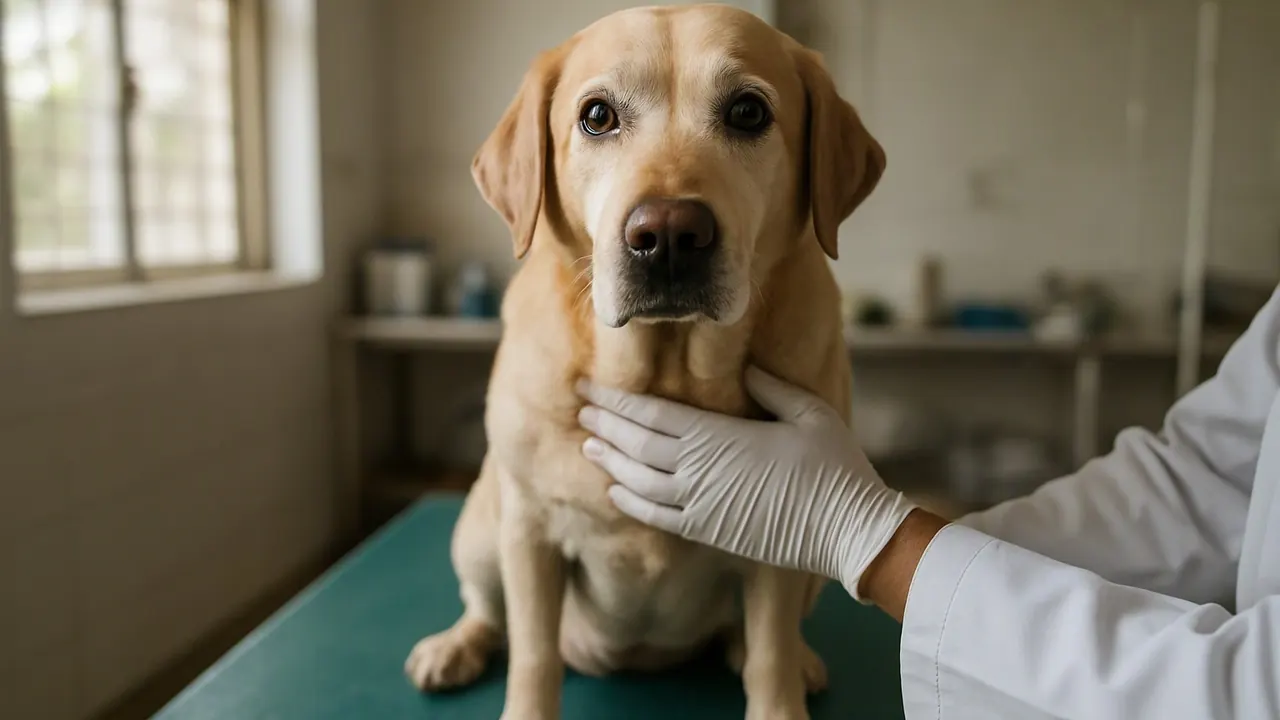
Dog cancer in India: the most common tumours, which dogs get them, and what Indian vet college studies show
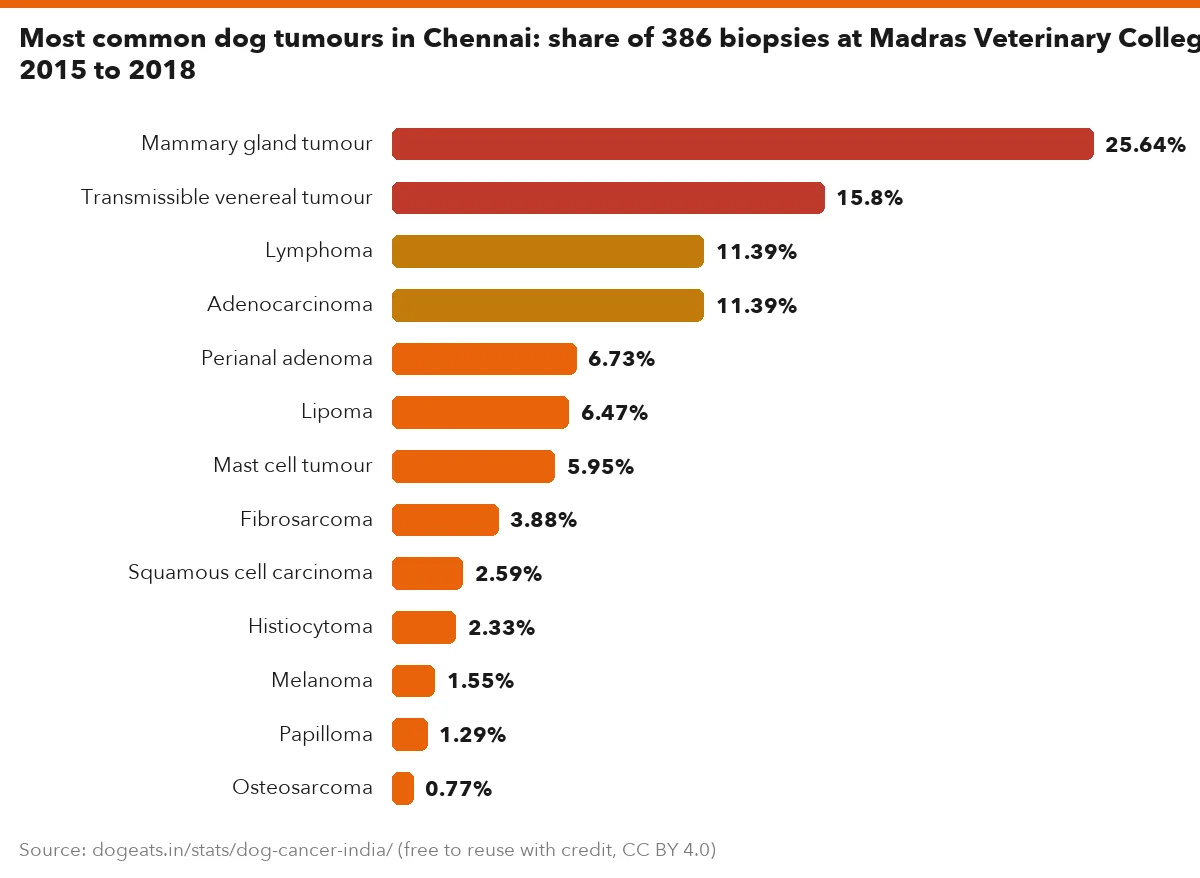
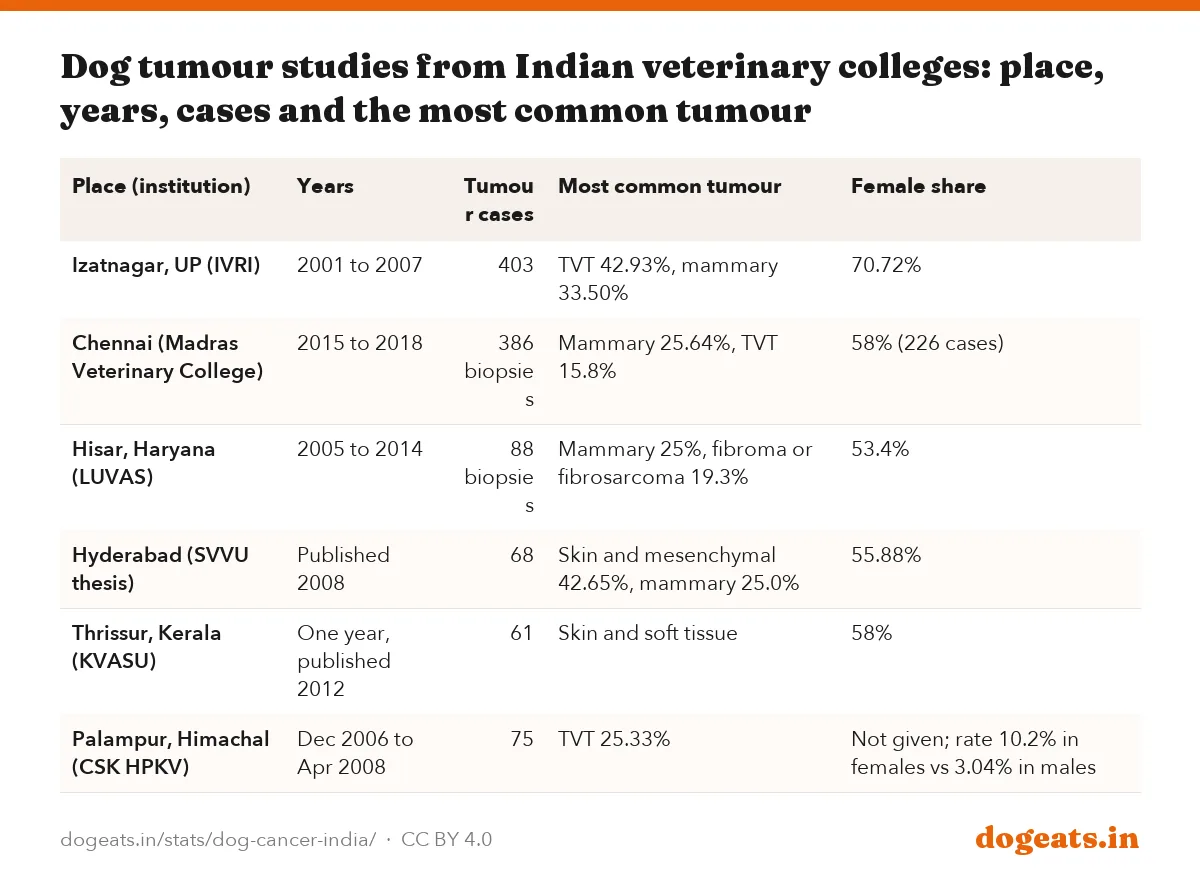
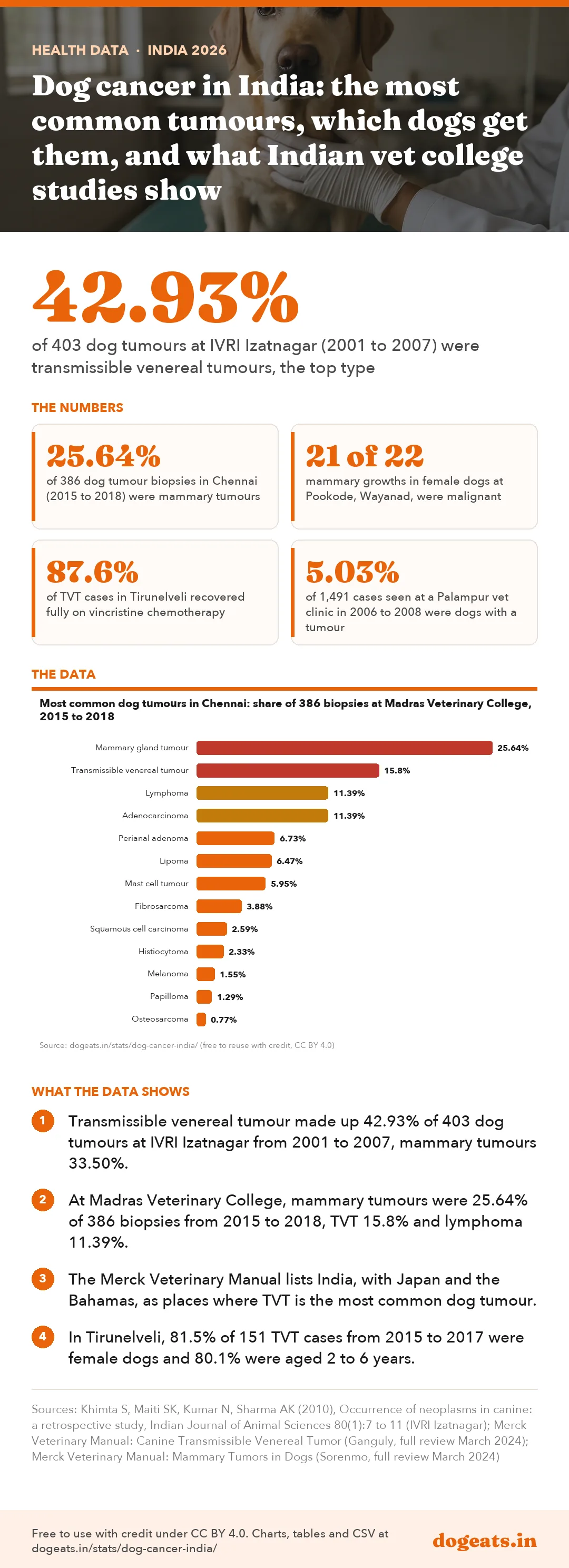
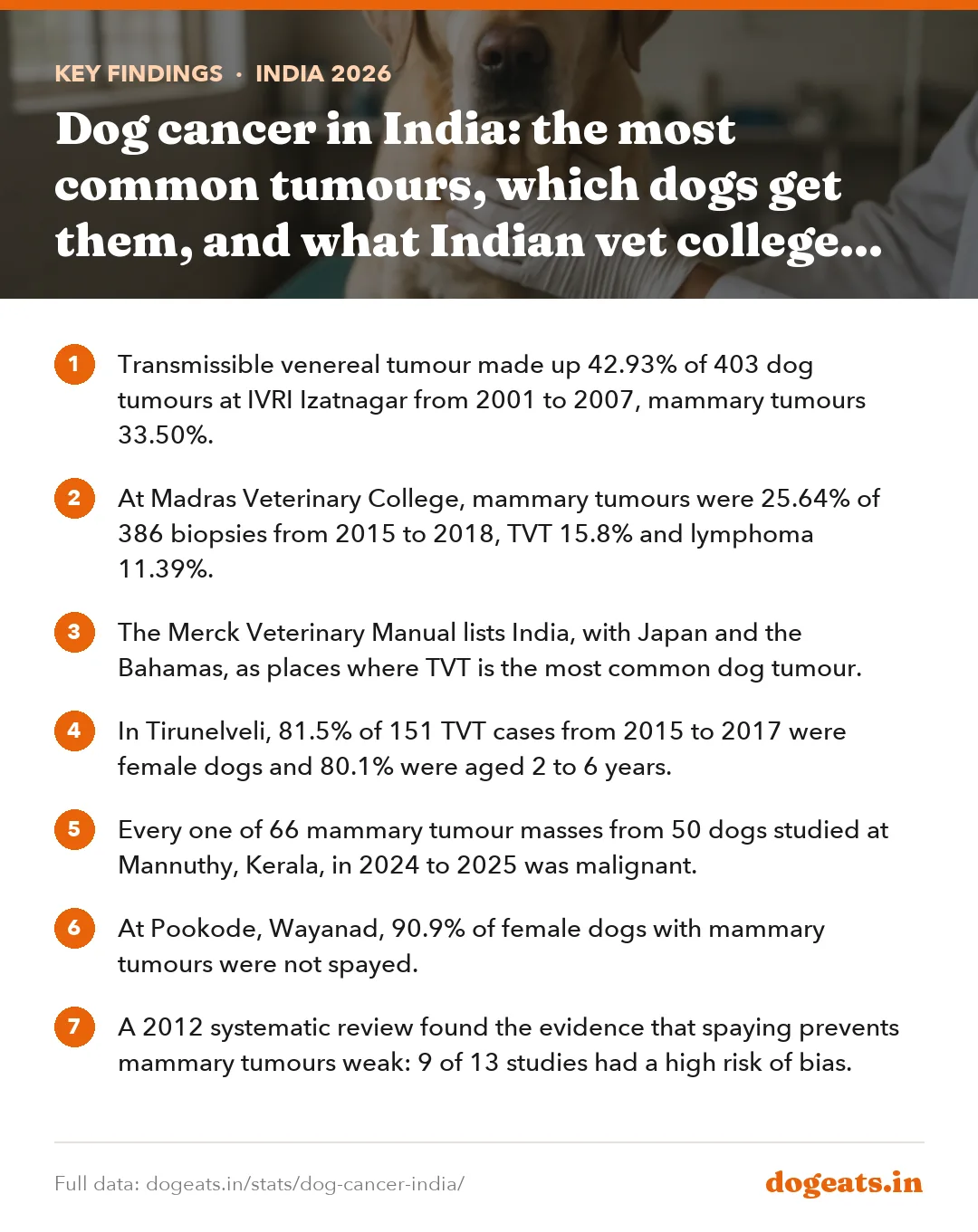
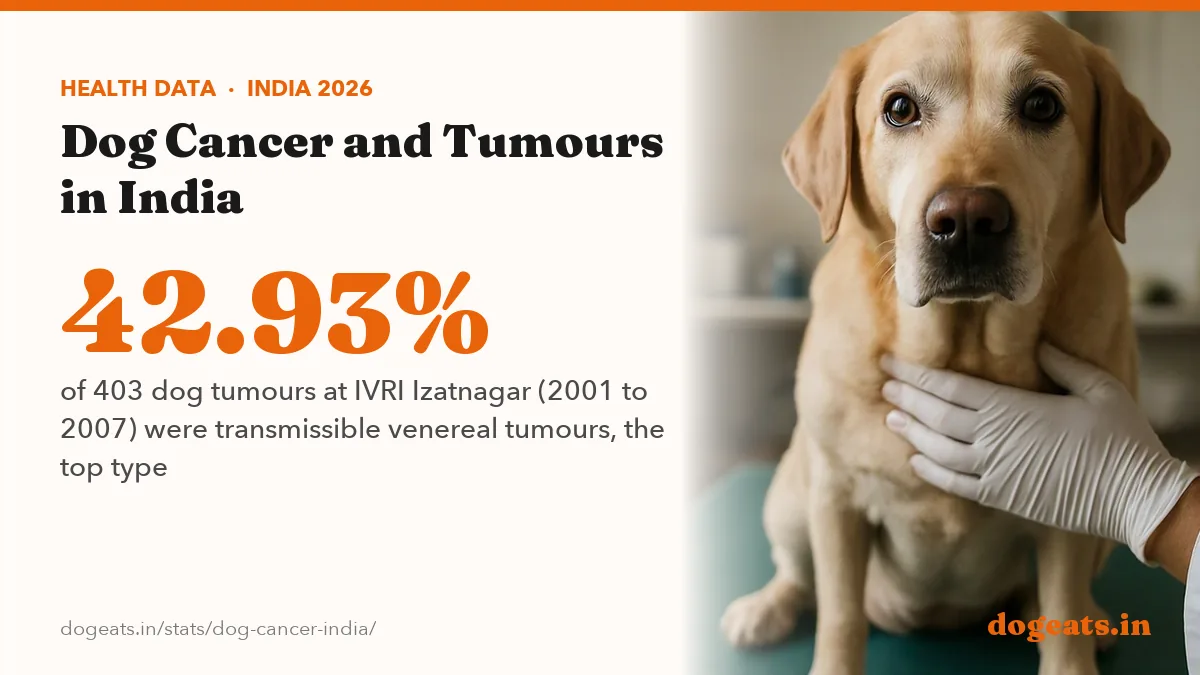
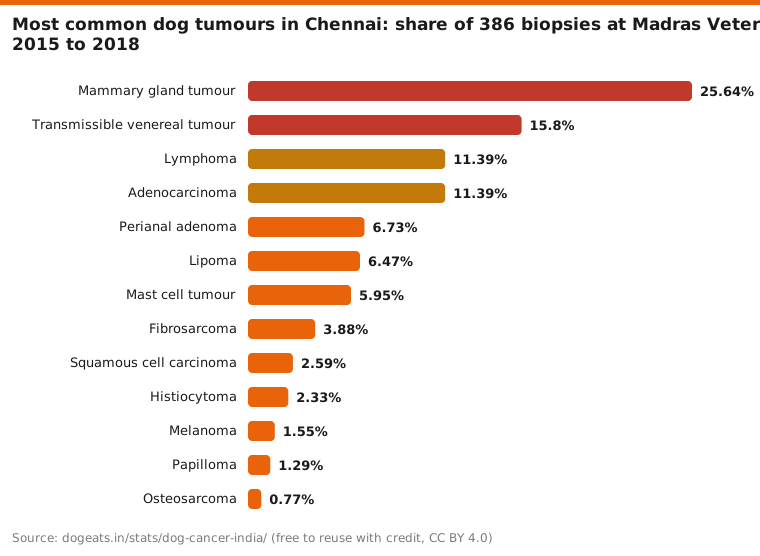
India has no animal cancer registry, so the best data comes from vet college pathology records. In 403 tumour cases at IVRI Izatnagar from 2001 to 2007, transmissible venereal tumour (TVT) made up 42.93% and mammary tumours 33.50%. At Madras Veterinary College from 2015 to 2018, mammary tumours led at 25.64% of 386 biopsies, ahead of TVT at 15.8% and lymphoma at 11.39%. Most dog tumours in these studies turned up between 4 and 10 years of age.
Key findings
- Transmissible venereal tumour made up 42.93% of 403 dog tumours at IVRI Izatnagar from 2001 to 2007, mammary tumours 33.50%.
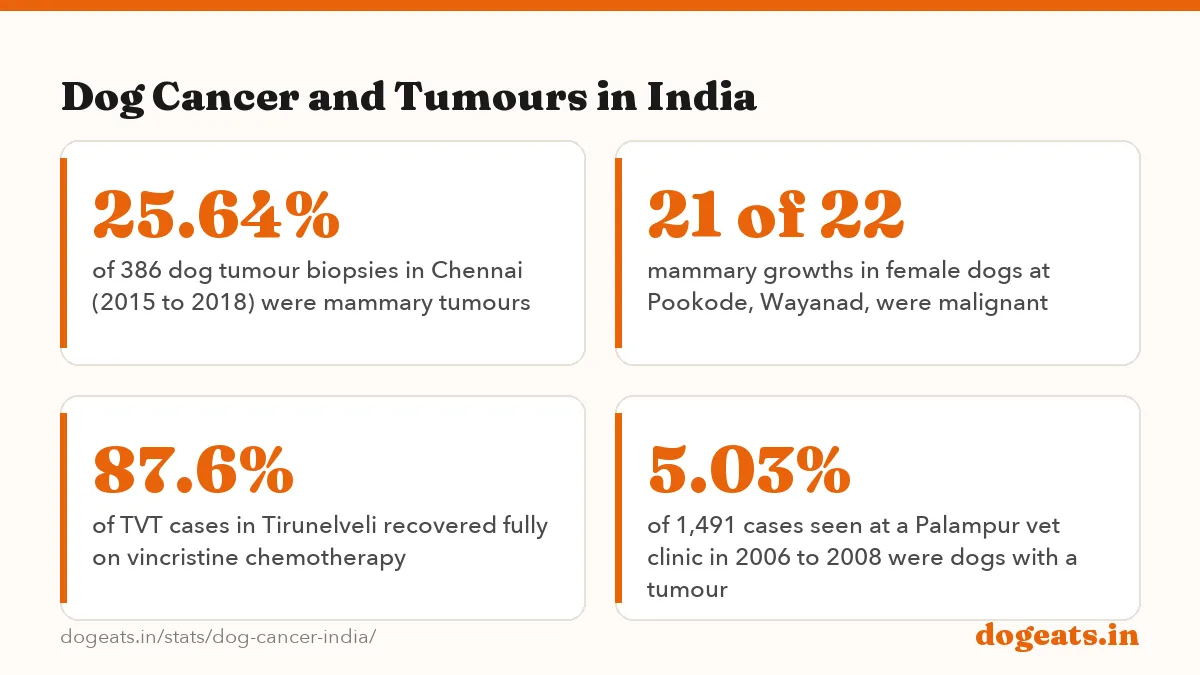
- At Madras Veterinary College, mammary tumours were 25.64% of 386 biopsies from 2015 to 2018, TVT 15.8% and lymphoma 11.39%.
- The Merck Veterinary Manual lists India, with Japan and the Bahamas, as places where TVT is the most common dog tumour.
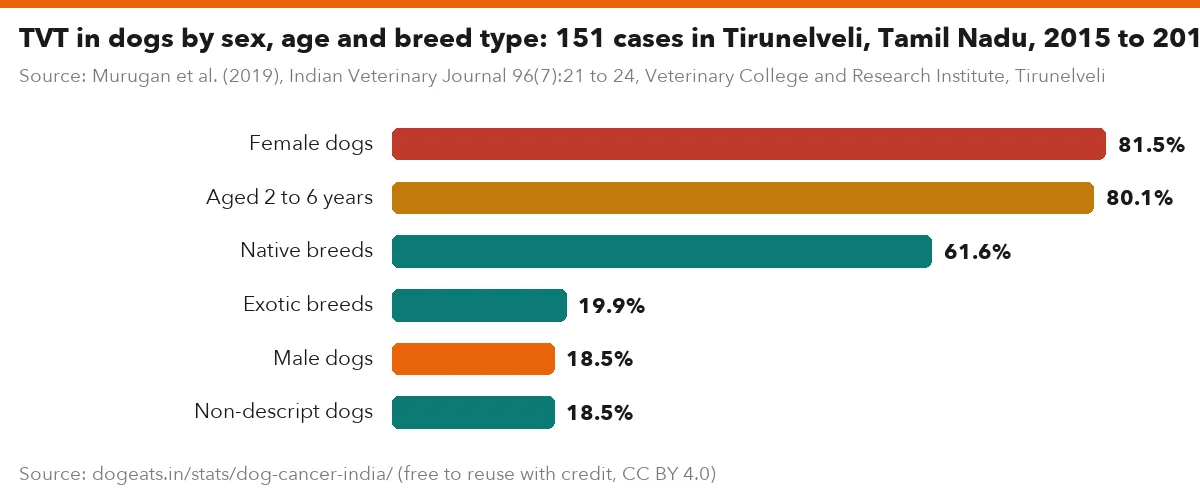
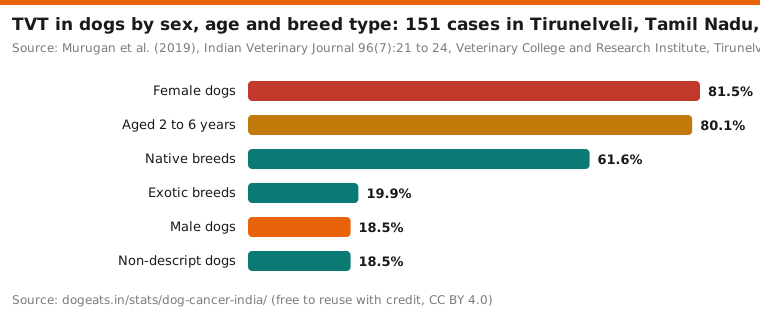
- In Tirunelveli, 81.5% of 151 TVT cases from 2015 to 2017 were female dogs and 80.1% were aged 2 to 6 years.
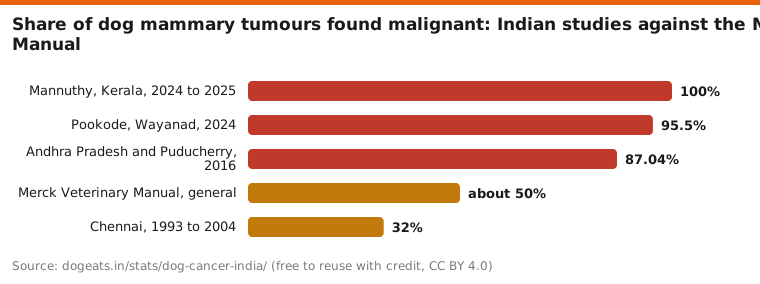
- Every one of 66 mammary tumour masses from 50 dogs studied at Mannuthy, Kerala, in 2024 to 2025 was malignant.
- At Pookode, Wayanad, 90.9% of female dogs with mammary tumours were not spayed.
- A 2012 systematic review found the evidence that spaying prevents mammary tumours weak: 9 of 13 studies had a high risk of bias.
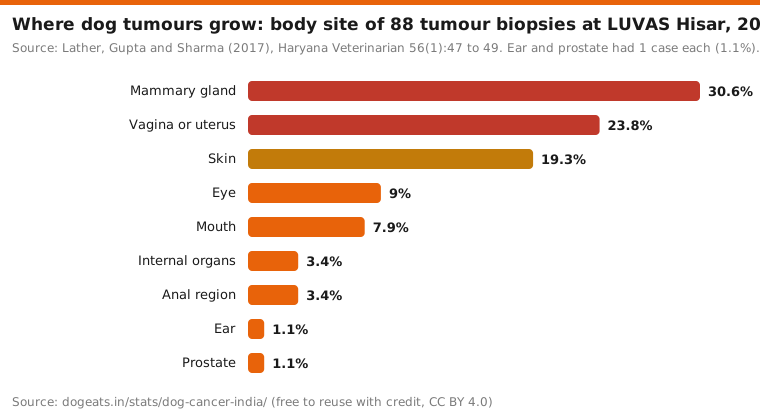
- In a 10-year Hisar series, 30.6% of 88 dog tumours sat in the mammary glands and 23.8% in the vagina or uterus.
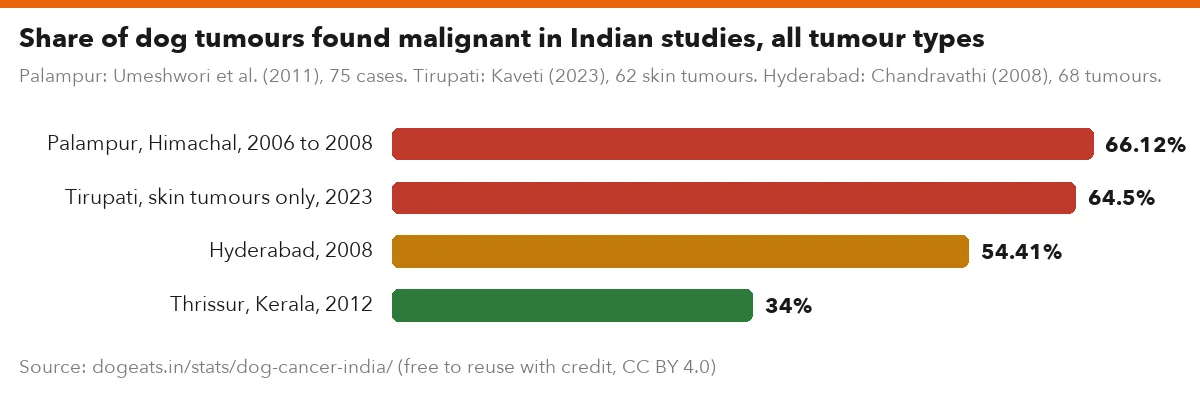
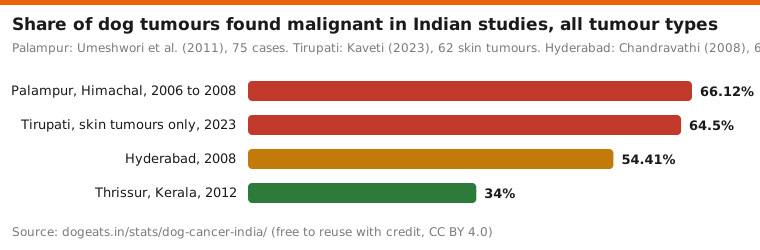
- Indian studies disagree on how many dog tumours are cancer: 34% malignant at Thrissur in 2012, 54.41% at Hyderabad in 2008, 66.12% at Palampur in 2011.
What is the most common cancer in dogs in India?
Transmissible venereal tumour (TVT) and mammary (breast) tumours are the two most common dog tumours in Indian vet college records. At IVRI Izatnagar, TVT made up 42.93% of 403 tumour cases between 2001 and 2007, and mammary tumours 33.50%.
India has no animal cancer registry. A 2017 paper from LUVAS Hisar says so directly, and notes that Indian figures come only from separate hospital reports. So every number here is a share of the tumours one college saw, not a rate of cancer among all Indian dogs.
The Merck Veterinary Manual, in an entry written by Bhaskar Ganguly of Indian Immunologicals, names India, Japan and the Bahamas as places where TVT is the most common dog tumour.
Source: Chakravarthi, Senthil, Subapriya and Vairamuthu (TANUVAS), retrospective study presented at the 20th Indian Veterinary Congress, February 2020. Not shown: hepatocellular carcinoma (1.03%), transitional cell carcinoma and mesothelioma (0.77% each), sebaceous adenoma and blood cell carcinoma (0.25% each).
Show the numbers
| Label | % |
|---|---|
| Mammary gland tumour | 25.64% |
| Transmissible venereal tumour | 15.8% |
| Lymphoma | 11.39% |
| Adenocarcinoma | 11.39% |
| Perianal adenoma | 6.73% |
| Lipoma | 6.47% |
| Mast cell tumour | 5.95% |
| Fibrosarcoma | 3.88% |
| Squamous cell carcinoma | 2.59% |
| Histiocytoma | 2.33% |
| Melanoma | 1.55% |
| Papilloma | 1.29% |
| Osteosarcoma | 0.77% |
Embed this chart
| Place (institution) | Years | Tumour cases | Most common tumour | Female share |
|---|---|---|---|---|
| Izatnagar, UP (IVRI) | 2001 to 2007 | 403 | TVT 42.93%, mammary 33.50% | 70.72% |
| Chennai (Madras Veterinary College) | 2015 to 2018 | 386 biopsies | Mammary 25.64%, TVT 15.8% | 58% (226 cases) |
| Hisar, Haryana (LUVAS) | 2005 to 2014 | 88 biopsies | Mammary 25%, fibroma or fibrosarcoma 19.3% | 53.4% |
| Hyderabad (SVVU thesis) | Published 2008 | 68 | Skin and mesenchymal 42.65%, mammary 25.0% | 55.88% |
| Thrissur, Kerala (KVASU) | One year, published 2012 | 61 | Skin and soft tissue | 58% |
| Palampur, Himachal (CSK HPKV) | Dec 2006 to Apr 2008 | 75 | TVT 25.33% | Not given; rate 10.2% in females vs 3.04% in males |
The order changes with place and time. IVRI's series from 2001 to 2007 was led by TVT. Chennai's from 2015 to 2018 and Hisar's from 2005 to 2014 were led by mammary tumours. Hyderabad and Thrissur saw mostly skin and soft tissue growths.
For context against other illnesses, our report on the most common dog health problems puts tumours alongside skin, ear and gut disease in vet records.
What is TVT in dogs, and is it curable?
TVT is a cancer that passes from dog to dog as living tumour cells, mostly during mating, and it usually responds well to treatment. In Tirunelveli, vincristine chemotherapy brought complete recovery in 87.6% of 151 cases seen from 2015 to 2017.
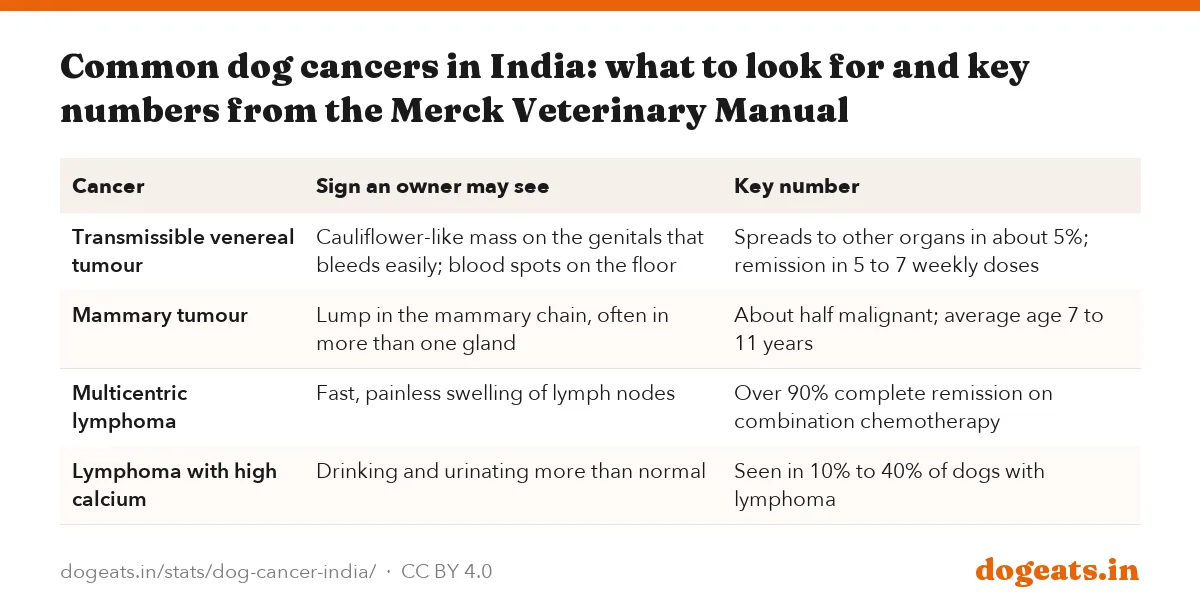
The Merck Veterinary Manual says TVT can also spread by sniffing, licking, scratching or biting. It looks like a cauliflower-shaped mass on the genitals that bleeds easily. In females, blood spots on the floor are often the first sign. It spreads to other organs in only about 5% of cases.
Vincristine, given once a week, is the treatment of choice in the manual, and total remission usually takes 5 to 7 doses. The manual adds that hot and humid seasons are usually linked with a poorer response, which matters in coastal India.
Source: Murugan et al. (2019), Indian Veterinary Journal 96(7):21 to 24, Veterinary College and Research Institute, Tirunelveli (TANUVAS).
Show the numbers
| Label | % |
|---|---|
| Female dogs | 81.5% |
| Aged 2 to 6 years | 80.1% |
| Native breeds | 61.6% |
| Exotic breeds | 19.9% |
| Male dogs | 18.5% |
| Non-descript dogs | 18.5% |
Embed this chart
The authors linked the high share in native dogs to their habit of escaping the yard. At IVRI, 67.63% of TVT cases were female, and Spitz and mongrels each made up 38.73% of TVT cases.
TVT also turns up in dogs caught for sterilisation. Among 141 genital lesions from 121 female dogs at Jaipur ABC centres and clinics, 9 (6.38%) were TVT, a 2025 study found.
The Merck manual says sustained animal birth control and treating affected dogs will control TVT to a great extent where stray populations are large. Our reports on ABC sterilisation coverage and the street dog population show how far that has gone.
How many mammary tumours in dogs are cancerous?
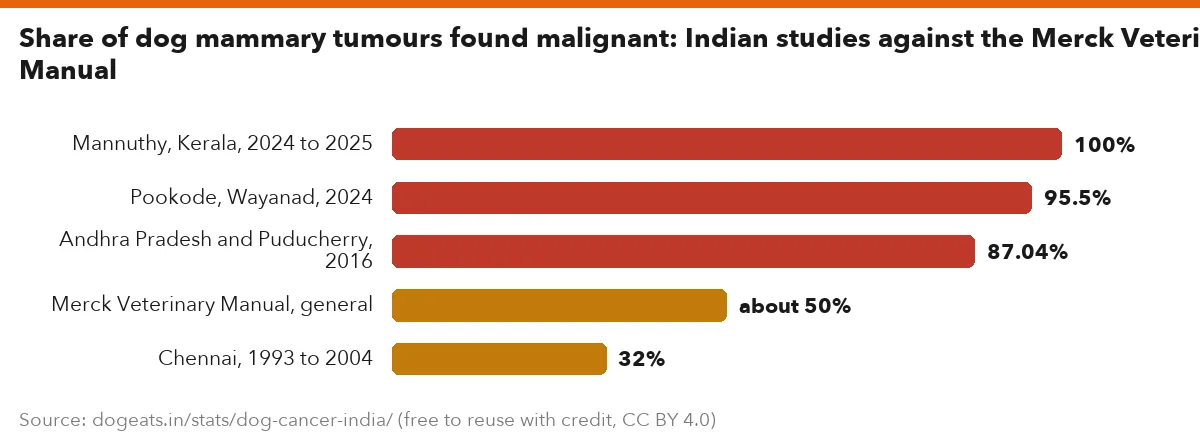
About half of mammary tumours in dogs are malignant, the Merck Veterinary Manual says. Recent Indian series found far more: 21 of 22 mammary growths at Pookode, Wayanad, and all 66 tumour masses from 50 dogs at Mannuthy, Kerala, were malignant.
Mammary tumours are the most common tumour in unspayed female dogs, according to the manual. It says they are rarely found before age 5, and the average age at diagnosis is 7 to 11 years. Purebred and smaller dogs, obesity and a red meat diet are linked with higher risk.
Kerala's affected dogs were mostly middle-aged or older. At Mannuthy the mean age was 8.94 years, and Labradors made up 36% of cases, crossbreeds 22% and German Shepherds 14%. At Pookode, 72.73% of mammary tumours were in pure-bred dogs and 54.55% in dogs aged 9 to 12 years.

Older Chennai data looked different. Of 115 mammary tumours examined by TANUVAS pathologists in Chennai between 1993 and 2004, 38% were benign, 32% malignant and the rest mixed tumours. German Shepherds had the highest share of samples, 24.13%.
The newer Indian series are small and come from referral clinics, where owners may bring only large or fast-growing lumps. That can push the malignant share up. Even so, any lump in the mammary chain of an unspayed female is worth a vet check.
The manual adds that tumours in more than one gland are very common, in 50% to 70% of cases. At Pookode, the inguinal glands near the hind legs were affected in 36.36% of cases and the caudal abdominal glands in 22.73%.
Does spaying prevent mammary cancer in dogs?
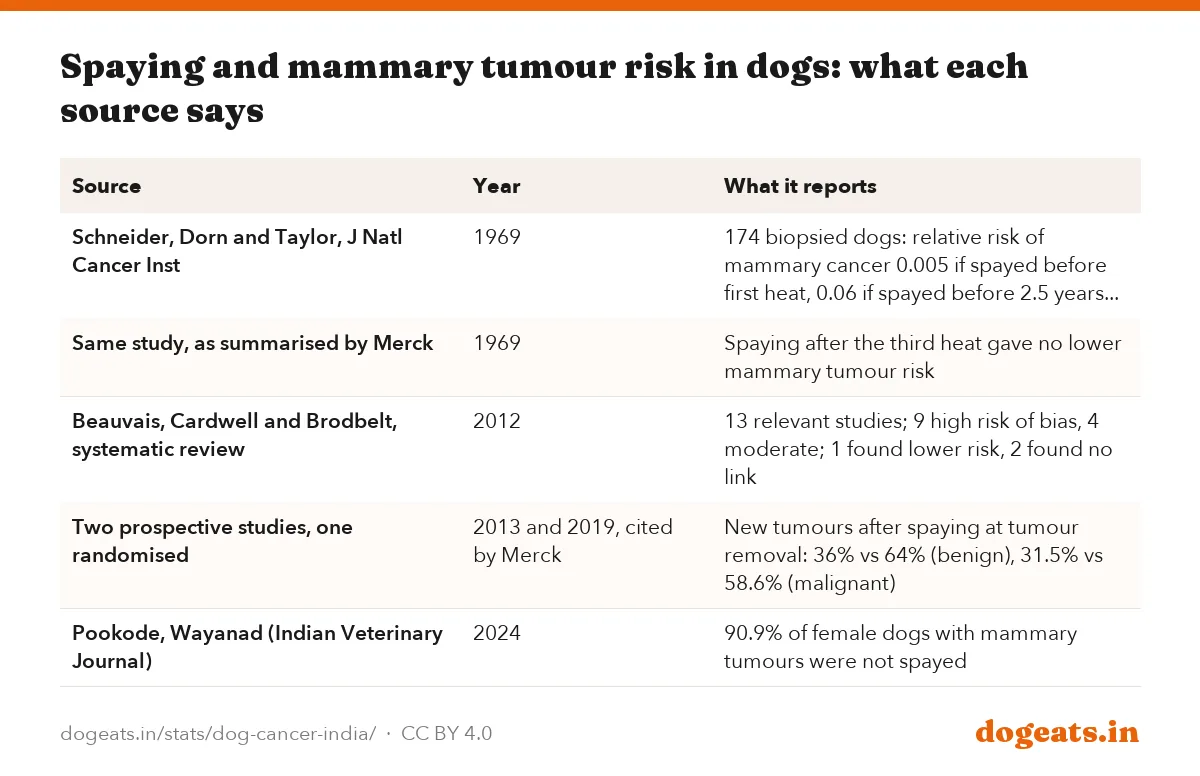
Spaying before the first heat is linked with a very low rate of mammary tumours, the Merck Veterinary Manual says, but the strength of that evidence is disputed. A 2012 systematic review judged 9 of the 13 studies it found to have a high risk of bias.
The widely quoted figure comes from one 1969 US study by Schneider, Dorn and Taylor of 174 dogs whose biopsies were examined. Spaying before the first heat went with a relative risk of mammary cancer of 0.005, about 1/200 of the risk in unspayed dogs. Spaying before 2.5 years went with 0.06, as reported by the Royal Veterinary College team that later reviewed it. The study gave no confidence interval, and later papers copy its numbers inconsistently, so we give only these two.
The Royal Veterinary College review by Beauvais, Cardwell and Brodbelt found one study showing a lower risk after spaying and two showing no link. It concluded the evidence was weak and 'not a sound basis for firm recommendations'.
| Source | Year | What it reports |
|---|---|---|
| Schneider, Dorn and Taylor, J Natl Cancer Inst | 1969 | 174 biopsied dogs: relative risk of mammary cancer 0.005 if spayed before first heat, 0.06 if spayed before 2.5 years (as reported by Beauvais et al.) |
| Same study, as summarised by Merck | 1969 | Spaying after the third heat gave no lower mammary tumour risk |
| Beauvais, Cardwell and Brodbelt, systematic review | 2012 | 13 relevant studies; 9 high risk of bias, 4 moderate; 1 found lower risk, 2 found no link |
| Two prospective studies, one randomised | 2013 and 2019, cited by Merck | New tumours after spaying at tumour removal: 36% vs 64% (benign), 31.5% vs 58.6% (malignant) |
| Pookode, Wayanad (Indian Veterinary Journal) | 2024 | 90.9% of female dogs with mammary tumours were not spayed |
Newer studies point the same way for older dogs. Merck cites two prospective studies, one randomised (Kristiansen et al. 2013 and Sorenmo et al. 2019), in which unspayed dogs spayed at the time of tumour removal developed fewer new tumours: 36% against 64% after benign tumours and 31.5% against 58.6% after malignant ones.
Merck also notes that early spaying may raise the risk of some other health problems, so advice on timing has become more nuanced. Talk to your vet about the right age for your breed.
In India the question is often moot. At Pookode, 90.9% of female dogs with mammary tumours had never been spayed.
At what age do dogs get cancer?
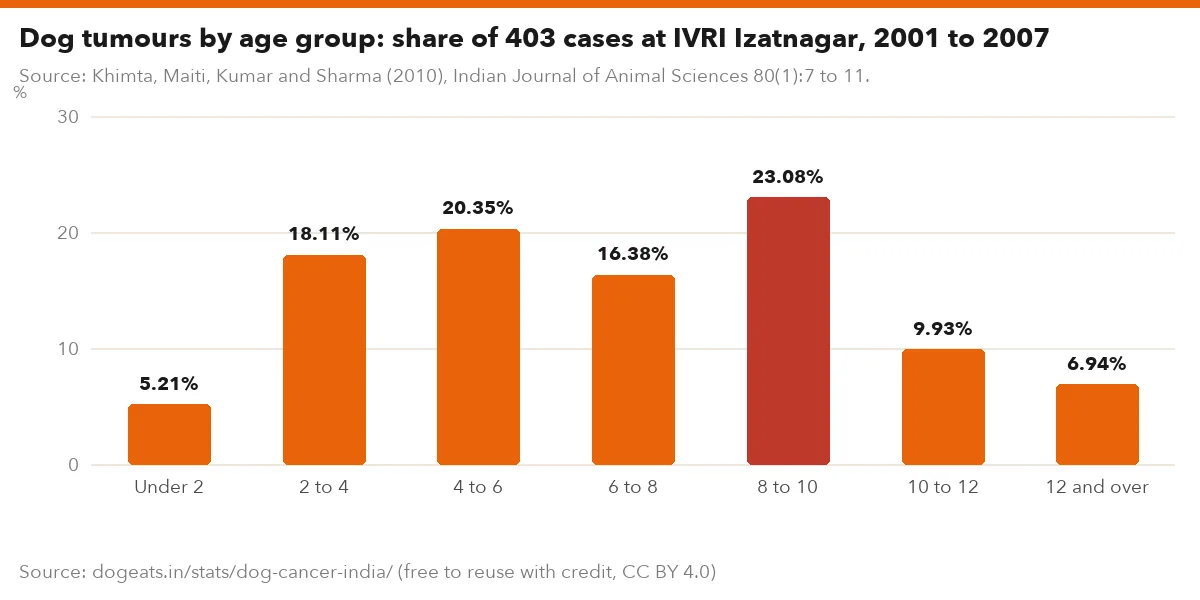
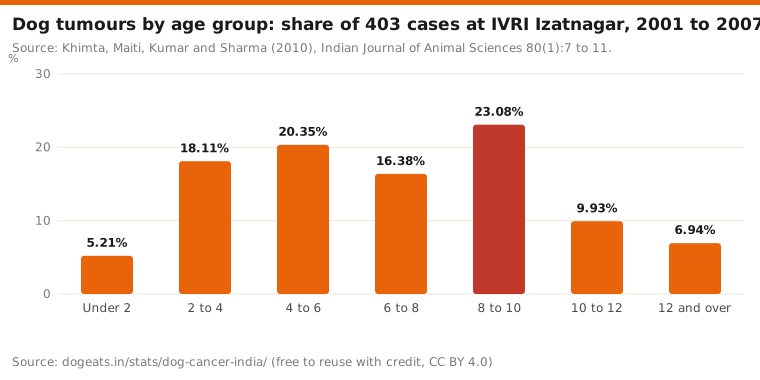
Most dog tumours in Indian studies appear between 4 and 10 years of age. At IVRI, the 8 to 10 year group had the largest share of 403 cases, 23.08%, followed by 4 to 6 years at 20.35%.
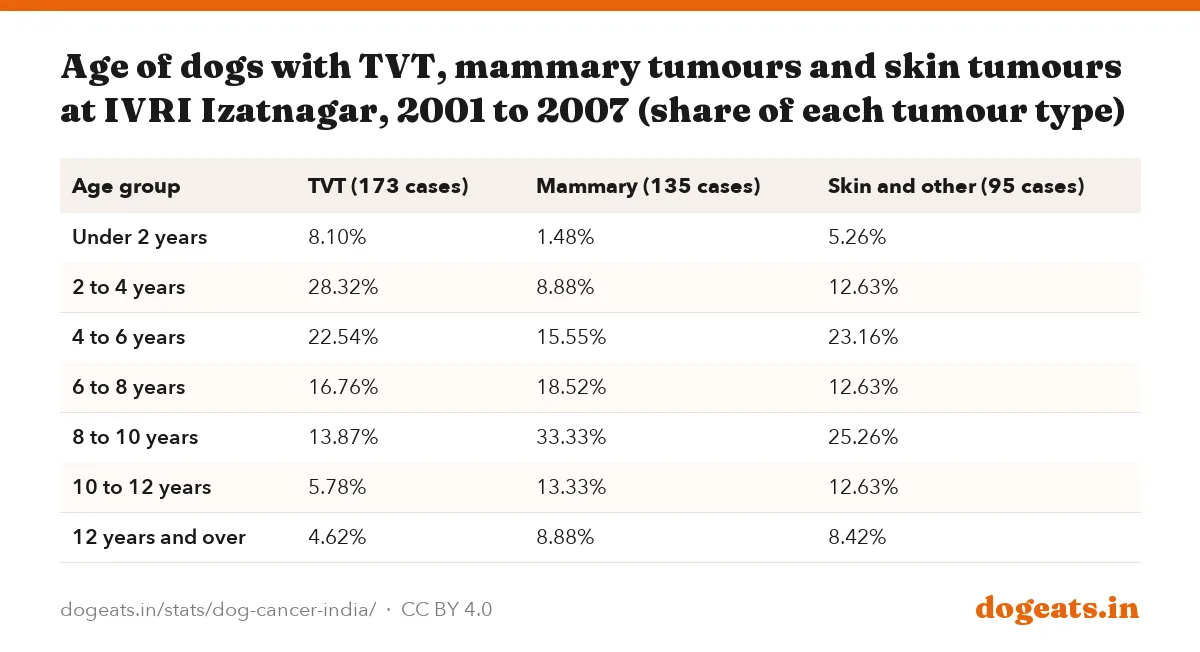
Each tumour type keeps its own timetable. At IVRI, TVT peaked at 2 to 4 years (28.32% of TVT cases), while mammary tumours peaked at 8 to 10 years (33.33%). Only 2 mammary tumours turned up in dogs under 2.
Hisar's 10-year series from 2005 to 2014 found the most cases at 4 to 6 years (25%), then 8 to 10 years (21.5%) and 6 to 8 years (20.4%). Only 4.5% of its 88 cases were in dogs under 2.

Source: Khimta, Maiti, Kumar and Sharma (2010), Indian Journal of Animal Sciences 80(1):7 to 11.
Show the numbers
| Label | % |
|---|---|
| Under 2 | 5.21% |
| 2 to 4 | 18.11% |
| 4 to 6 | 20.35% |
| 6 to 8 | 16.38% |
| 8 to 10 | 23.08% |
| 10 to 12 | 9.93% |
| 12 and over | 6.94% |
Embed this chart
| Age group | TVT (173 cases) | Mammary (135 cases) | Skin and other (95 cases) |
|---|---|---|---|
| Under 2 years | 8.10% | 1.48% | 5.26% |
| 2 to 4 years | 28.32% | 8.88% | 12.63% |
| 4 to 6 years | 22.54% | 15.55% | 23.16% |
| 6 to 8 years | 16.76% | 18.52% | 12.63% |
| 8 to 10 years | 13.87% | 33.33% | 25.26% |
| 10 to 12 years | 5.78% | 13.33% | 12.63% |
| 12 years and over | 4.62% | 8.88% | 8.42% |
Few dogs over 12 appear in these series. That may reflect how few Indian pet dogs reach that age, or how few older dogs get a biopsy. Our dog breed lifespan report shows a median of 13 years across 58 breeds, and the dog years chart puts those ages in human terms.
Regular checks matter more as a dog ages. Our senior dog feeding guide covers diet changes from middle age.
Which dog breeds get cancer most in India?
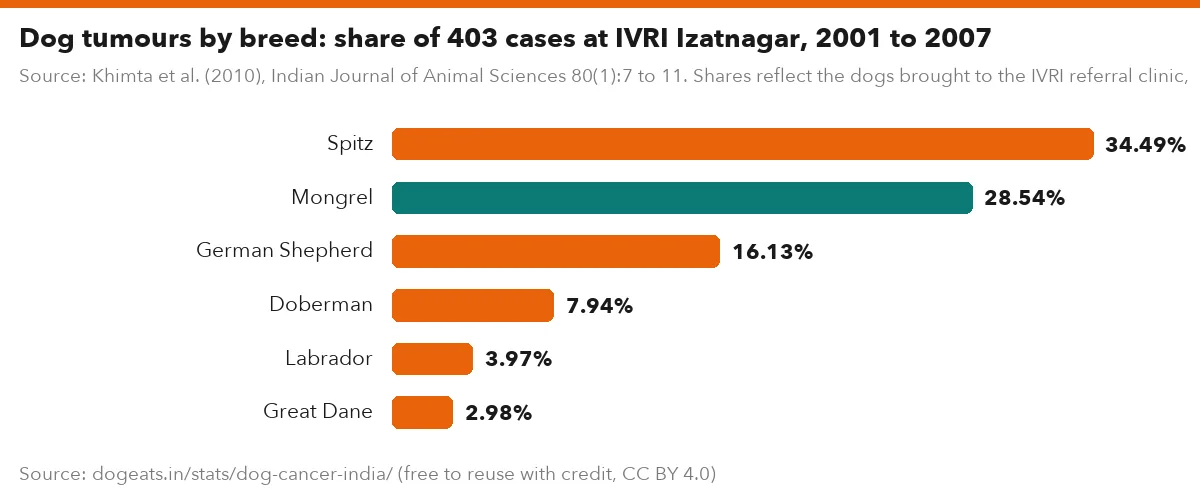
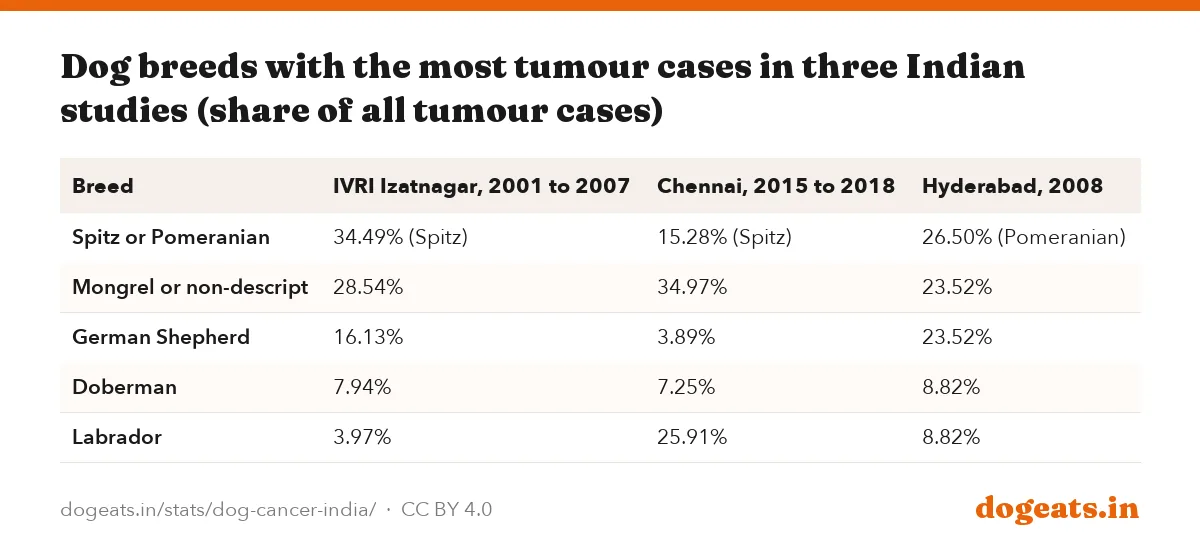
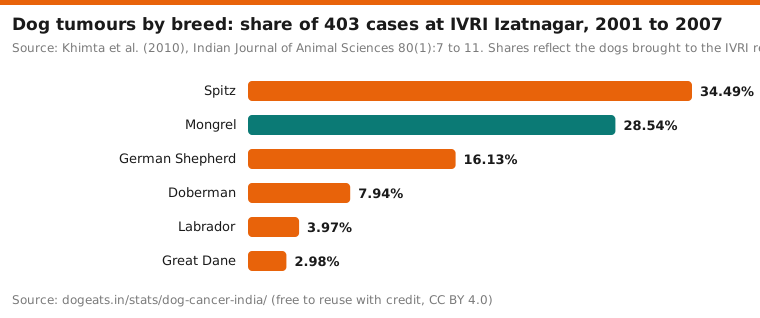
Spitz, mongrels and German Shepherds topped the IVRI tumour list, at 34.49%, 28.54% and 16.13% of 403 cases. In Chennai the order was non-descript dogs (34.97%), Labradors (25.91%) and Spitz (15.28%).
These shares follow which breeds are common in each city and which owners reach a college hospital. None of the studies compared tumour cases with the number of each breed in the area, so they cannot show that one breed carries a higher risk.
The pattern is still useful. It shows that local dogs and mixed breeds get tumours as often as pedigree dogs. It also shows that the Indian Spitz, Labrador and German Shepherd appear high in every list where they are common.
Source: Khimta et al. (2010), Indian Journal of Animal Sciences 80(1):7 to 11. Shares reflect the dogs brought to the IVRI referral clinic, not breed risk.
Show the numbers
| Label | % |
|---|---|
| Spitz | 34.49% |
| Mongrel | 28.54% |
| German Shepherd | 16.13% |
| Doberman | 7.94% |
| Labrador | 3.97% |
| Great Dane | 2.98% |
Embed this chart
Labradors show how much the mix of dogs matters. They were 3.97% of IVRI's cases in 2001 to 2007 but 25.91% of Chennai's in 2015 to 2018, and 36% of Mannuthy's mammary cases in 2024 to 2025. None of the studies explains the shift.
The Pomeranian led the Hyderabad series at 26.50% of 68 cases. Kerala's 2012 Thrissur study found German Shepherds the most affected breed.
Where on the body do dogs get tumours?
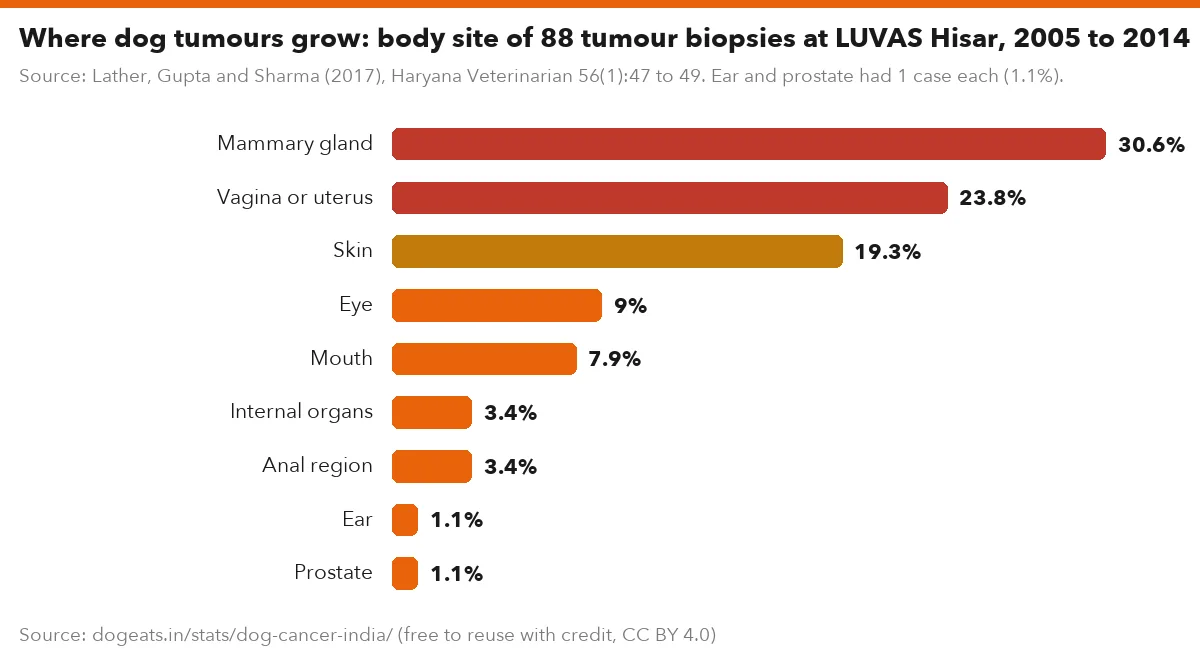
The mammary glands, genitals and skin account for most dog tumours in Indian records. In Hisar's 88 biopsies from 2005 to 2014, 30.6% were in the mammary glands, 23.8% in the vagina or uterus and 19.3% on the skin.
Skin tumours have their own pattern. A 2023 Tirupati thesis on 62 skin tumours found the head most often affected (37.1%), then the limbs (32.3%), the trunk (19.4%) and the neck (11.3%). Males made up 71% of those dogs.
Source: Lather, Gupta and Sharma (2017), Haryana Veterinarian 56(1):47 to 49. Ear and prostate had 1 case each (1.1%).
Show the numbers
| Label | % |
|---|---|
| Mammary gland | 30.6% |
| Vagina or uterus | 23.8% |
| Skin | 19.3% |
| Eye | 9% |
| Mouth | 7.9% |
| Internal organs | 3.4% |
| Anal region | 3.4% |
| Ear | 1.1% |
| Prostate | 1.1% |
Embed this chart
At IVRI, skin and other tumours were the one group seen more in males, at 65.26% of 95 cases. Mammary tumours were recorded only in females there.
Most mammary tumours grow in the rear glands. At IVRI the fourth and fifth glands were involved in 65% of mammary cases. Check the belly near the hind legs when you groom your dog.
Are most lumps and tumours in dogs cancerous?
Indian studies split roughly half and half, with wide swings. At Hyderabad, 54.41% of 68 tumours were malignant in a 2008 thesis, while at Thrissur 66% of 61 tumours were benign in 2012.
Where TVT is common, the malignant share rises. A Palampur study published in 2011 found 66.12% of tumours malignant and said the many TVT cases there might explain it. A 2023 Tirupati thesis found 64.5% of 62 skin tumours malignant.
A biopsy is the only way to tell. Benign growths in these series included lipomas, papillomas, perianal adenomas and histiocytomas. Malignant ones included fibrosarcomas, squamous cell carcinomas and malignant melanomas.
Tumours are also not rare in a clinic. At the Palampur university clinic, 75 of 1,491 cases seen from December 2006 to April 2008 were dogs with a tumour, a rate of 5.03%.
How common is lymphoma in dogs, and how long do dogs live with it?
Lymphoma made up 11.39% of 386 dog tumour biopsies in Chennai from 2015 to 2018, the third most common type. With chemotherapy, dogs with B-cell lymphoma survive about 12 months, according to the Merck Veterinary Manual.
Dogs with T-cell lymphoma survive about 6 months with treatment. Combination chemotherapy brings more than 90% of dogs with high-grade multicentric lymphoma into complete remission, the manual says.
The multicentric form accounts for about 80% to 85% of cases. Its early sign is fast, painless swelling of the lymph nodes, which can reach 3 to 10 times their normal size.
| Cancer | Sign an owner may see | Key number |
|---|---|---|
| Transmissible venereal tumour | Cauliflower-like mass on the genitals that bleeds easily; blood spots on the floor | Spreads to other organs in about 5%; remission in 5 to 7 weekly doses |
| Mammary tumour | Lump in the mammary chain, often in more than one gland | About half malignant; average age 7 to 11 years |
| Multicentric lymphoma | Fast, painless swelling of lymph nodes | Over 90% complete remission on combination chemotherapy |
| Lymphoma with high calcium | Drinking and urinating more than normal | Seen in 10% to 40% of dogs with lymphoma |
Bone cancer was rare in Indian biopsy series. Osteosarcoma was 0.77% of Chennai's tumours, though Hyderabad's 2008 thesis counted 13.23% of its 68 tumours in joints and bones.
Cancer care costs money that few Indian owners have insured. Our pet insurance report covers what Indian policies pay for.
Frequently asked questions
What is the most common cancer in dogs in India?
Transmissible venereal tumour (TVT) and mammary tumours. TVT made up 42.93% of 403 tumours at IVRI Izatnagar in 2001 to 2007, and mammary tumours led Chennai's 386 biopsies at 25.64% in 2015 to 2018.
Is TVT in dogs curable?
Usually, yes. Weekly vincristine is the treatment of choice, and total remission usually takes 5 to 7 doses, the Merck Veterinary Manual says. In Tirunelveli, 87.6% of 151 cases recovered fully on vincristine.
How does TVT spread between dogs?
It spreads between dogs, mostly during mating but also by sniffing, licking, scratching or biting, the Merck manual says. The manual describes TVT as a transmissible cancer affecting canids, the dog family.
Are mammary tumours in dogs always cancer?
No. About half are malignant, the Merck manual says. Recent Indian series found much higher shares: 21 of 22 growths at Pookode, Wayanad, and all 66 masses from 50 dogs at Mannuthy, Kerala.
Does spaying a dog prevent breast cancer?
Spaying before the first heat is linked with very few mammary tumours; a 1969 study of 174 biopsied dogs put the relative risk at 0.005 against unspayed dogs. A 2012 systematic review judged the evidence weak, with 9 of 13 studies at high risk of bias.
At what age do dogs get cancer?
Mostly between 4 and 10 years in Indian studies. At IVRI the 8 to 10 year group had the most cases (23.08%). Mammary tumours are rarely found before age 5.
Which dog breeds get the most tumours in India?
Spitz, mongrels and German Shepherds led at IVRI (34.49%, 28.54% and 16.13%). In Chennai, non-descript dogs (34.97%) and Labradors (25.91%) led. These shares reflect which dogs are common, not proven breed risk.
How long can a dog live with lymphoma?
With chemotherapy, about 12 months for B-cell lymphoma and about 6 months for T-cell lymphoma, according to the Merck Veterinary Manual.
Are most lumps on dogs cancer?
Not most, but many. Indian studies range from 34% malignant at Thrissur to 66.12% at Palampur. Only a biopsy or needle sample can tell.
Methodology and limitations
We searched PubMed and the ICAR e-journals platform (Indian Journal of Animal Sciences, Indian Veterinary Journal). We also searched Haryana Veterinarian, Indian Journal of Animal Health, Indian Journal of Animal Research and the KrishiKosh repository of Indian agricultural university theses. We looked for studies counting tumours in dogs in India.
Every Indian figure is taken as published in the study's abstract or full text. Where we show a figure the authors did not print, it is computed and labelled. For example, 21 of 22 is shown as 95.5%, and Thrissur's 66% benign is shown as 34% malignant.
Clinical facts on TVT, mammary tumours and lymphoma come from the Merck Veterinary Manual (professional and pet owner versions, read October 2026). The spaying figures from Schneider et al. (1969) are quoted as reported by Beauvais, Cardwell and Brodbelt of the Royal Veterinary College, who reviewed the original; the article itself was not open to us. Other papers quote it differently, some as an absolute risk and with extra figures for later spaying that we could not confirm, so we left those out.
Breed shares are shares of tumour cases, not risk. No study compared tumour counts with the number of each breed in its area.
Sources
- Khimta S, Maiti SK, Kumar N, Sharma AK (2010), Occurrence of neoplasms in canine: a retrospective study, Indian Journal of Animal Sciences 80(1):7 to 11 (IVRI Izatnagar), 403 tumour cases 2001 to 2007: TVT 42.93%, mammary 33.50%; sex, age and breed shares
- Merck Veterinary Manual: Canine Transmissible Venereal Tumor (Ganguly, full review March 2024), TVT most common dog tumour in India; spread, signs, 5% metastasis, 5 to 7 vincristine doses
- Merck Veterinary Manual: Mammary Tumors in Dogs (Sorenmo, full review March 2024), About half malignant; age 7 to 11; spaying evidence; 36% vs 64% and 31.5% vs 58.6%
- Also consulted: Chakravarthi R, Senthil N, Subapriya S, Vairamuthu S (2020), Retrospective studies on tumor conditions in dogs over four years (2015 to 2018) in Chennai district, TANUVAS conference abstract, Lather D, Gupta RP, Sharma S (2017), Retrospective studies on tumor conditions in dogs over ten years (2005 to 2014), Haryana Veterinarian 56(1):47 to 49, Beauvais W, Cardwell JM, Brodbelt DC (2012), The effect of neutering on the risk of mammary tumours in dogs: a systematic review, J Small Anim Pract 53(6):314 to 322, Murugan M et al. (2019), Canine transmissible venereal tumour cases in Tirunelveli region of Tamil Nadu, Indian Veterinary Journal 96(7):21 to 24, Tamilvani P et al. (2024), Occurrence of canine mammary tumours in Wayanad district, Kerala, Indian Veterinary Journal 101(6):38 to 41, Vijay AV et al. (2025), Epidemiological determinants and histopathological spectrum of canine mammary tumours: a study from central Kerala, Journal of Indian Veterinary Association Kerala (JIVA) 23(3):55 to 67, published online 21 December 2025, Hemanth I et al. (2016), Histopathological studies on canine mammary tumors, Indian Journal of Veterinary and Animal Sciences Research 45(2):534 to 542, Priya S et al. (2006), Incidence of canine mammary tumours in Chennai, Tamil Nadu, Indian Veterinary Journal, Chandravathi T (2008), Pathology of neoplasms in dogs, thesis, Sri Venkateswara Veterinary University, Kaveti S (2023), Cytological, pathomorphological and immunohistochemical studies on canine cutaneous neoplasms, thesis, Sri Venkateswara Veterinary University, Umeshwori N, Kumar A, Tyagi SP, Kurade NP (2011), Incidence and management of neoplasms in dogs of Himachal Pradesh, Indian Journal of Animal Sciences 81(1):26 to 28, Babu P et al. (2012), An epidemiological study of canine neoplasms, Indian Journal of Animal Research 46(2):196 to 198, Khandelwal P et al. (2025), Cyto-histopathological study of transmissible venereal tumour in female dogs, Indian Journal of Animal Health 64(2):379 to 382, Merck Veterinary Manual, pet owner version: Malignant Lymphoma in Dogs (Fan, full review Dec 2017, updated Sept 2024), Beauvais W, Cardwell J, Brodbelt D (2011), The effect of neutering on the risk of mammary masses: a systematic review, SVEPM conference poster, Royal Veterinary College, Schneider R, Dorn CR, Taylor DO (1969), Factors influencing canine mammary cancer development and postsurgical survival, J Natl Cancer Inst 43(6):1249 to 1261 (not open; figures as reported by Beauvais et al.), Burrai GP et al. (2020), Animals 10(9):1687, and Nosalova N et al. (2024), Int J Mol Sci 25(5):2891: both quote Schneider 1969, with figures that disagree with each other.
Cite, embed and download
This report, its data and its images are free to reuse under a Creative Commons Attribution 4.0 licence. Credit dogeats.in with a link to this page. Every chart has its own embed code, every table has a CSV and an image download, and the images below are ready for social posts, slides and articles.
Cite this report
Link to this report
Every chart and table as an image