Explainer · Updated October 2026
Dogs left in hot cars: laws by state, how hot cars get, and whether July 4 fireworks fill shelters
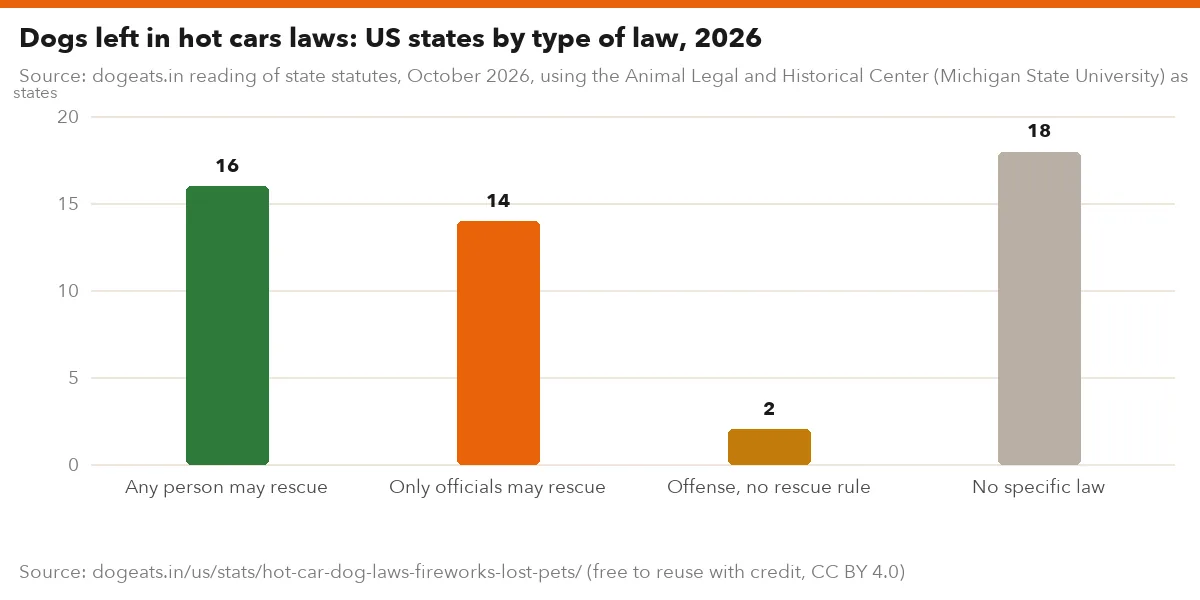
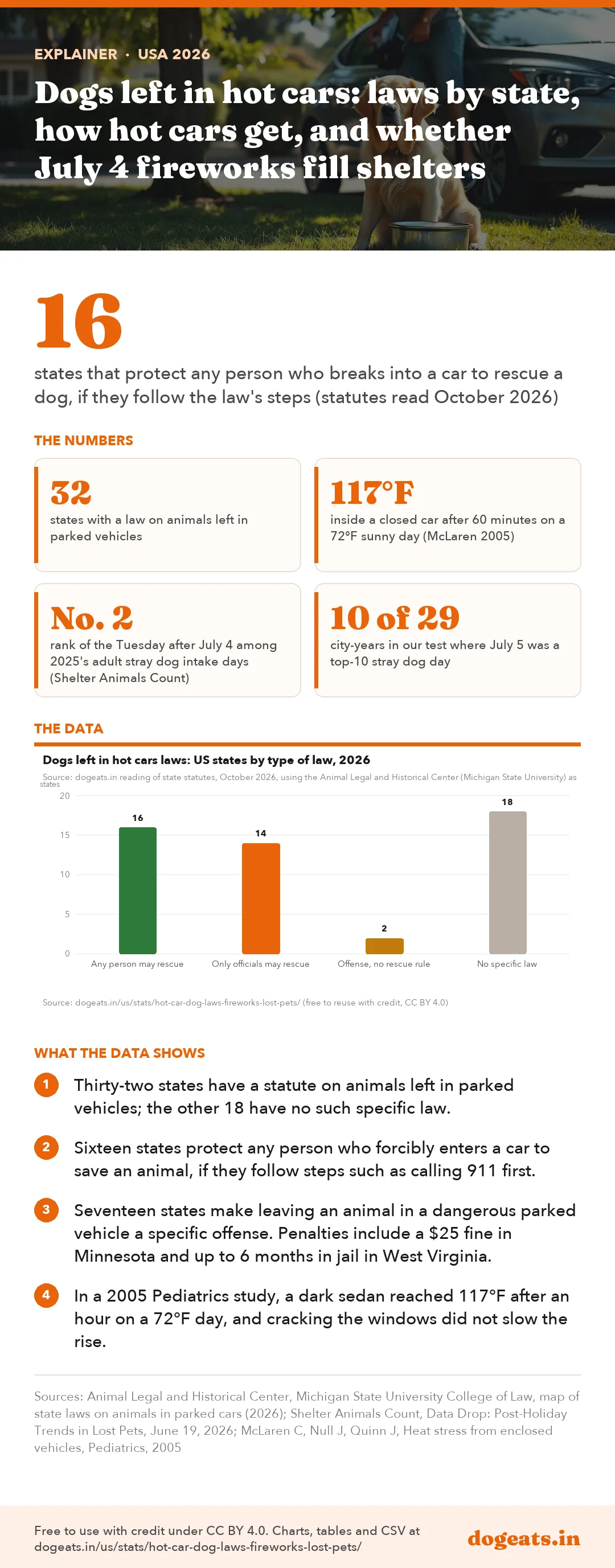
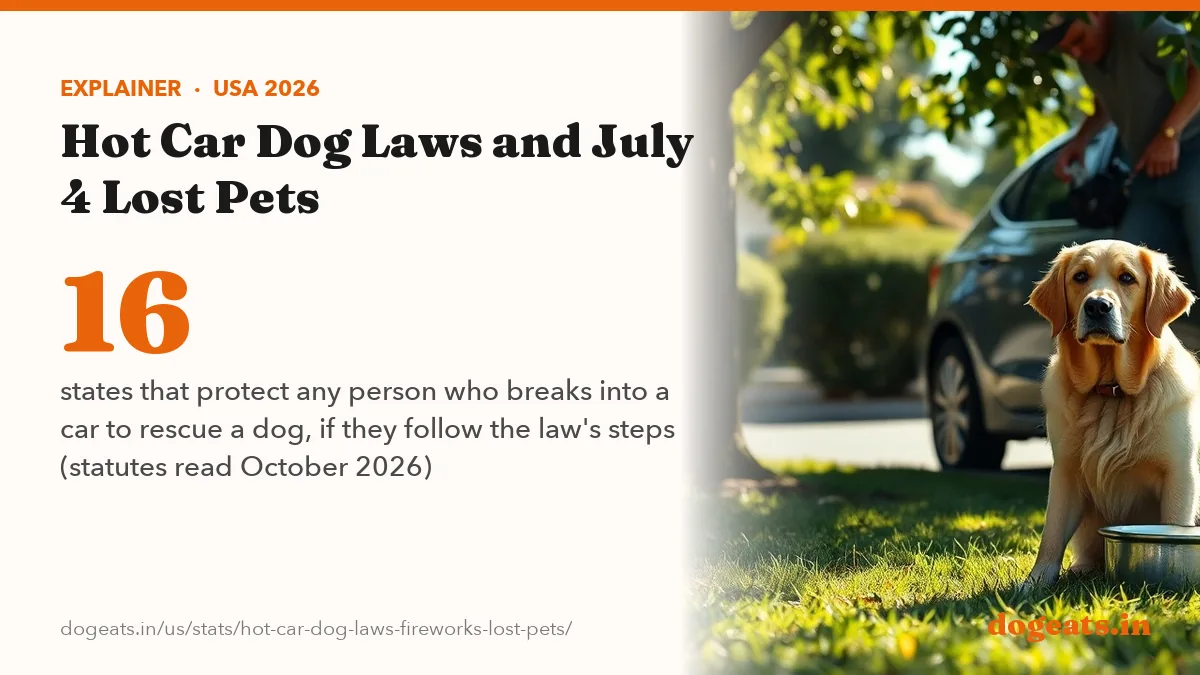
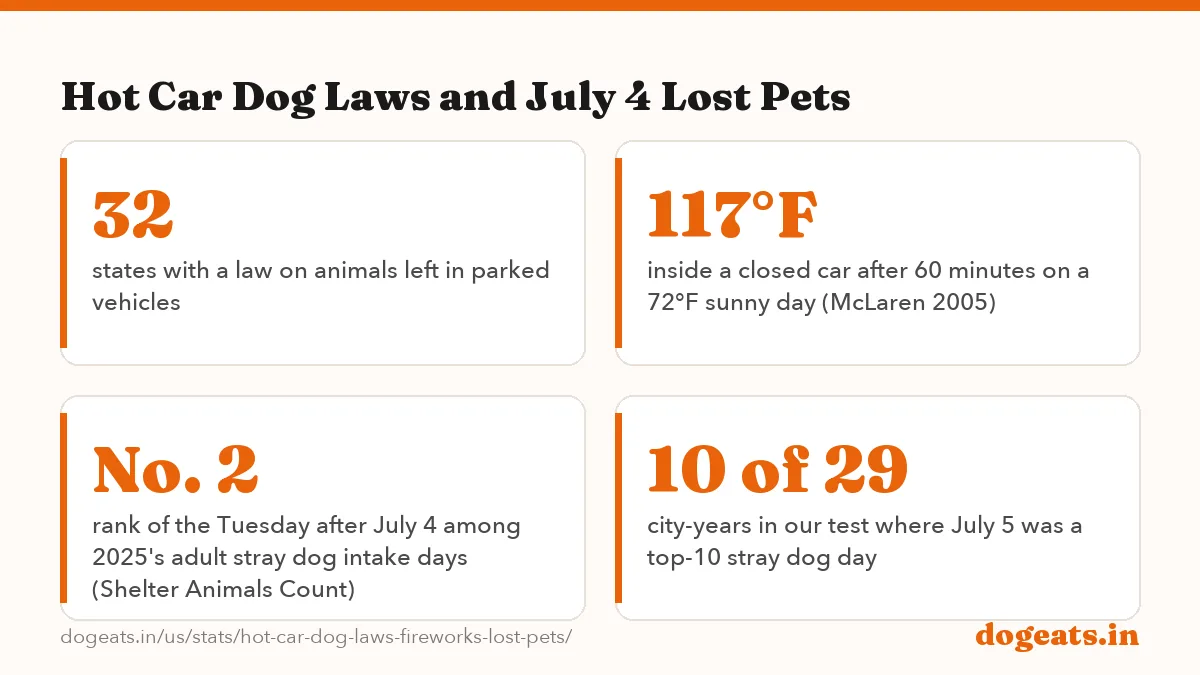
Thirty-two states have a law on animals left in parked vehicles. Sixteen of them protect any person who breaks in to rescue one by following set steps. On a 72°F sunny day, a closed car reached 117°F within an hour in one study. Stray dog intake does rise after July 4, but July 5 is not always the busiest shelter day.
Key findings
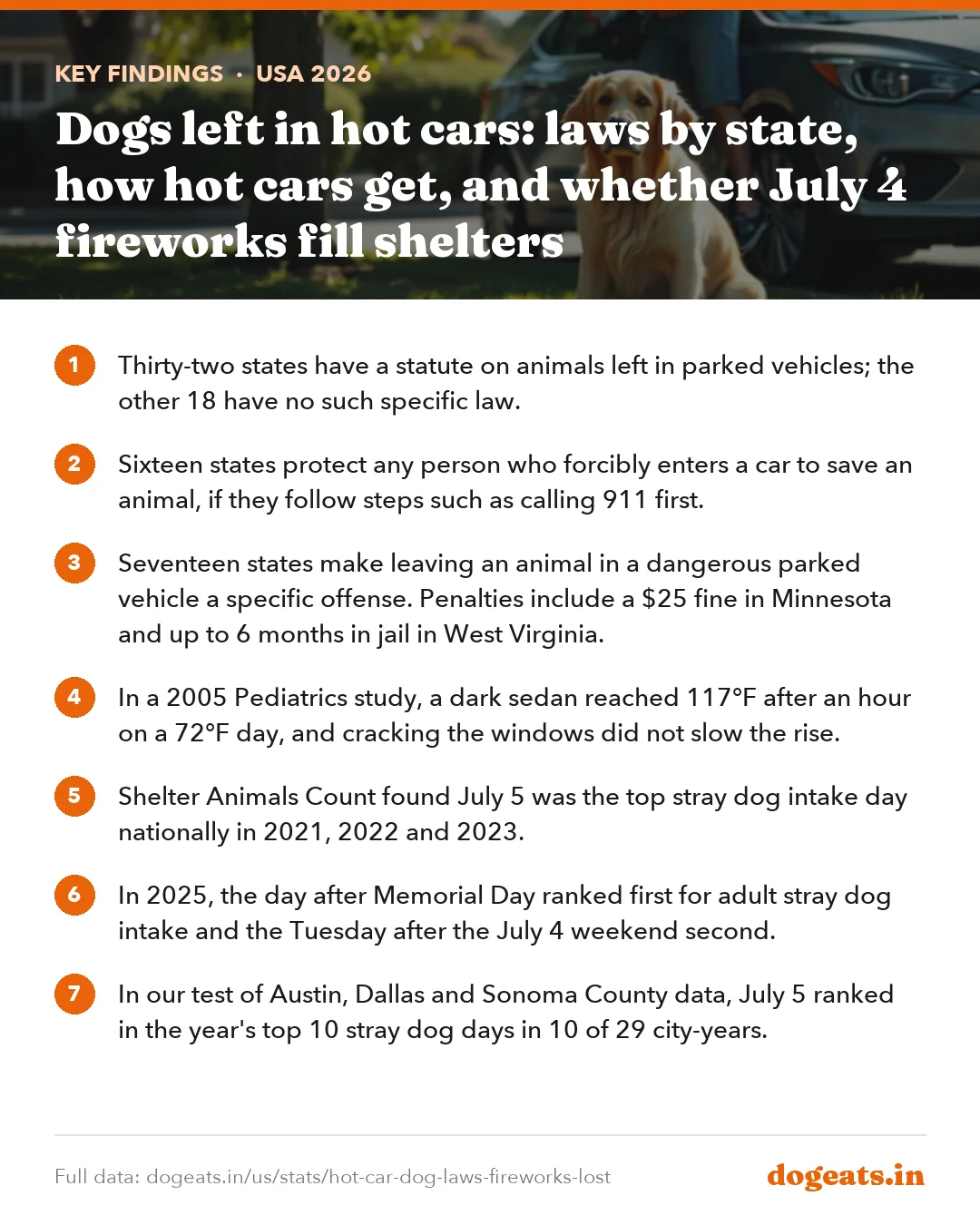
- Thirty-two states have a statute on animals left in parked vehicles; the other 18 have no such specific law.
- Sixteen states protect any person who forcibly enters a car to save an animal, if they follow steps such as calling 911 first.
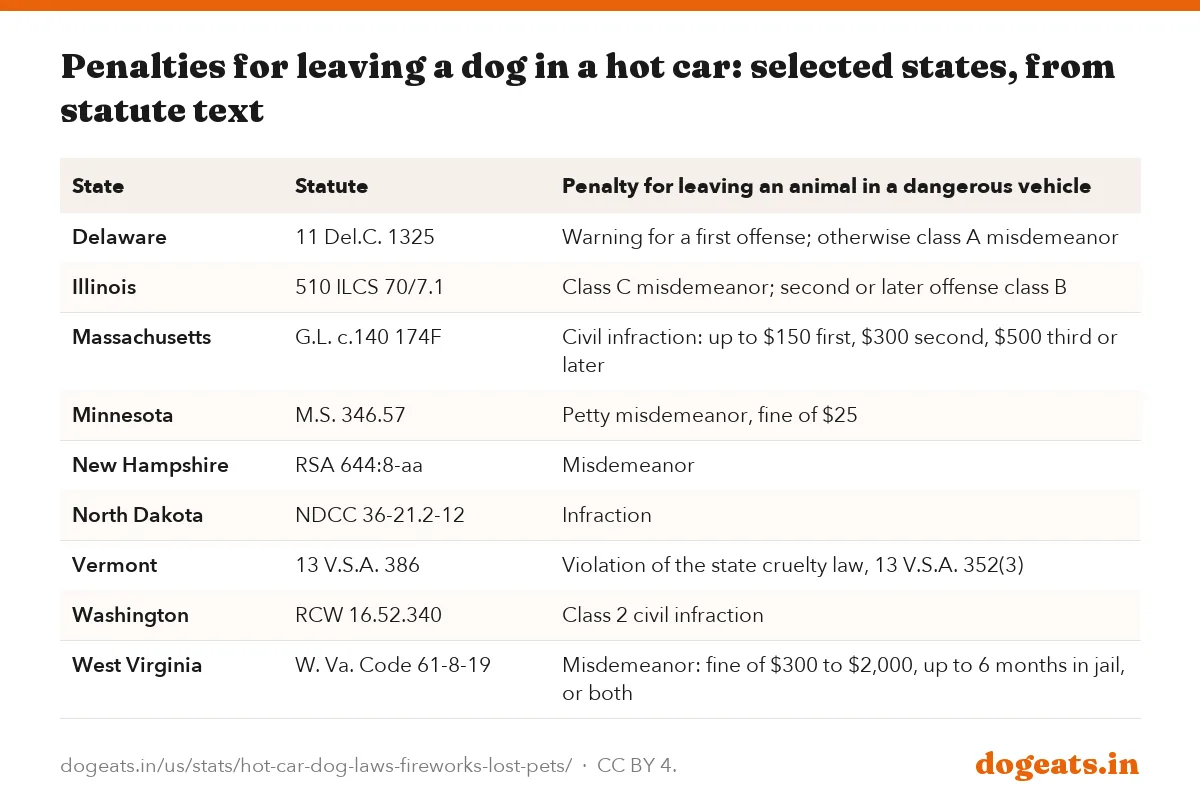
- Seventeen states make leaving an animal in a dangerous parked vehicle a specific offense. Penalties include a $25 fine in Minnesota and up to 6 months in jail in West Virginia.
- In a 2005 Pediatrics study, a dark sedan reached 117°F after an hour on a 72°F day, and cracking the windows did not slow the rise.
- Shelter Animals Count found July 5 was the top stray dog intake day nationally in 2021, 2022 and 2023.
- In 2025, the day after Memorial Day ranked first for adult stray dog intake and the Tuesday after the July 4 weekend second.
- In our test of Austin, Dallas and Sonoma County data, July 5 ranked in the year's top 10 stray dog days in 10 of 29 city-years.
- Only 5.2% of UK dog heatstroke cases in a 905,543-dog study were caused by confinement in a vehicle; 74.2% followed exercise.
Is it illegal to leave a dog in a hot car?
In 17 states, yes: state law makes it a specific offense to leave an animal in a parked vehicle in dangerous heat or cold. Elsewhere, a serious case may still be charged under general cruelty law, the Michigan State University center notes.
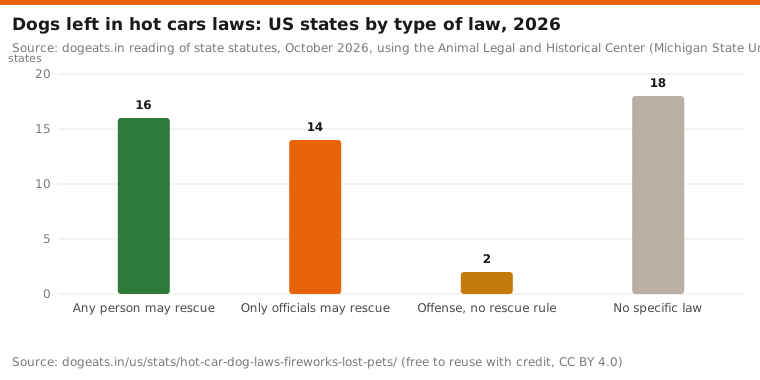
We read the statutes for the 32 states that have a law on animals left in parked vehicles. Sixteen protect any person who rescues an animal and 14 protect only police, animal control or other officials. In New Jersey and West Virginia, leaving the animal is an offense but no rescue rule exists.
That leaves 18 states with no specific statute. The Animal Legal and Historical Center at Michigan State University also counts 32 states, though its 2026 map sorts several states differently.
Source: dogeats.in reading of state statutes, October 2026, using the Animal Legal and Historical Center (Michigan State University) as a lead. 50 states; Washington, DC not included.
Show the numbers
| Label | states |
|---|---|
| Any person may rescue | 16 |
| Only officials may rescue | 14 |
| Offense, no rescue rule | 2 |
| No specific law | 18 |
Embed this chart
The center's 2026 map lists 18 states with no such statute. They are Alabama, Alaska, Arkansas, Hawaii, Idaho, Iowa, Kentucky, Michigan, Mississippi, Missouri, Montana, Nebraska, New Mexico, Oklahoma, South Carolina, Texas, Utah and Wyoming.
Can you break a car window to save a dog?
In 16 states, a bystander who follows the law's steps is protected from being sued, and in some also from prosecution. Those states are Arizona, California, Colorado, Connecticut, Florida, Indiana, Kansas, Louisiana, Massachusetts, Nevada, Ohio, Oregon, Tennessee, Vermont, Washington and Wisconsin.
Washington joined recently. Its law, House Bill 1046, took effect on July 27, 2025. It protects a rescuer from civil claims over car damage if they call 911 first and stay with the animal.
Most of these laws set similar steps. The rescuer must find the car locked, believe the animal faces imminent harm, use no more force than needed and wait with the animal for responders.
| State | Statute | Penalty for leaving an animal in a dangerous vehicle |
|---|---|---|
| Delaware | 11 Del.C. 1325 | Warning for a first offense; otherwise class A misdemeanor |
| Illinois | 510 ILCS 70/7.1 | Class C misdemeanor; second or later offense class B |
| Massachusetts | G.L. c.140 174F | Civil infraction: up to $150 first, $300 second, $500 third or later |
| Minnesota | M.S. 346.57 | Petty misdemeanor, fine of $25 |
| New Hampshire | RSA 644:8-aa | Misdemeanor |
| North Dakota | NDCC 36-21.2-12 | Infraction |
| Vermont | 13 V.S.A. 386 | Violation of the state cruelty law, 13 V.S.A. 352(3) |
| Washington | RCW 16.52.340 | Class 2 civil infraction |
| West Virginia | W. Va. Code 61-8-19 | Misdemeanor: fine of $300 to $2,000, up to 6 months in jail, or both |
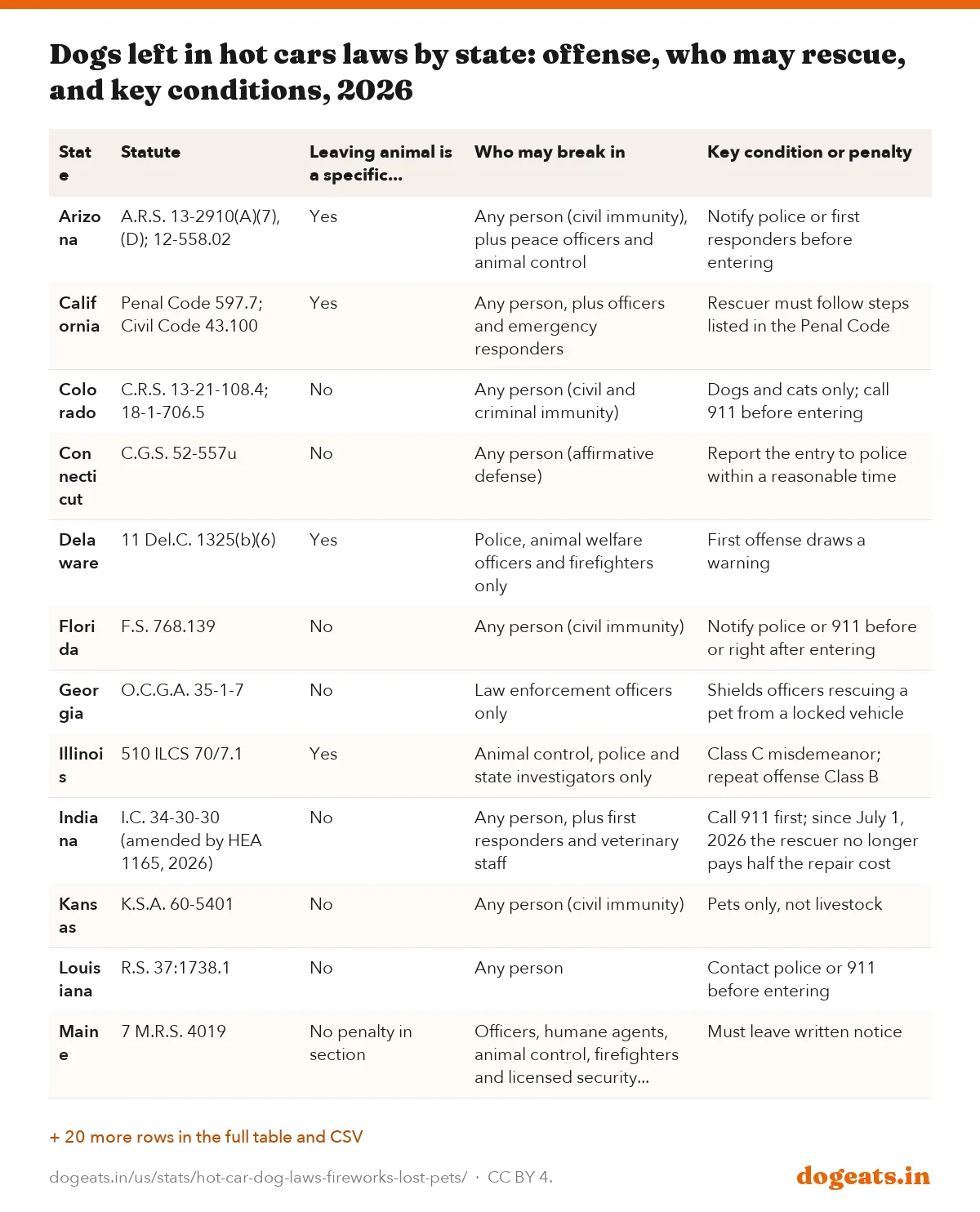
| State | Statute | Leaving animal is a specific offense | Who may break in | Key condition or penalty |
|---|---|---|---|---|
| Arizona | A.R.S. 13-2910(A)(7), (D); 12-558.02 | Yes | Any person (civil immunity), plus peace officers and animal control | Notify police or first responders before entering |
| California | Penal Code 597.7; Civil Code 43.100 | Yes | Any person, plus officers and emergency responders | Rescuer must follow steps listed in the Penal Code |
| Colorado | C.R.S. 13-21-108.4; 18-1-706.5 | No | Any person (civil and criminal immunity) | Dogs and cats only; call 911 before entering |
| Connecticut | C.G.S. 52-557u | No | Any person (affirmative defense) | Report the entry to police within a reasonable time |
| Delaware | 11 Del.C. 1325(b)(6) | Yes | Police, animal welfare officers and firefighters only | First offense draws a warning |
| Florida | F.S. 768.139 | No | Any person (civil immunity) | Notify police or 911 before or right after entering |
| Georgia | O.C.G.A. 35-1-7 | No | Law enforcement officers only | Shields officers rescuing a pet from a locked vehicle |
| Illinois | 510 ILCS 70/7.1 | Yes | Animal control, police and state investigators only | Class C misdemeanor; repeat offense Class B |
| Indiana | I.C. 34-30-30 (amended by HEA 1165, 2026) | No | Any person, plus first responders and veterinary staff | Call 911 first; since July 1, 2026 the rescuer no longer pays half the repair cost |
| Kansas | K.S.A. 60-5401 | No | Any person (civil immunity) | Pets only, not livestock |
| Louisiana | R.S. 37:1738.1 | No | Any person | Contact police or 911 before entering |
| Maine | 7 M.R.S. 4019 | No penalty in section | Officers, humane agents, animal control, firefighters and licensed security guards | Must leave written notice |
| Maryland | Transportation 21-1004.1 | Yes | Police, public safety, animal control, humane officers and fire or rescue only | Cats and dogs |
| Massachusetts | G.L. c.140 174F | Yes | Any person who follows the listed steps, plus officers and firefighters | Fine up to $150 first offense, $500 third |
| Minnesota | M.S. 346.57 | Yes | Peace officers, humane agents, dog wardens and fire or rescue only | Fine of $25 |
| Nevada | NRS 202.487 | Yes | Any person (civil and criminal immunity), plus officers | Report to police, 911 or animal control and stay with the pet |
| New Hampshire | RSA 644:8-aa | Yes | Police and humane agents only | Misdemeanor |
| New Jersey | N.J.S.A. 4:22-17; 4:22-26 | Yes | No rescue provision in these sections | Leaving an animal in a vehicle under inhumane conditions is cruelty |
| New York | Agriculture and Markets Law 353-d | Yes | Police, peace officers, EMS and firefighters only | Companion animals |
| North Carolina | G.S. 14-363.3 | No | Animal control, cruelty investigators, police, firefighters and rescue squads only | Rescue authority only |
| North Dakota | NDCC 36-21.2-12 | Yes | Law enforcement only | Infraction |
| Ohio | R.C. 959.133 | No | Any person (civil immunity) | Contact police, fire or 911 first if possible |
| Oregon | ORS 30.813 | No | Any person | Notify police or 911 before or soon after entering |
| Pennsylvania | 42 Pa.C.S. 8340.3 | No | Police, animal control, humane police and emergency responders only | Dogs and cats |
| Rhode Island | Gen. Laws 4-1-3.2 | Yes | Animal control, police and firefighters only | |
| South Dakota | SDCL 40-1-36 | Yes | Peace officers and humane society officers only | Dogs, cats and other small animals |
| Tennessee | T.C.A. 29-34-209 | No | Any person (civil immunity) | |
| Vermont | 13 V.S.A. 386; 12 V.S.A. 5784 | Yes | Any person (civil immunity), plus humane officers and fire or rescue | Notify police, fire or 911 before entering |
| Virginia | Va. Code 3.2-6504.1 | No | Police, firefighters, EMS and animal control only | Civil immunity for officials |
| Washington | RCW 16.52.340; Laws of 2025, ch. 183 | Yes | Any person (since July 27, 2025), plus animal control and police | Class 2 civil infraction; call 911 first |
| West Virginia | W. Va. Code 61-8-19 | Yes | No rescue provision in this section | Misdemeanor, fine of $300 to $2,000 or up to 6 months |
| Wisconsin | W.S.A. 895.484 | No | Any person (civil immunity) |
In the other 14 states with a law, only named officials may force entry. They include police, animal control officers and firefighters, and in Maine licensed security guards.
Penalties for owners vary widely. For national shelter trends, see our shelter adoption statistics report. Minnesota sets a $25 fine. Massachusetts fines up to $150 for a first offense and $500 for a third. West Virginia allows a fine of $300 to $2,000 or up to 6 months in jail.
How hot does a parked car get?
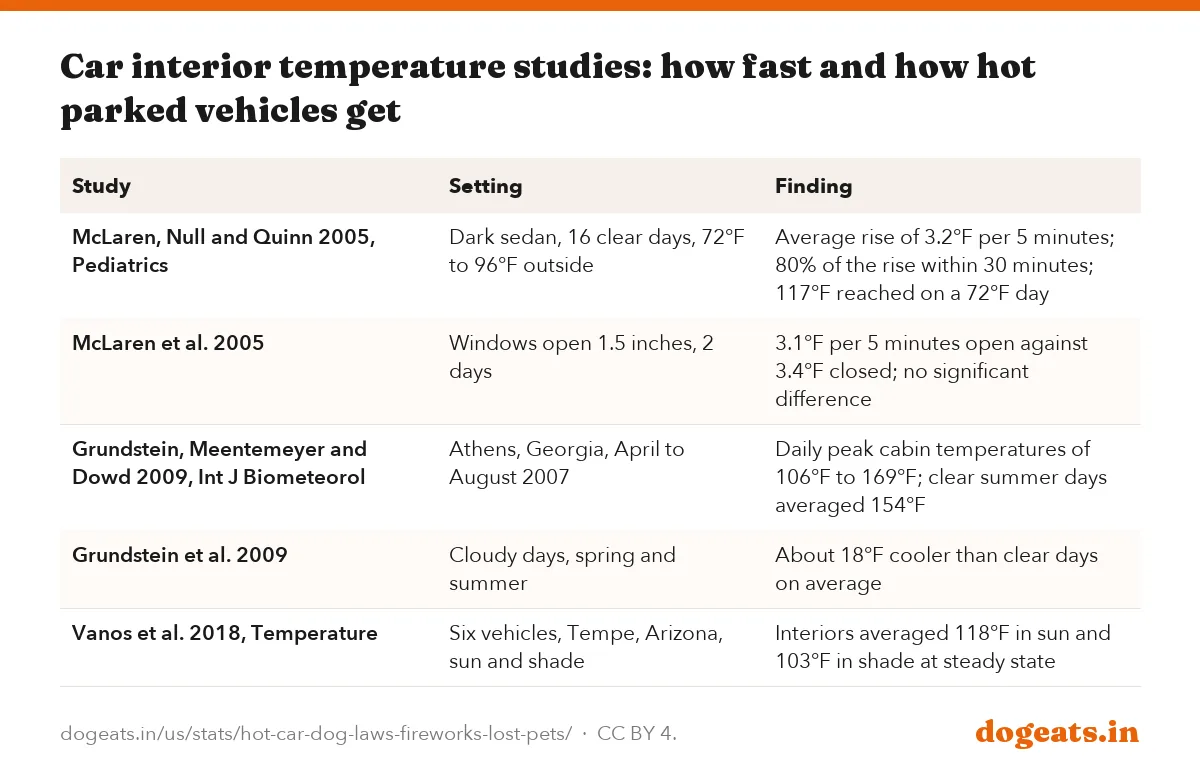
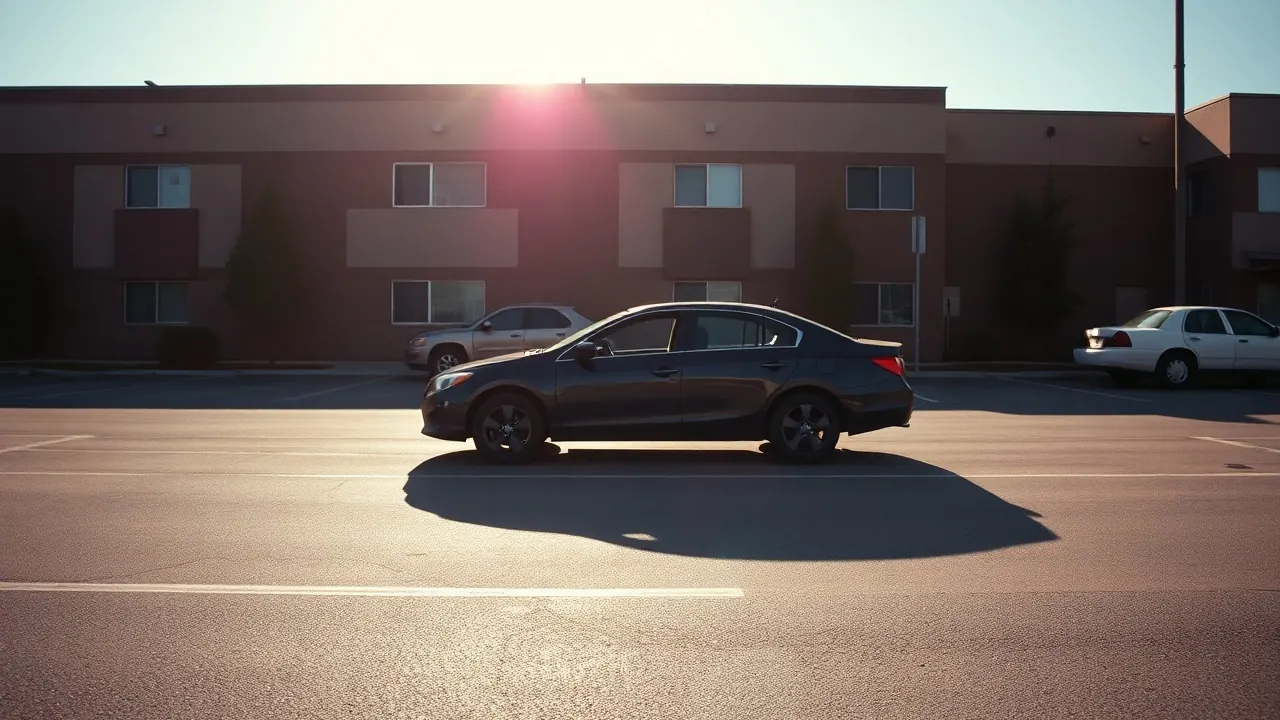
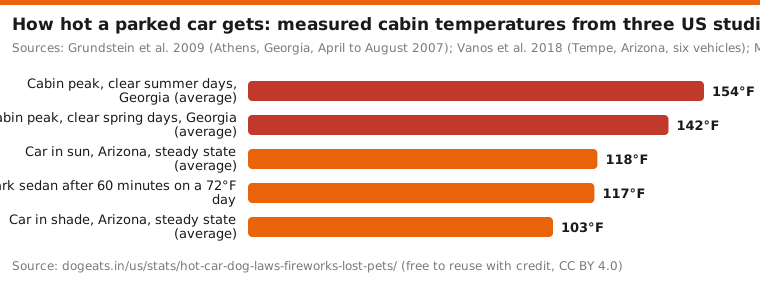
Fast and high, even on mild days. In a 2005 Pediatrics study, a dark sedan was measured on 16 clear days with outside temperatures from 72°F to 96°F.
The inside rose an average of 3.2°F every 5 minutes, with 80% of the rise in the first 30 minutes. Even on the coolest day, 72°F, the car reached 117°F within an hour. On average the interior climbed about 40°F.
Cracking the windows 1.5 inches did not help. The car heated at 3.1°F per 5 minutes with windows open, against 3.4°F closed.
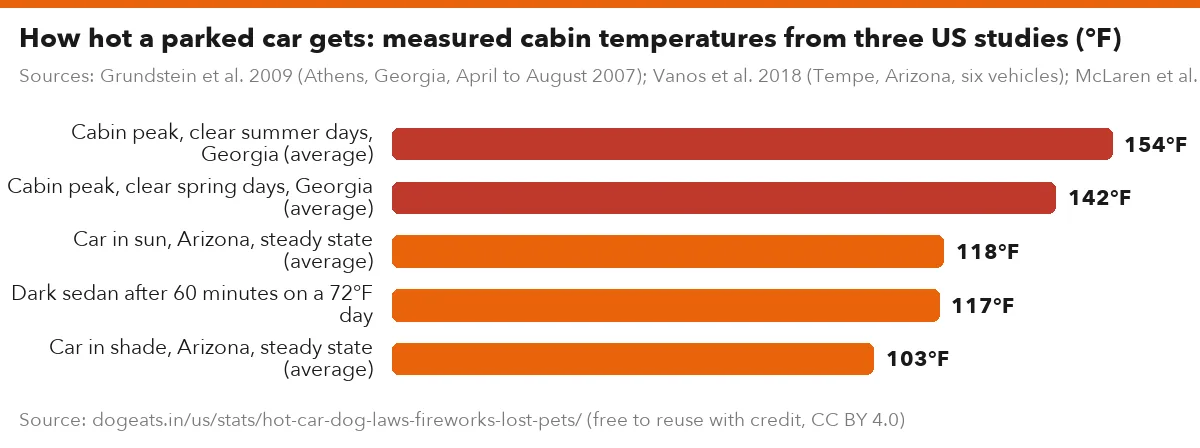
Sources: Grundstein et al. 2009 (Athens, Georgia, April to August 2007); Vanos et al. 2018 (Tempe, Arizona, six vehicles); McLaren et al. 2005 (dark sedan, 16 clear days). Celsius values converted to Fahrenheit and rounded.
Show the numbers
| Label | °F |
|---|---|
| Cabin peak, clear summer days, Georgia (average) | 154°F |
| Cabin peak, clear spring days, Georgia (average) | 142°F |
| Car in sun, Arizona, steady state (average) | 118°F |
| Dark sedan after 60 minutes on a 72°F day | 117°F |
| Car in shade, Arizona, steady state (average) | 103°F |
Embed this chart
| Study | Setting | Finding |
|---|---|---|
| McLaren, Null and Quinn 2005, Pediatrics | Dark sedan, 16 clear days, 72°F to 96°F outside | Average rise of 3.2°F per 5 minutes; 80% of the rise within 30 minutes; 117°F reached on a 72°F day |
| McLaren et al. 2005 | Windows open 1.5 inches, 2 days | 3.1°F per 5 minutes open against 3.4°F closed; no significant difference |
| Grundstein, Meentemeyer and Dowd 2009, Int J Biometeorol | Athens, Georgia, April to August 2007 | Daily peak cabin temperatures of 106°F to 169°F; clear summer days averaged 154°F |
| Grundstein et al. 2009 | Cloudy days, spring and summer | About 18°F cooler than clear days on average |
| Vanos et al. 2018, Temperature | Six vehicles, Tempe, Arizona, sun and shade | Interiors averaged 118°F in sun and 103°F in shade at steady state |
Shade helps but does not make a car safe. In the Arizona study, shaded cars still averaged 103°F inside, against 118°F in the sun.
Most dog heatstroke happens outside the car
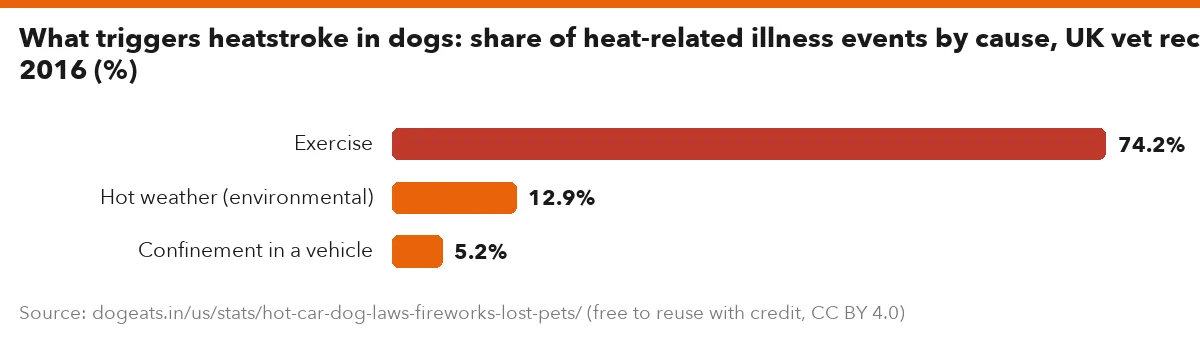
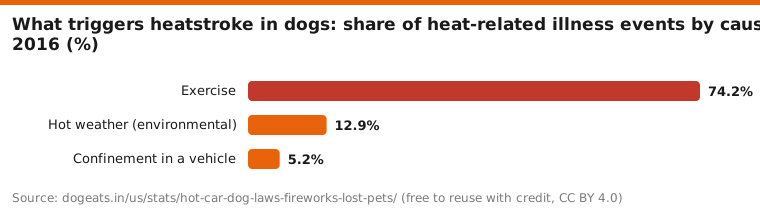
Hot cars are only one cause of heatstroke in dogs. A 2020 study of 905,543 UK dogs under veterinary care in 2016 found 1,259 heat-related illness events in 1,222 dogs.
Exercise triggered 74.2% of the events. Hot weather alone triggered 12.9%, and confinement in a vehicle 5.2%. The odds of death after vehicle heatstroke were similar to those after exercise heatstroke.
Flat-faced breeds had higher odds of all three types. The authors concluded that in the UK, exercise-related heatstroke affects and kills more dogs than hot cars.
Source: Hall, Carter and O'Neill 2020, Animals, VetCompass records of 905,543 UK dogs. Shares of 1,259 events; remaining events had other or unrecorded triggers.
Show the numbers
| Label | % |
|---|---|
| Exercise | 74.2% |
| Hot weather (environmental) | 12.9% |
| Confinement in a vehicle | 5.2% |
Embed this chart
No US agency counts dogs that die in hot cars. The UK figures come from vet records, so they cover only dogs that reached a vet.
Is July 5 the busiest day for animal shelters?
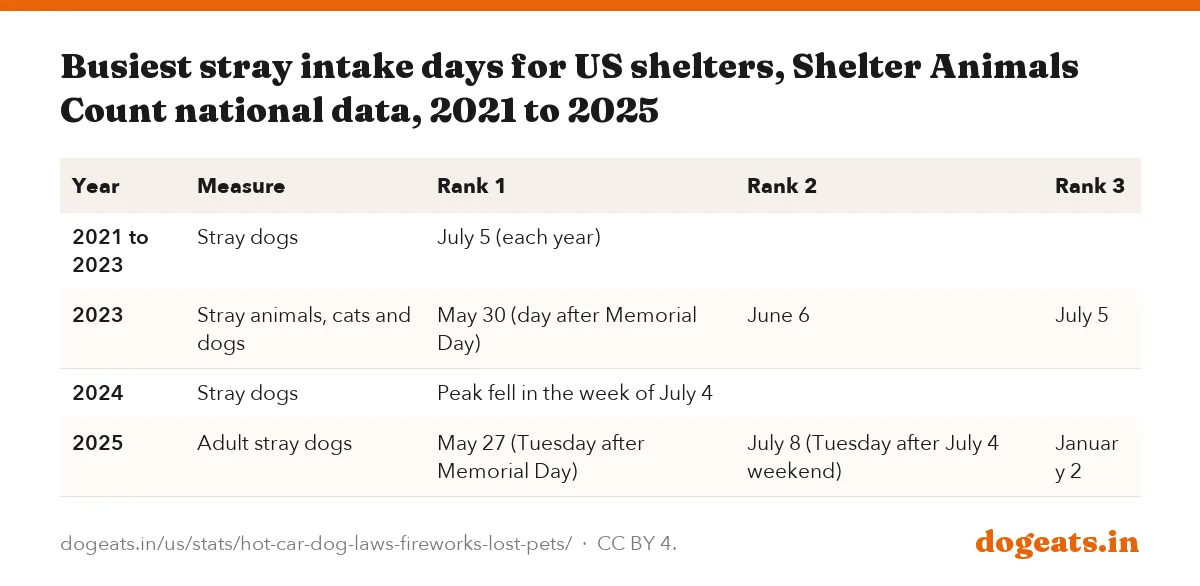
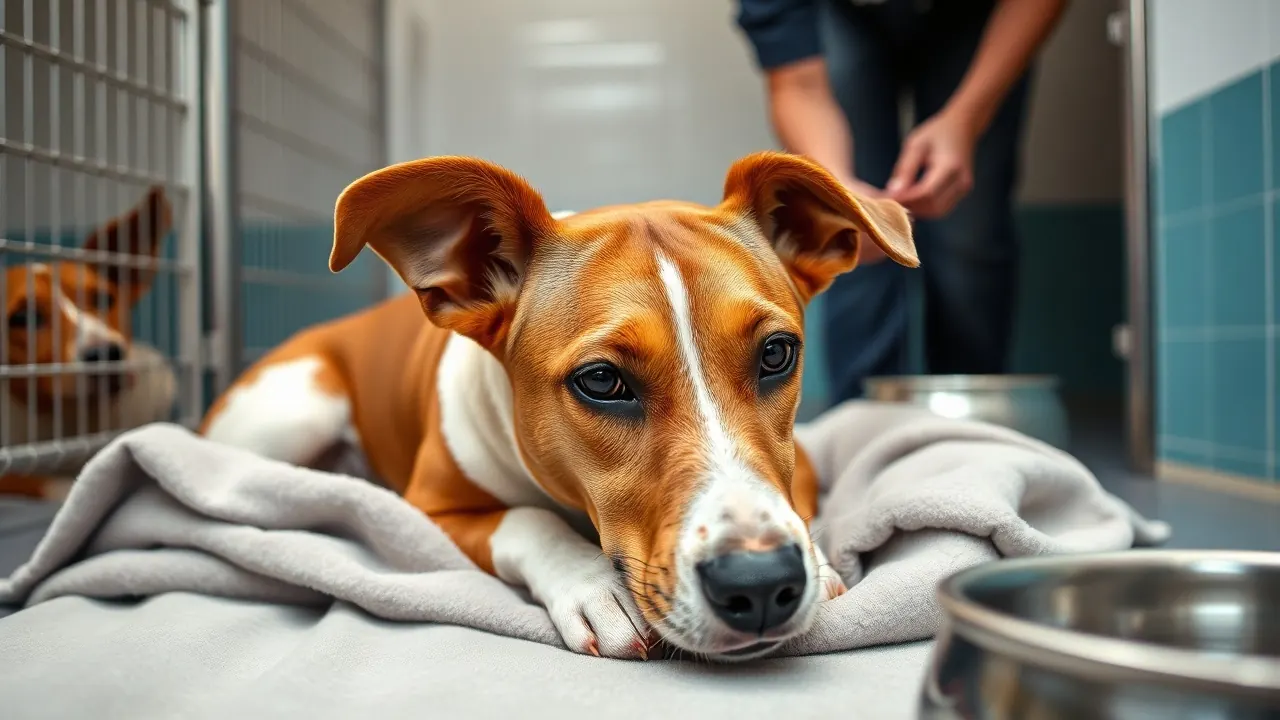
Sometimes, for stray dogs, but not every year. Shelter Animals Count, a national shelter data nonprofit, found July 5 was the single highest stray dog intake day nationally in 2021, 2022 and 2023.
For cats and dogs combined, the picture changes. In 2023, July 5 ranked third, behind May 30 and June 6, the two days after Memorial Day weekend.
In 2025, the top intake day for adult stray dogs was May 27, the Tuesday after Memorial Day. The second was July 8, the Tuesday after the July 4 weekend, and the third January 2.
| Year | Measure | Rank 1 | Rank 2 | Rank 3 |
|---|---|---|---|---|
| 2021 to 2023 | Stray dogs | July 5 (each year) | ||
| 2023 | Stray animals, cats and dogs | May 30 (day after Memorial Day) | June 6 | July 5 |
| 2024 | Stray dogs | Peak fell in the week of July 4 | ||
| 2025 | Adult stray dogs | May 27 (Tuesday after Memorial Day) | July 8 (Tuesday after July 4 weekend) | January 2 |
Shelter Animals Count also reported that 638,000 dogs and cats were returned to their owners in 2025, a 3% drop from 2024.
Fireworks and lost dogs: what local shelter data show
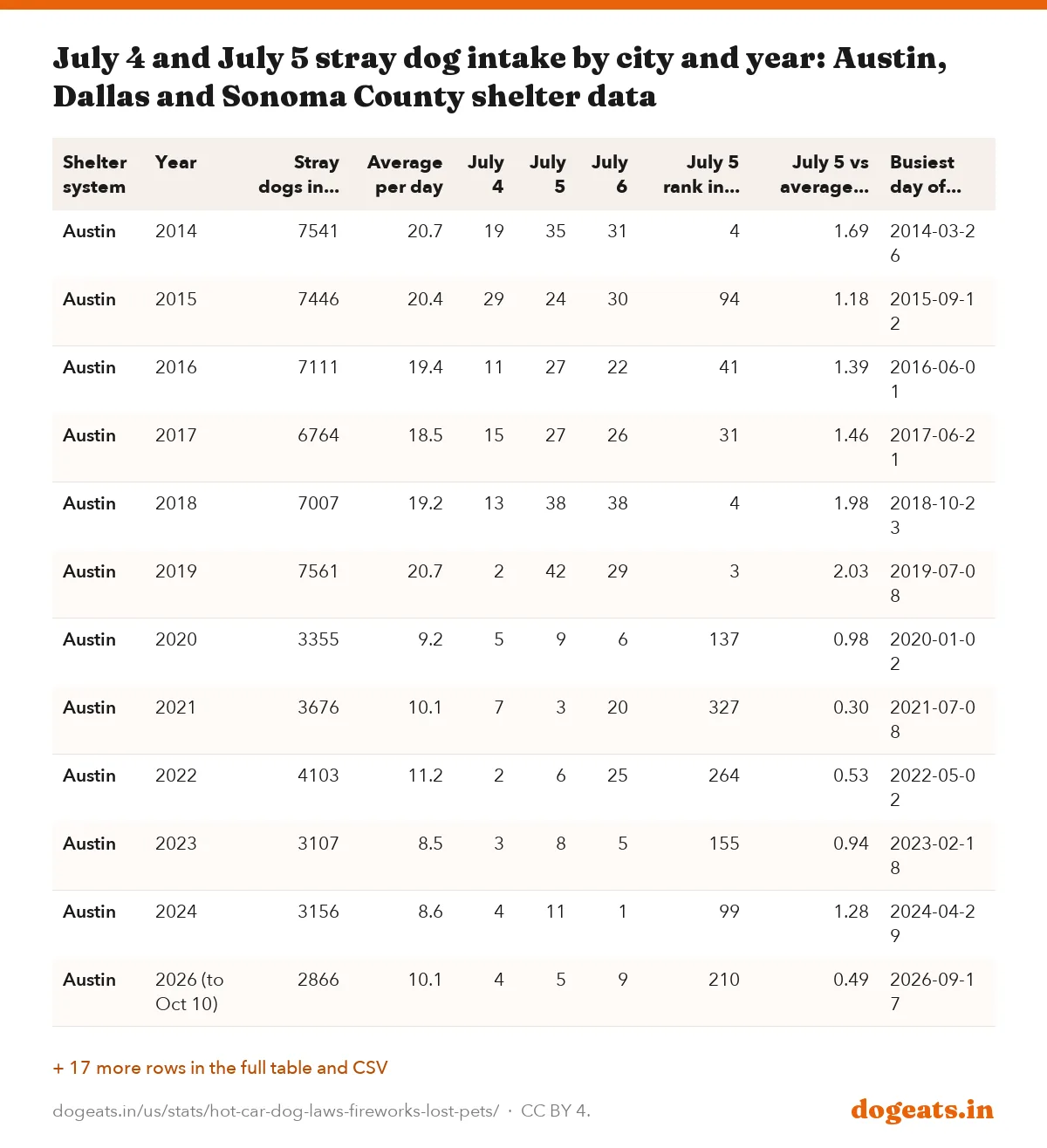
We tested the July 5 claim with open daily intake data from three public shelter systems: Austin, Dallas and Sonoma County, California. We counted stray dog intakes per day and ranked every day of each year.
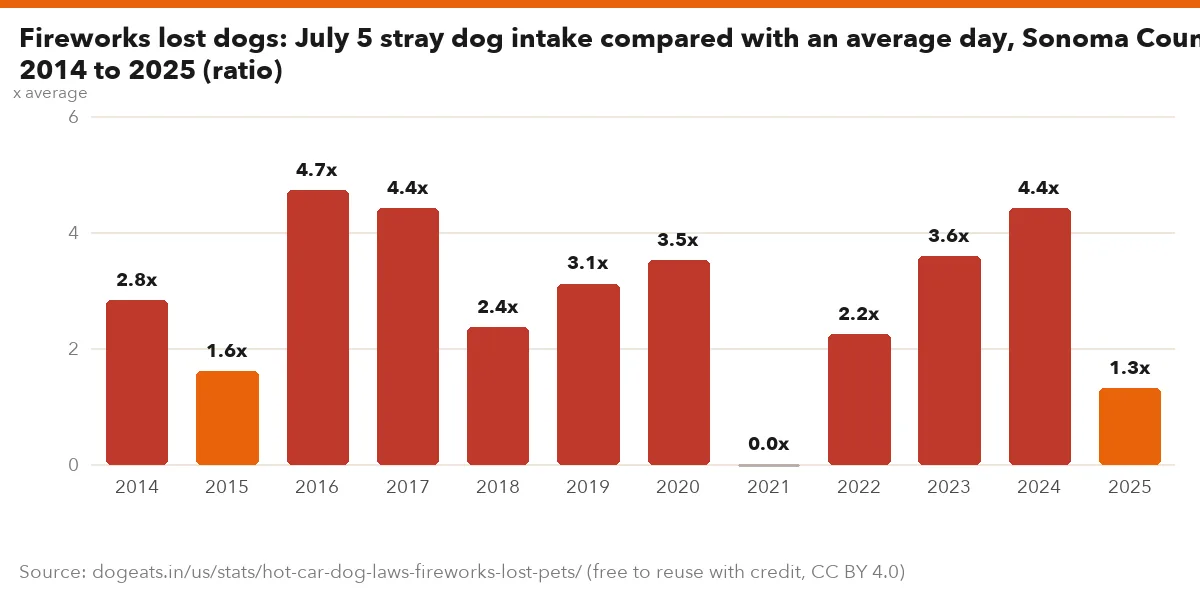
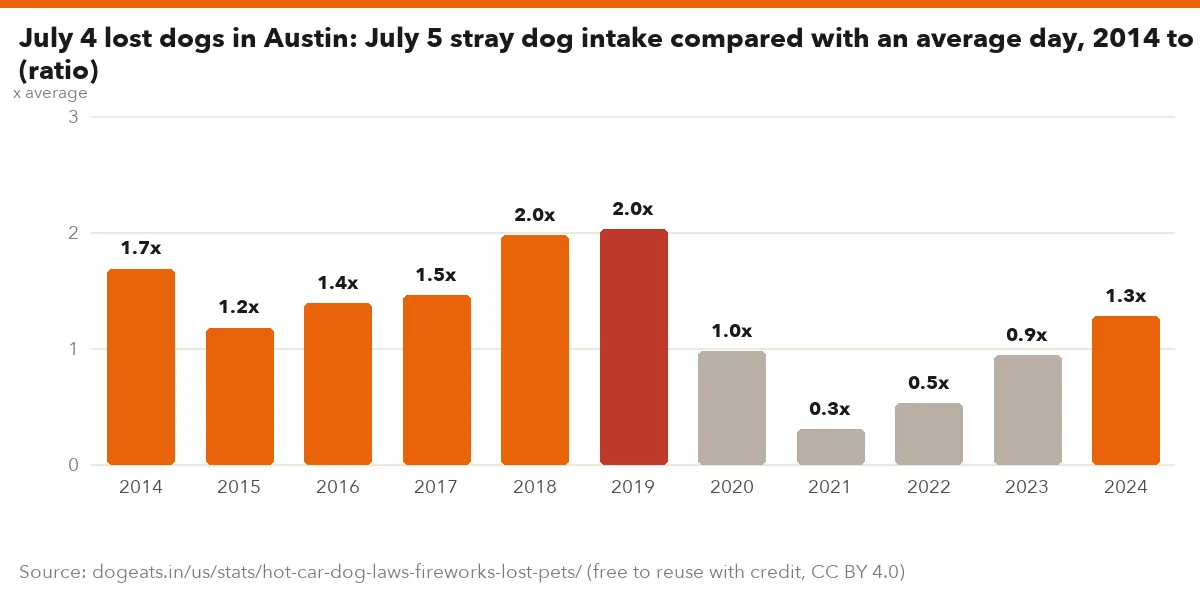
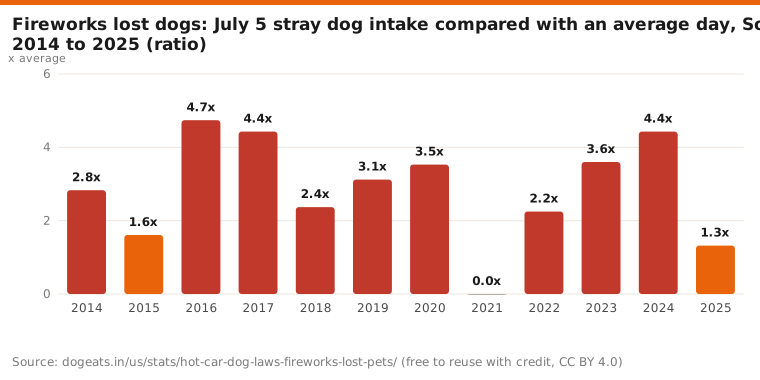
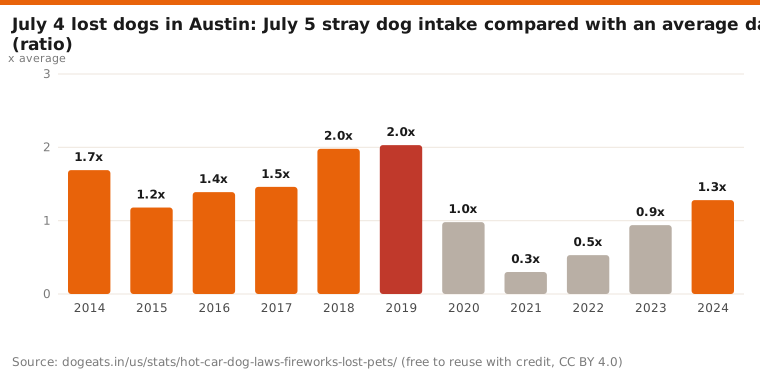
July 5 ranked in the year's top 10 stray dog days in 10 of 29 city-years. It was the single busiest day only twice, both in Sonoma County, in 2016 and 2017. It beat the average day in 21 of the 29.
July 4 itself was usually quiet. It came in below the year's average day in 23 of 29 city-years, which fits with shelters closing or cutting hours for the holiday.
Source: Sonoma County Animal Services intake data (county open data portal), downloaded October 11, 2026. Ratio = July 5 stray dog intakes divided by the year's average daily stray dog intakes. Our calculation.
Show the numbers
| Label | x average |
|---|---|
| 2014 | 2.8x |
| 2015 | 1.6x |
| 2016 | 4.7x |
| 2017 | 4.4x |
| 2018 | 2.4x |
| 2019 | 3.1x |
| 2020 | 3.5x |
| 2021 | 0.0x |
| 2022 | 2.2x |
| 2023 | 3.6x |
| 2024 | 4.4x |
| 2025 | 1.3x |
Embed this chart
Source: City of Austin open data, Austin Animal Center intakes, downloaded October 11, 2026. Austin's intake fell sharply from 2020. Our calculation.
Show the numbers
| Label | x average |
|---|---|
| 2014 | 1.7x |
| 2015 | 1.2x |
| 2016 | 1.4x |
| 2017 | 1.5x |
| 2018 | 2.0x |
| 2019 | 2.0x |
| 2020 | 1.0x |
| 2021 | 0.3x |
| 2022 | 0.5x |
| 2023 | 0.9x |
| 2024 | 1.3x |
Embed this chart
| Shelter system | Year | Stray dogs in year | Average per day | July 4 | July 5 | July 6 | July 5 rank in year | July 5 vs average day | Busiest day of year |
|---|---|---|---|---|---|---|---|---|---|
| Austin | 2014 | 7541 | 20.7 | 19 | 35 | 31 | 4 | 1.69 | 2014-03-26 |
| Austin | 2015 | 7446 | 20.4 | 29 | 24 | 30 | 94 | 1.18 | 2015-09-12 |
| Austin | 2016 | 7111 | 19.4 | 11 | 27 | 22 | 41 | 1.39 | 2016-06-01 |
| Austin | 2017 | 6764 | 18.5 | 15 | 27 | 26 | 31 | 1.46 | 2017-06-21 |
| Austin | 2018 | 7007 | 19.2 | 13 | 38 | 38 | 4 | 1.98 | 2018-10-23 |
| Austin | 2019 | 7561 | 20.7 | 2 | 42 | 29 | 3 | 2.03 | 2019-07-08 |
| Austin | 2020 | 3355 | 9.2 | 5 | 9 | 6 | 137 | 0.98 | 2020-01-02 |
| Austin | 2021 | 3676 | 10.1 | 7 | 3 | 20 | 327 | 0.30 | 2021-07-08 |
| Austin | 2022 | 4103 | 11.2 | 2 | 6 | 25 | 264 | 0.53 | 2022-05-02 |
| Austin | 2023 | 3107 | 8.5 | 3 | 8 | 5 | 155 | 0.94 | 2023-02-18 |
| Austin | 2024 | 3156 | 8.6 | 4 | 11 | 1 | 99 | 1.28 | 2024-04-29 |
| Austin | 2026 (to Oct 10) | 2866 | 10.1 | 4 | 5 | 9 | 210 | 0.49 | 2026-09-17 |
| Dallas | 2023 | 15369 | 42.1 | 64 | 59 | 53 | 33 | 1.40 | 2023-09-20 |
| Dallas | 2024 | 15681 | 42.8 | 46 | 49 | 41 | 93 | 1.14 | 2024-04-27 |
| Dallas | 2025 | 12778 | 35.0 | 49 | 29 | 69 | 244 | 0.83 | 2025-07-01 |
| Dallas | 2026 (to Oct 10) | 9728 | 34.4 | 32 | 34 | 26 | 134 | 0.99 | 2026-02-25 |
| Sonoma County | 2014 | 1162 | 3.2 | 2 | 9 | 1 | 6 | 2.83 | 2014-10-10 |
| Sonoma County | 2015 | 1364 | 3.7 | 5 | 6 | 5 | 59 | 1.61 | 2015-03-13 |
| Sonoma County | 2016 | 1391 | 3.8 | 0 | 18 | 9 | 1 | 4.74 | 2016-07-05 |
| Sonoma County | 2017 | 1319 | 3.6 | 1 | 16 | 10 | 1 | 4.43 | 2017-07-05 |
| Sonoma County | 2018 | 1231 | 3.4 | 1 | 8 | 8 | 15 | 2.37 | 2018-12-26 |
| Sonoma County | 2019 | 1169 | 3.2 | 1 | 10 | 7 | 4 | 3.12 | 2019-10-04 |
| Sonoma County | 2020 | 725 | 2.0 | 4 | 7 | 4 | 7 | 3.53 | 2020-02-18 |
| Sonoma County | 2021 | 692 | 1.9 | 0 | 0 | 6 | 275 | 0.00 | 2021-12-25 |
| Sonoma County | 2022 | 811 | 2.2 | 2 | 5 | 6 | 27 | 2.25 | 2022-01-03 |
| Sonoma County | 2023 | 1014 | 2.8 | 2 | 10 | 4 | 3 | 3.60 | 2023-07-27 |
| Sonoma County | 2024 | 1156 | 3.2 | 1 | 14 | 6 | 3 | 4.43 | 2024-03-13 |
| Sonoma County | 2025 | 1109 | 3.0 | 1 | 4 | 0 | 88 | 1.32 | 2025-12-31 |
| Sonoma County | 2026 (to Oct 10) | 743 | 2.6 | 0 | 3 | 4 | 87 | 1.14 | 2026-10-08 |
Dallas shows the weakest July 5 effect. July 5 beat the average day in 2 of its 4 years, and in 2025 the busiest day of the year was July 1, before the holiday.
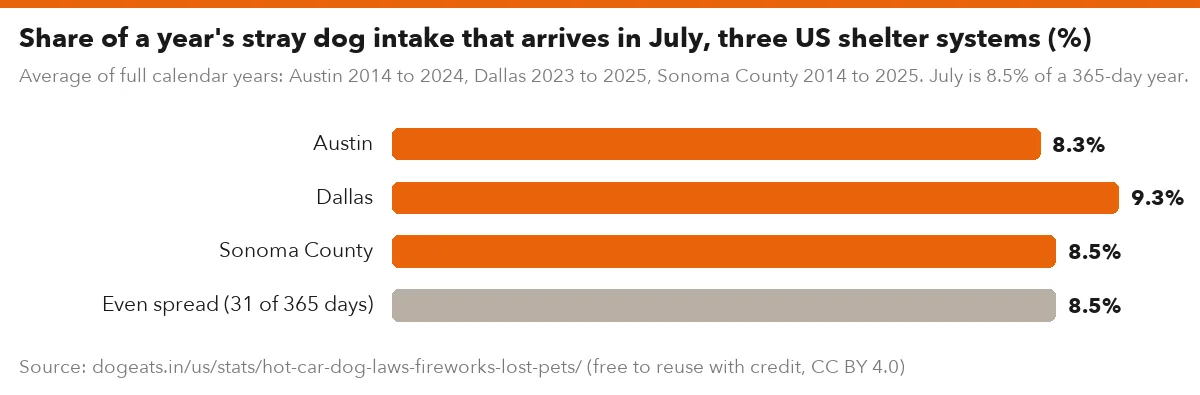
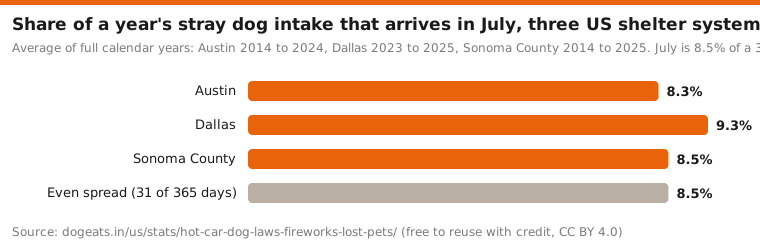
July as a whole runs close to normal. For the food side of the holiday, see our holiday food dangers report. Its share of the year's stray dogs averaged 8.3% in Austin, 9.3% in Dallas and 8.5% in Sonoma County, against 8.5% for an even spread.
These are three systems, not a national sample. Outcomes for strays that are never reclaimed are covered in our shelter euthanasia by state report. Daily counts depend on shelter hours and intake policies, and a stray dog's intake date is not always the day it got lost.
Frequently asked questions
Is it illegal to leave a dog in a hot car?
In 17 states it is a specific offense to leave an animal in a parked vehicle in dangerous conditions. Thirty-two states have some law on animals in parked vehicles. In other states, a serious case may still be charged under general cruelty law.
Can I break a car window to save a dog?
In 16 states, a bystander who follows the law's steps is protected, usually from civil claims. The steps typically include confirming the car is locked, calling 911 first, using minimal force and staying with the dog.
Which states let anyone rescue a dog from a hot car?
Arizona, California, Colorado, Connecticut, Florida, Indiana, Kansas, Louisiana, Massachusetts, Nevada, Ohio, Oregon, Tennessee, Vermont, Washington and Wisconsin, based on our reading of the statutes in October 2026.
How hot does a car get on a 70-degree day?
In a 2005 Pediatrics study, a car on a 72°F sunny day reached 117°F within an hour. Most of the rise came in the first 30 minutes.
Does cracking the windows keep a car cool?
No. In the same study, windows open 1.5 inches barely changed the heating rate: 3.1°F per 5 minutes against 3.4°F with windows closed.
Is July 5 the busiest day for animal shelters?
For stray dogs nationally it was in 2021, 2022 and 2023, Shelter Animals Count says. For adult stray dogs in 2025, the day after Memorial Day ranked first and the Tuesday after the July 4 weekend second.
Do fireworks cause more lost dogs?
Stray dog intake rises around July 4 in national data, which points to fireworks and holiday disruption. In our local test, July 5 ranked in the top 10 days of the year in 10 of 29 city-years.
What should I do if I see a dog in a hot car?
Call 911 or local animal control first and note the car's location. Only break in if your state's law allows it and you meet its conditions.
Methodology and limitations
We read the text of each state's statute on animals in parked vehicles in October 2026. We used the Animal Legal and Historical Center at Michigan State University as a lead and its statute pages for text, and checked several states against official legislature sites.
We classified a state as letting any person rescue if its statute gives immunity or a defense to a private person who enters a vehicle. Our sorting differs from the center's 2026 map for Delaware, Georgia, Nevada and Washington.
For the July test, we downloaded daily stray dog intake counts from open data portals for Austin, Dallas and Sonoma County on October 11, 2026. We ranked each day within its calendar year, counting ties as the same rank. The 29 city-years include January 1 to October 10, 2026, for each system.
Austin's data come from two systems. We used 2014 to 2024 from the older one and January to October 2026 from the newer one, skipping 2025, when the system changed.
Sources
- Animal Legal and Historical Center, Michigan State University College of Law, map of state laws on animals in parked cars (2026), Lead list of 32 states and statute pages
- Shelter Animals Count, Data Drop: Post-Holiday Trends in Lost Pets, June 19, 2026, Top stray dog intake days in 2025
- McLaren C, Null J, Quinn J, Heat stress from enclosed vehicles, Pediatrics, 2005, Car interior temperature rise
- Also consulted: Shelter Animals Count, Stray dog intakes spike after July 4th, June 23, 2025, Shelter Animals Count, In 2023, July 5 was the 3rd highest stray intake day, June 28, 2024, Shelter Animals Count, Age and reunification trends, June 3, 2026, Washington State Legislature, HB 1046, Chapter 183, Laws of 2025, Arizona Revised Statutes 12-558.02, Maryland Code, Transportation 21-1004.1, Nevada Revised Statutes 202.487 (text via Animal Legal and Historical Center), Grundstein A et al., Maximum vehicle cabin temperatures under different meteorological conditions, 2009, Vanos JK et al., Temperature, 2018, Hall EJ, Carter AJ, O'Neill DG, Dogs don't die just in hot cars, Animals, 2020, City of Austin, Austin Animal Center Intakes (10/01/2013 to 05/05/2025), City of Austin, Austin Animal Center Intakes (current system), City of Dallas, Dallas Animal Shelter Data FY 2023 to 2026, City of Dallas, Dallas Animal Shelter Data FY 2022 to 2023, Sonoma County, Animal Shelter Intake and Outcome, Indiana Public Media, New state law to increase penalties for animal abuse, neglect, March 19, 2026.
Cite, embed and download
This report, its data and its images are free to reuse under a Creative Commons Attribution 4.0 licence. Credit dogeats.in with a link to this page. Every chart has its own embed code, every table has a CSV and an image download, and the images below are ready for social posts, slides and articles.
Cite this report
Link to this report
Every chart and table as an image