Explainer · Updated October 2026
Dog blood banks and blood transfusion in India: where they are, who can donate, blood types and safety
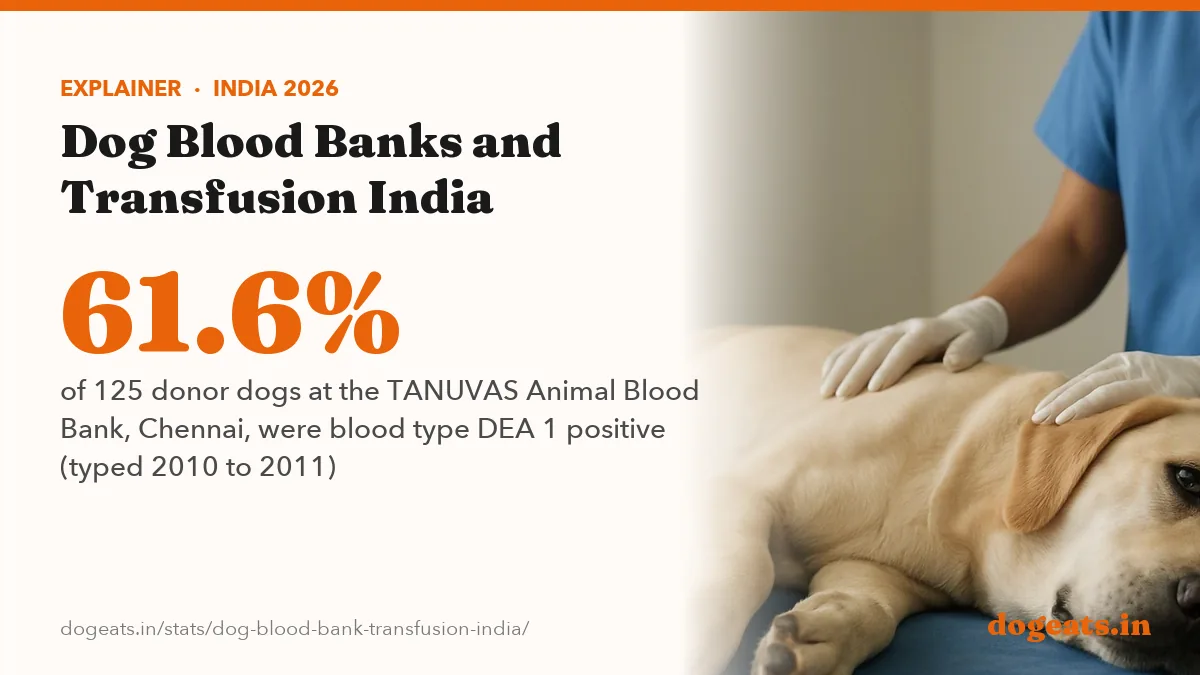
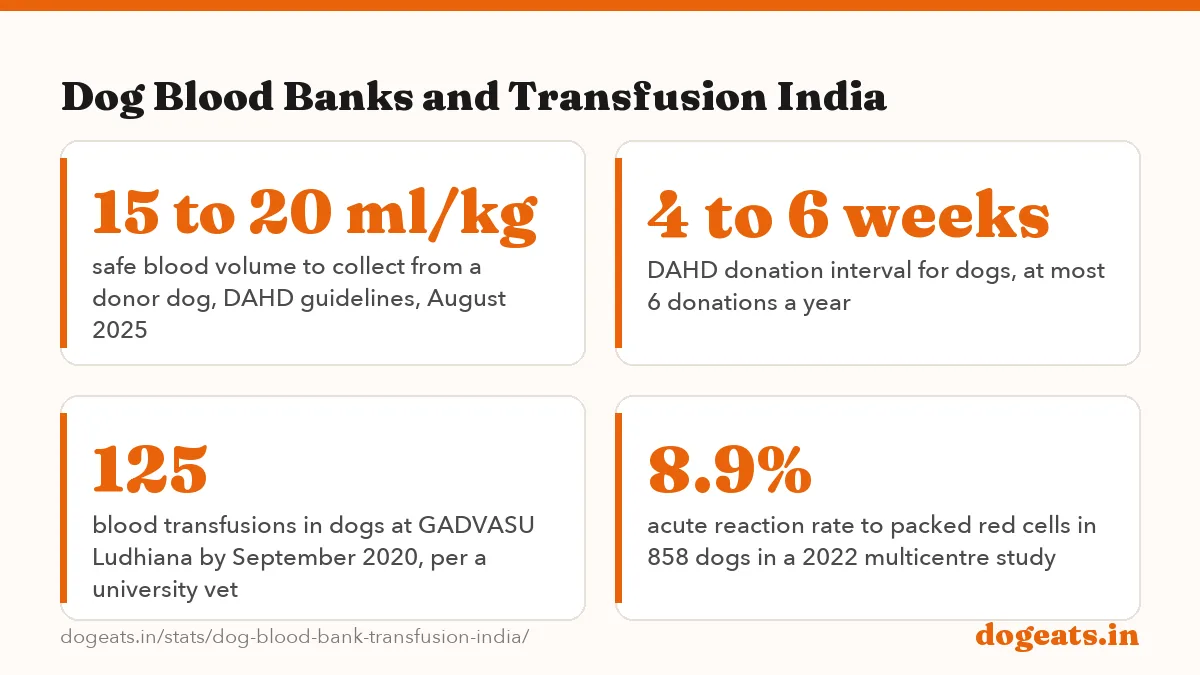
India has few dog blood banks. Two are confirmed: the TANUVAS Animal Blood Bank at Madras Veterinary College in Chennai and the GADVASU blood bank in Ludhiana. Under DAHD's August 2025 guidelines, a donor dog should be 1 to 8 years old and weigh at least 25 kg if it is a large breed. It can give 15 to 20 ml per kg, no more often than every 4 to 6 weeks. Among 125 donor dogs typed in Chennai, 61.6% were DEA 1 positive.
Key findings
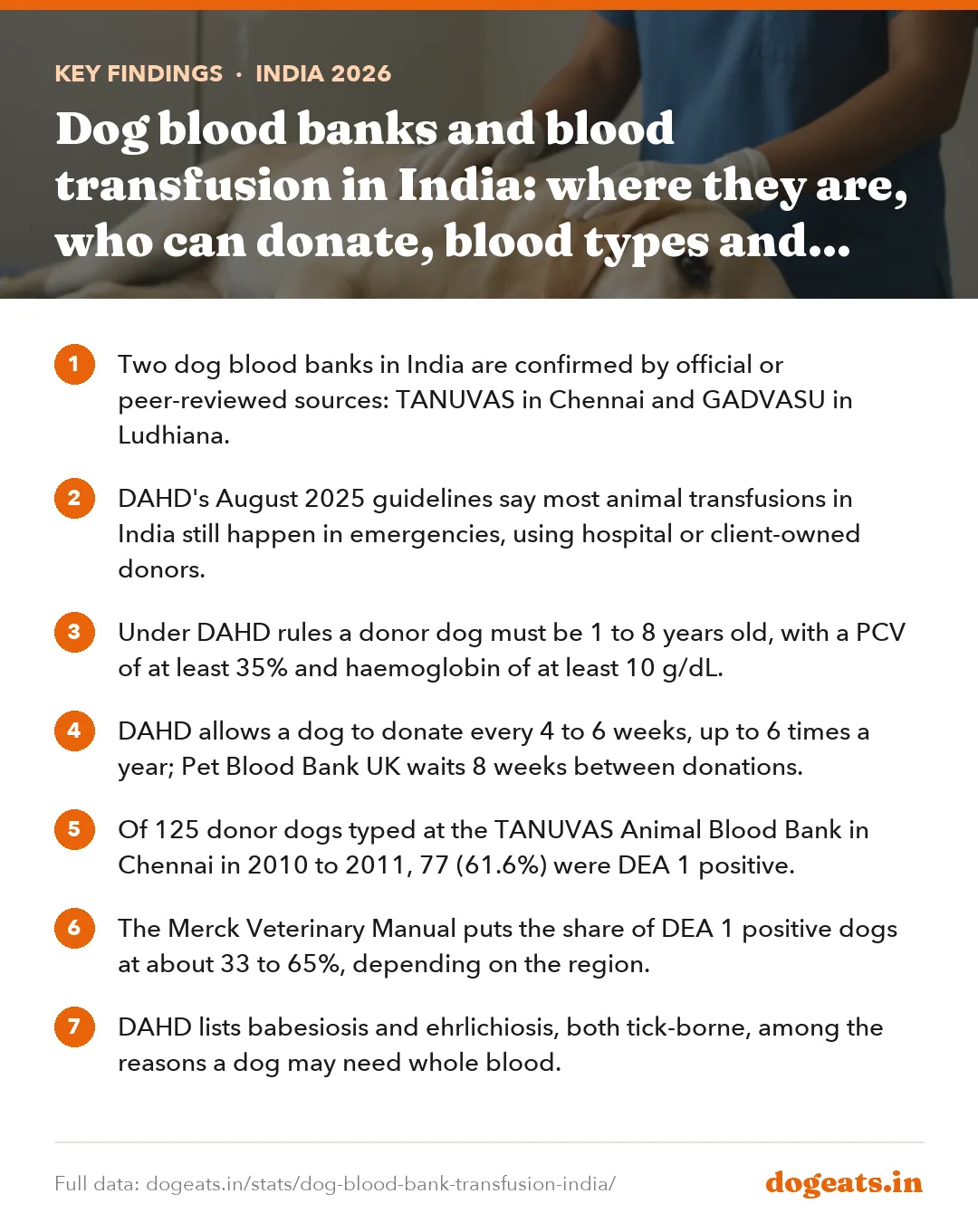
- Two dog blood banks in India are confirmed by official or peer-reviewed sources: TANUVAS in Chennai and GADVASU in Ludhiana.
- DAHD's August 2025 guidelines say most animal transfusions in India still happen in emergencies, using hospital or client-owned donors.
- Under DAHD rules a donor dog must be 1 to 8 years old, with a PCV of at least 35% and haemoglobin of at least 10 g/dL.
- DAHD allows a dog to donate every 4 to 6 weeks, up to 6 times a year; Pet Blood Bank UK waits 8 weeks between donations.
- Of 125 donor dogs typed at the TANUVAS Animal Blood Bank in Chennai in 2010 to 2011, 77 (61.6%) were DEA 1 positive.
- The Merck Veterinary Manual puts the share of DEA 1 positive dogs at about 33 to 65%, depending on the region.
- DAHD lists babesiosis and ehrlichiosis, both tick-borne, among the reasons a dog may need whole blood.
- In 858 dogs given blood products in 2022, 8.9% reacted to packed red cells and 4.5% to plasma.
- Packed red cells stored longer than 28 days raised the odds of a febrile reaction about four times, against cells stored 14 days or fewer.
Is there a blood bank for dogs in India?
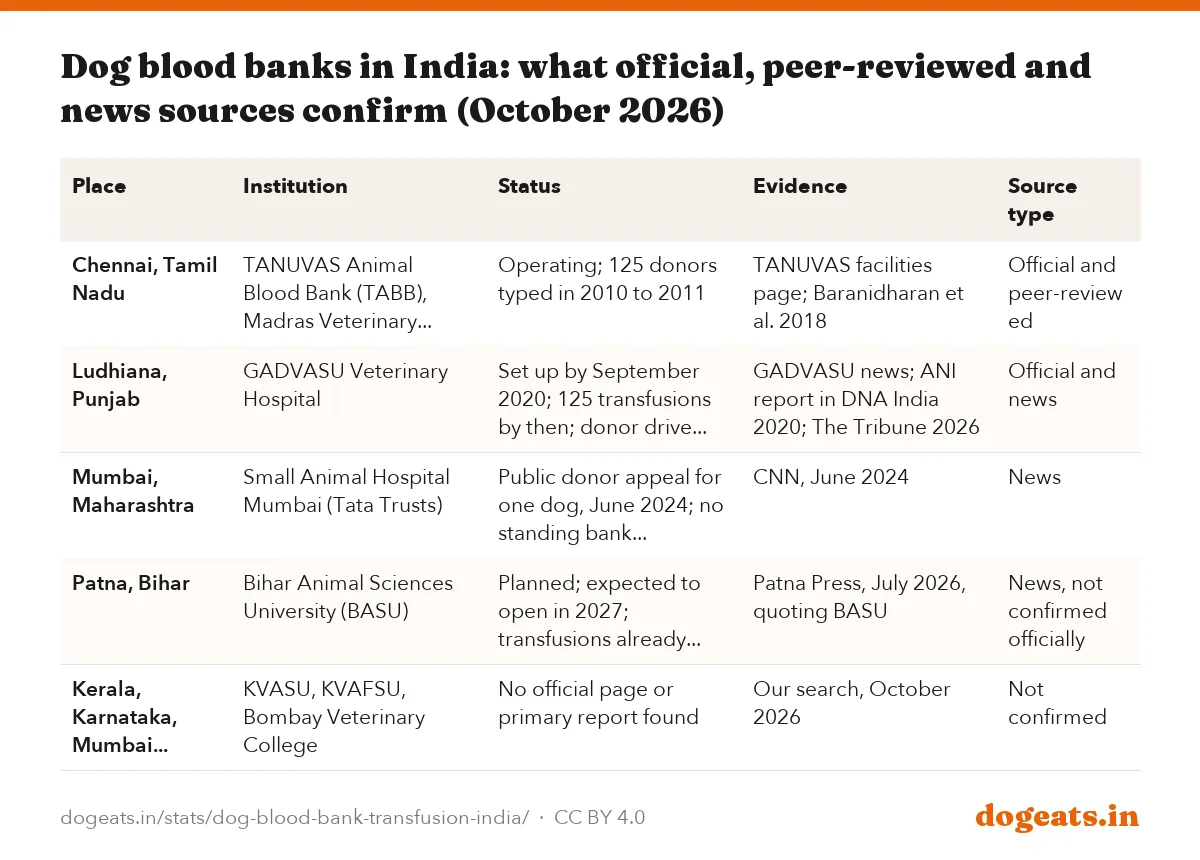
Yes, but very few. Official or peer-reviewed sources confirm two: the TANUVAS Animal Blood Bank at Madras Veterinary College in Chennai, and the dog blood bank at GADVASU in Ludhiana.
The Chennai bank was typing donor dogs by January 2010, according to a 2018 paper by TANUVAS clinicians. The college still lists an Animal Blood Bank among its facilities. The Department of Animal Husbandry and Dairying (DAHD) says it drafted its national guidelines with reference to the TANUVAS SOP.
GADVASU set up its blood bank by September 2020, after approval from the Department of Biotechnology. Punjab's Governor praised it as the first dog blood bank in northern India, offering blood, platelets and plasma to sick or injured dogs. In June 2026 university officials asked Ludhiana residents to register their pet dogs as blood donors for emergencies.
| Place | Institution | Status | Evidence | Source type |
|---|---|---|---|---|
| Chennai, Tamil Nadu | TANUVAS Animal Blood Bank (TABB), Madras Veterinary College | Operating; 125 donors typed in 2010 to 2011 | TANUVAS facilities page; Baranidharan et al. 2018 | Official and peer-reviewed |
| Ludhiana, Punjab | GADVASU Veterinary Hospital | Set up by September 2020; 125 transfusions by then; donor drive June 2026 | GADVASU news; ANI report in DNA India 2020; The Tribune 2026 | Official and news |
| Mumbai, Maharashtra | Small Animal Hospital Mumbai (Tata Trusts) | Public donor appeal for one dog, June 2024; no standing bank confirmed | CNN, June 2024 | News |
| Patna, Bihar | Bihar Animal Sciences University (BASU) | Planned; expected to open in 2027; transfusions already offered at its clinical complex | Patna Press, July 2026, quoting BASU | News, not confirmed officially |
| Kerala, Karnataka, Mumbai colleges | KVASU, KVAFSU, Bombay Veterinary College | No official page or primary report found | Our search, October 2026 | Not confirmed |
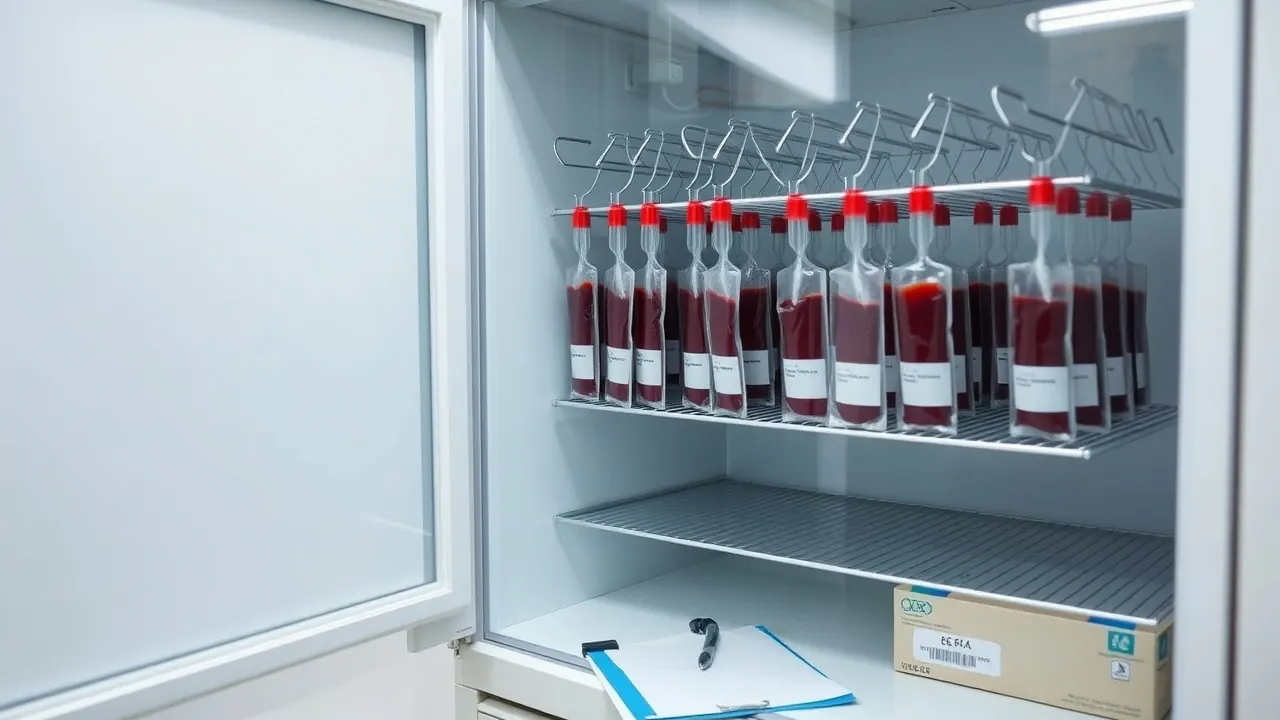
Outside these banks, transfusion depends on finding a donor on the day. DAHD's guidelines say most animal transfusions in India still happen in emergency settings. They rely on hospital or client-owned donors, without consistent screening, blood typing or standard protocols.
In June 2024 the Small Animal Hospital in Mumbai made a public appeal for a donor for a 7-month-old dog. It had been admitted with suspected tick fever and life-threatening anaemia. A donor was found the same day the appeal went out, hospital staff told CNN.
A short supply of vets makes it harder still. See our report on vets per lakh population in India for how unevenly care is spread across states.
Which dogs can donate blood in India?
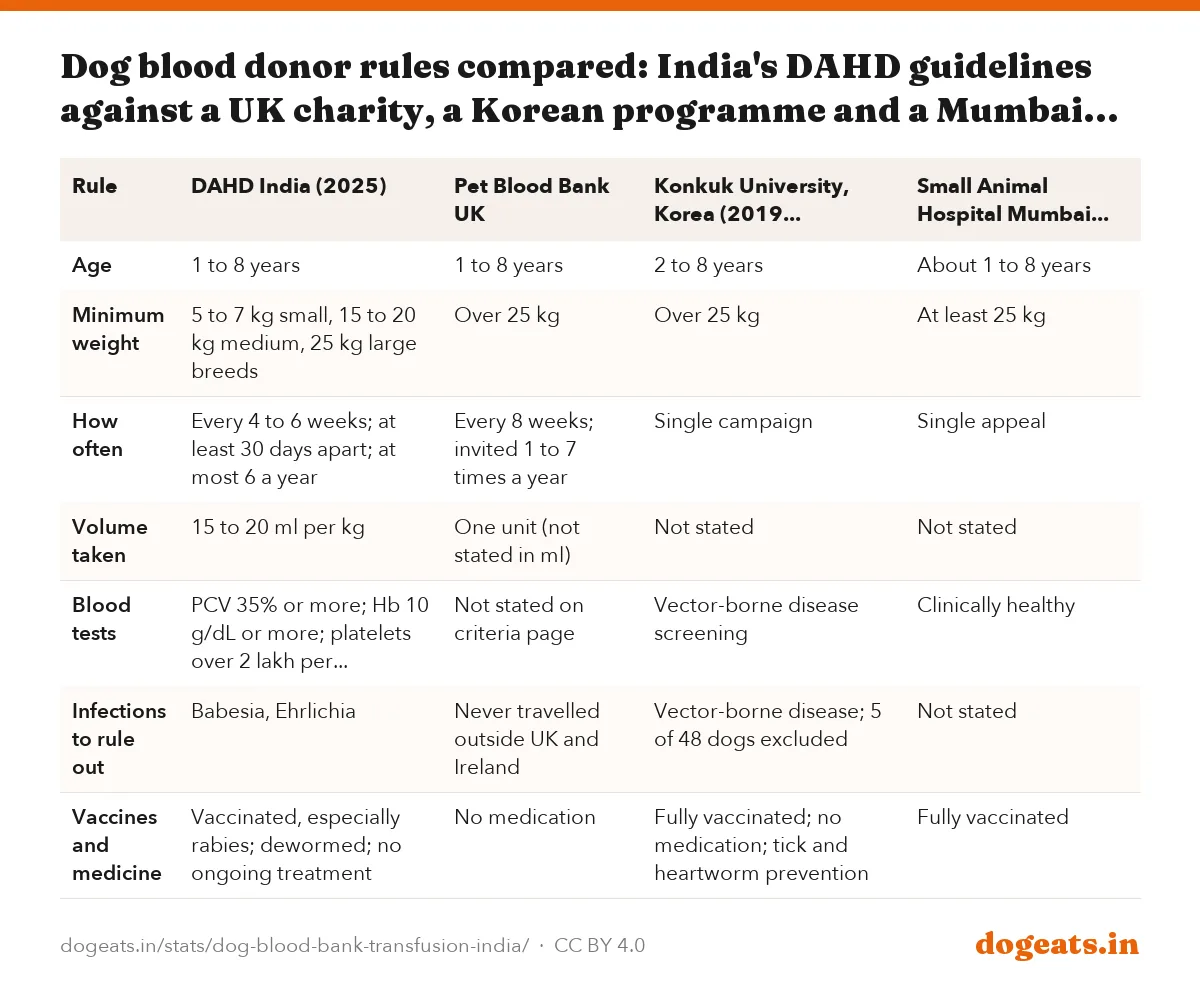
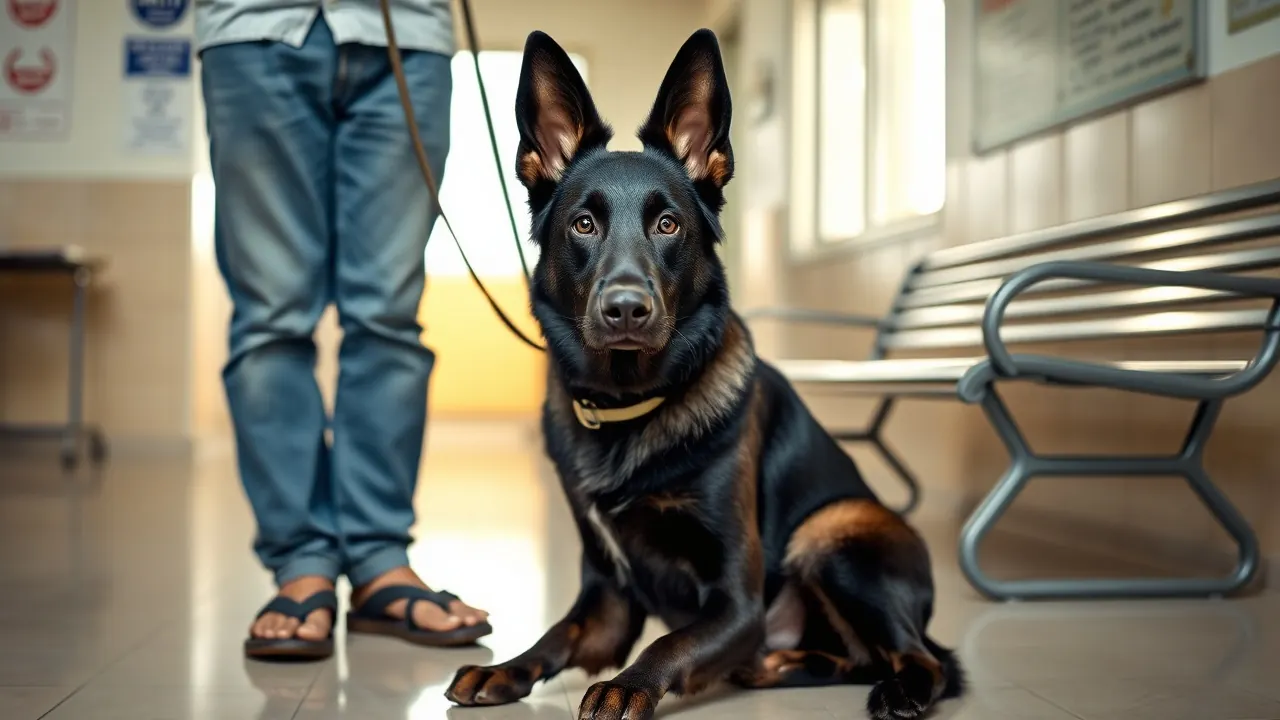
Under DAHD's August 2025 guidelines, a donor dog must be 1 to 8 years old. It must weigh at least 25 kg if it is a large breed, 15 to 20 kg if medium and 5 to 7 kg if small. It needs a PCV of at least 35% and haemoglobin of at least 10 g/dL.
The dog must be clinically healthy, docile, on no medicine, vaccinated (especially against rabies), regularly dewormed, and free of tick-borne disease. Females must not be pregnant or recently lactating. Owners give written consent, and donation is voluntary and unpaid.
DAHD allows a dog to donate every 4 to 6 weeks, with at least 30 days between donations and at most 6 donations a year. The safe volume is 15 to 20 ml per kg of body weight, collected from the jugular vein into a closed bag with CPDA-1.
| Rule | DAHD India (2025) | Pet Blood Bank UK | Konkuk University, Korea (2019 campaign) | Small Animal Hospital Mumbai appeal (2024) |
|---|---|---|---|---|
| Age | 1 to 8 years | 1 to 8 years | 2 to 8 years | About 1 to 8 years |
| Minimum weight | 5 to 7 kg small, 15 to 20 kg medium, 25 kg large breeds | Over 25 kg | Over 25 kg | At least 25 kg |
| How often | Every 4 to 6 weeks; at least 30 days apart; at most 6 a year | Every 8 weeks; invited 1 to 7 times a year | Single campaign | Single appeal |
| Volume taken | 15 to 20 ml per kg | One unit (not stated in ml) | Not stated | Not stated |
| Blood tests | PCV 35% or more; Hb 10 g/dL or more; platelets over 2 lakh per microlitre | Not stated on criteria page | Vector-borne disease screening | Clinically healthy |
| Infections to rule out | Babesia, Ehrlichia | Never travelled outside UK and Ireland | Vector-borne disease; 5 of 48 dogs excluded | Not stated |
| Vaccines and medicine | Vaccinated, especially rabies; dewormed; no ongoing treatment | No medication | Fully vaccinated; no medication; tick and heartworm prevention | Fully vaccinated |
The interval is where sources differ most. DAHD itself notes that while volume returns within 24 hours, two to four weeks may be needed to replace all blood constituents. Pet Blood Bank UK says the volume takes around two months to be completely replaced, and invites dogs every eight weeks.
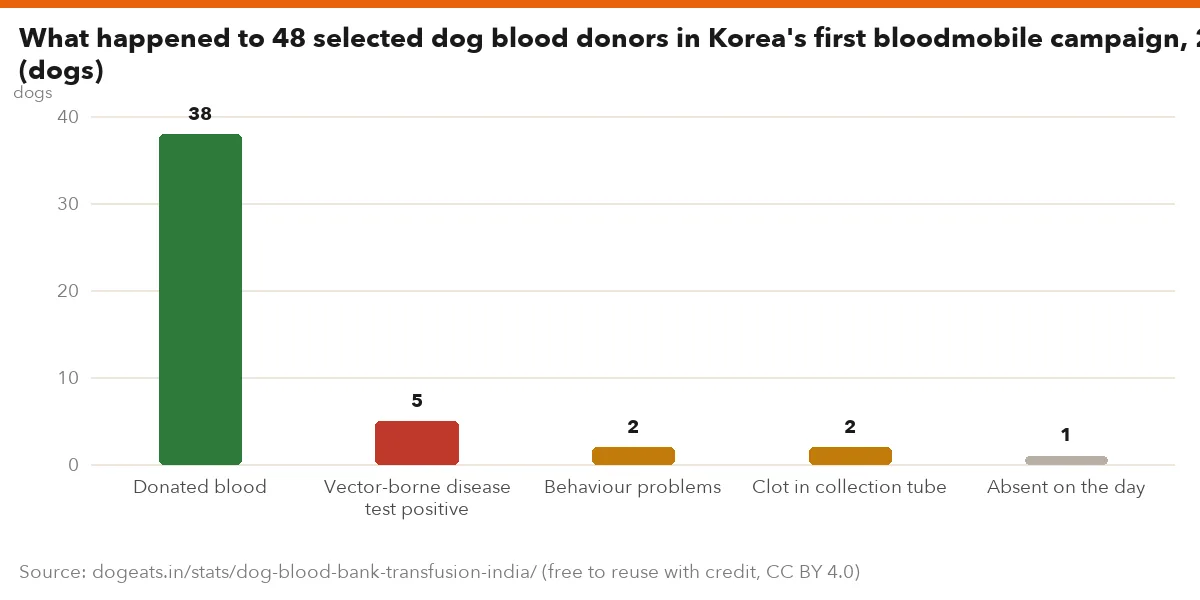
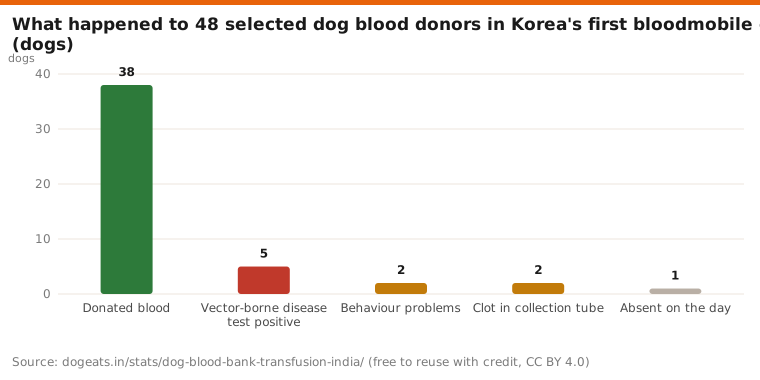
The Korean programme raised its minimum age from the usual 1 year to 2 years to lower the risk of low blood pressure in adolescent dogs. Of 48 dogs selected, 38 donated. Five were turned away after a positive vector-borne disease screen.
Keeping a would-be donor's shots current is the first step. Our dog vaccination cost report lists vaccine and vet fees from official Indian rate cards.
What blood types do dogs have, and how common is DEA 1 positive?
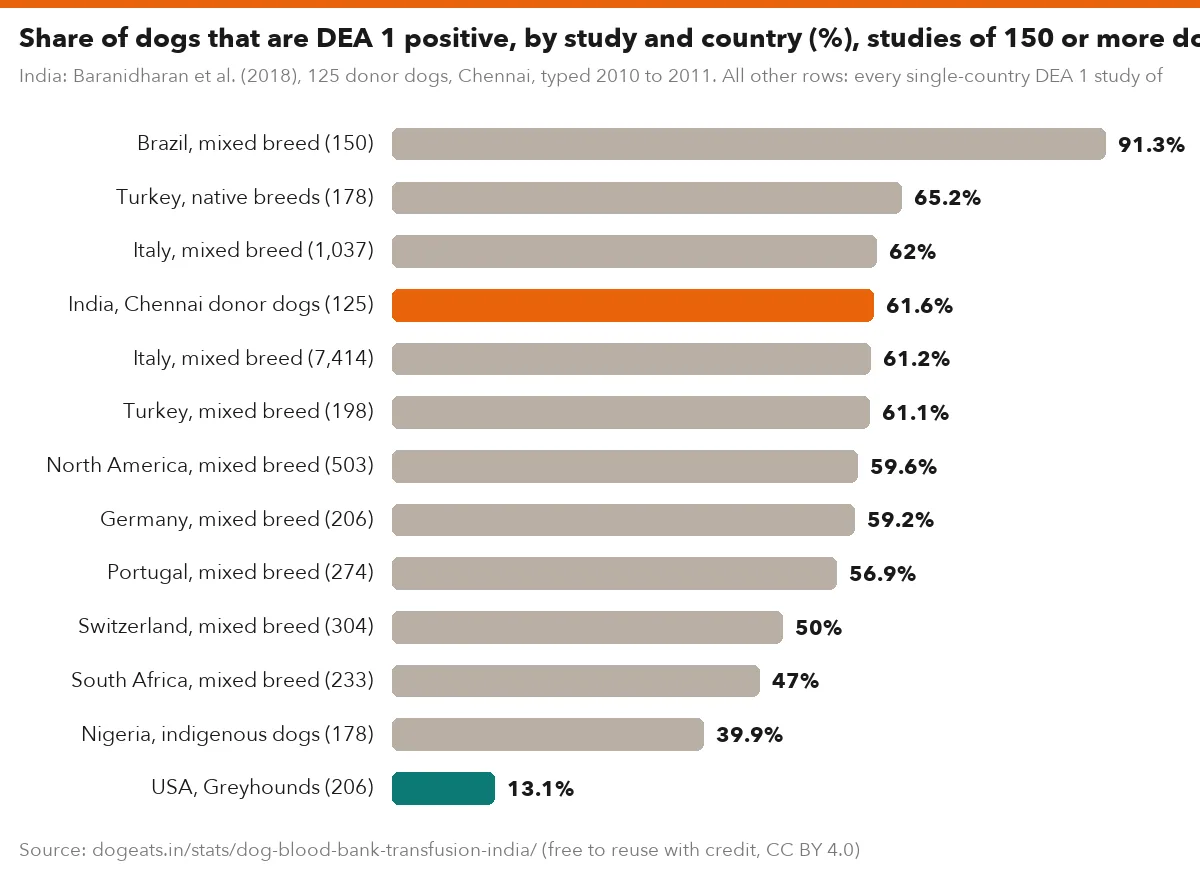
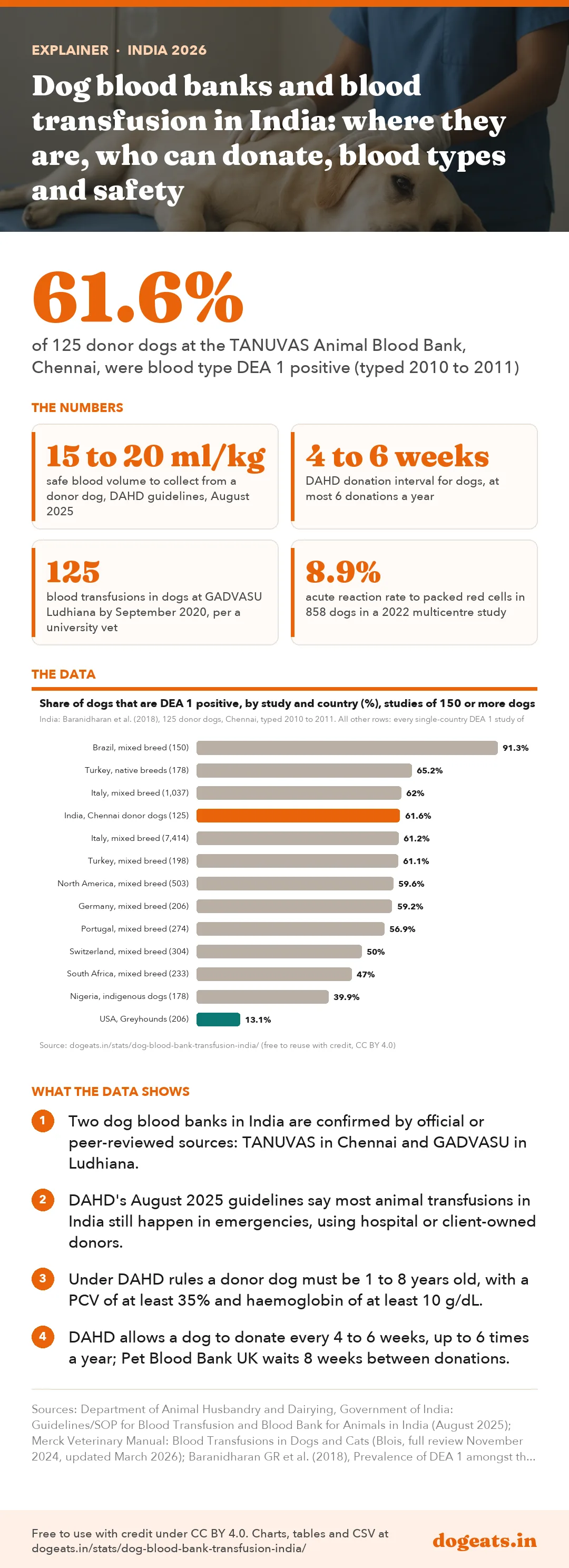
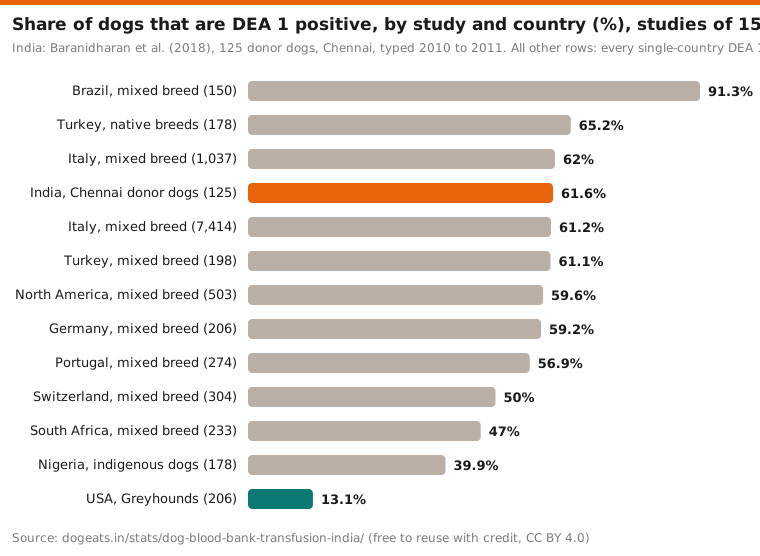
Dogs have many blood groups, and the one that matters most for transfusion is DEA 1. The Merck Veterinary Manual says about 33 to 65% of dogs are DEA 1 positive, depending on the region. In Chennai, 61.6% of 125 donor dogs were positive, close to the 59 to 62% found in large studies in Italy, Germany and North America.
Merck lists DEA 1, 3, 4, 5, 6, 7 and 8, plus Dal and Kai 1 and 2. DAHD's guidelines count 9 canine blood groups, splitting DEA 1 into 1.1 and 1.2. Merck's current text treats DEA 1 as a single group and says a weak positive donor counts as positive.
A DEA 1 negative dog given DEA 1 positive blood can form antibodies against it, Merck says. Its next positive transfusion can then trigger a reaction. DEA 1 positive dogs can receive DEA 1 negative red cells without risk of incompatibility.
India: Baranidharan et al. (2018), 125 donor dogs, Chennai, typed 2010 to 2011. All other rows: every single-country DEA 1 study of 150 or more dogs in Table 2 of Mangiaterra et al. (2021), Animals 11(2):342; sample size in brackets. Left out: Lucidi et al. (2011, 172 dogs, country not given in the review) and Proverbio et al. (2020, 320 dogs, Italy and Spain combined, 42.8%).
Show the numbers
| Label | % |
|---|---|
| Brazil, mixed breed (150) | 91.3% |
| Turkey, native breeds (178) | 65.2% |
| Italy, mixed breed (1,037) | 62% |
| India, Chennai donor dogs (125) | 61.6% |
| Italy, mixed breed (7,414) | 61.2% |
| Turkey, mixed breed (198) | 61.1% |
| North America, mixed breed (503) | 59.6% |
| Germany, mixed breed (206) | 59.2% |
| Portugal, mixed breed (274) | 56.9% |
| Switzerland, mixed breed (304) | 50% |
| South Africa, mixed breed (233) | 47% |
| Nigeria, indigenous dogs (178) | 39.9% |
| USA, Greyhounds (206) | 13.1% |
Embed this chart
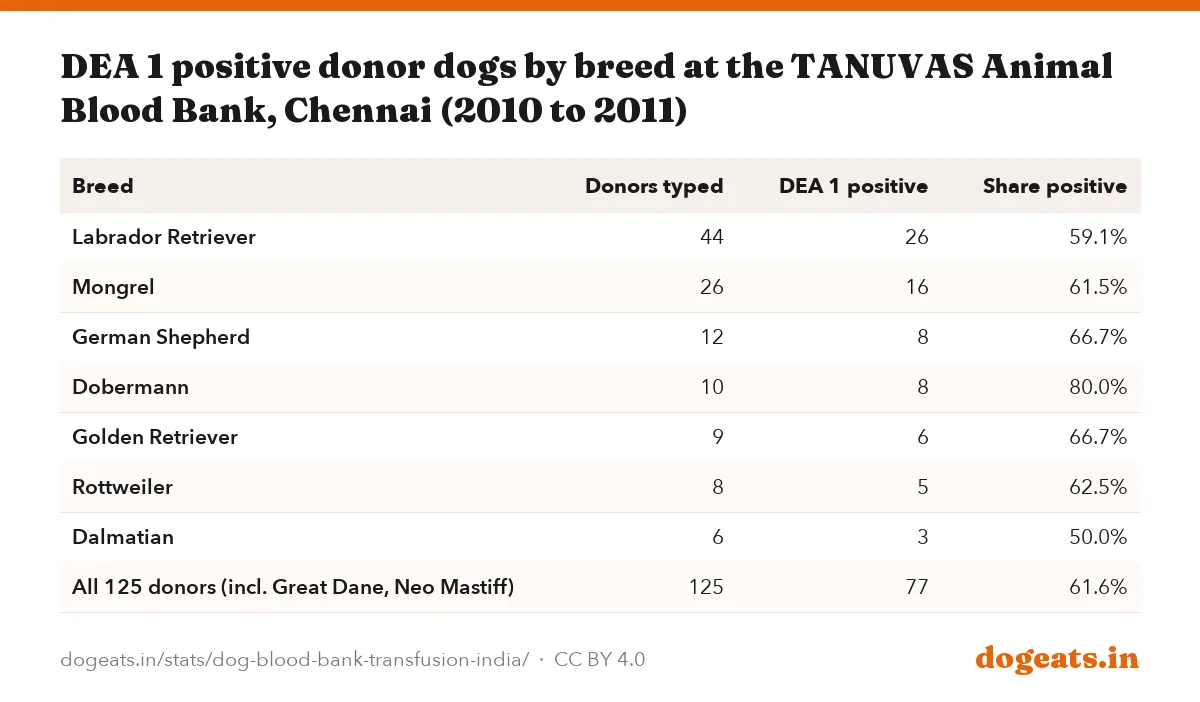
| Breed | Donors typed | DEA 1 positive | Share positive |
|---|---|---|---|
| Labrador Retriever | 44 | 26 | 59.1% |
| Mongrel | 26 | 16 | 61.5% |
| German Shepherd | 12 | 8 | 66.7% |
| Dobermann | 10 | 8 | 80.0% |
| Golden Retriever | 9 | 6 | 66.7% |
| Rottweiler | 8 | 5 | 62.5% |
| Dalmatian | 6 | 3 | 50.0% |
| All 125 donors (incl. Great Dane, Neo Mastiff) | 125 | 77 | 61.6% |
Breed groups in the Chennai study were small, so treat the breed shares as rough. Labradors made up 44 of the 125 donors. The highest share was in Dobermanns, 8 of 10, and the lowest in Dalmatians, 3 of 6. German Shepherds came in at 8 of 12, Golden Retrievers at 6 of 9 and Rottweilers at 5 of 8.
Sources give different overall figures because they count different things. Merck's pet owner page, which still uses the older DEA 1.1 name, says about 40% of dogs are DEA 1.1 positive. Pet Blood Bank UK says its research finds only 30% of dogs have the negative type, which implies about 70% are positive.
Greyhounds stand out: only 13.1% of 206 US Greyhounds were DEA 1 positive. At the other end, 91.3% of 150 dogs in a 1999 Brazilian study were positive. In Asia's first canine bloodmobile, in South Korea in 2019, 31 of 46 typed donors (67.4%) were positive.
When does a dog need a blood transfusion?
A dog needs blood when anaemia or blood loss leaves too few red cells to carry oxygen. In 2024 vets at Proddatur in Andhra Pradesh transfused 350 ml of whole blood into each of two dogs with babesiosis whose PCV had fallen below 10%.
DAHD's guidelines list the uses of whole blood: anaemia, severe thrombocytopenia, disseminated intravascular coagulation, severe trauma and major surgery. They add immune-mediated haemolytic anaemia, poisoning, parasitism, and tick-borne disease such as babesiosis and ehrlichiosis.
Tick fever is the Indian reason most often seen in case reports. At ICAR-IVRI in Bareilly, a Labrador with Ehrlichia canis, marked anaemia and low platelets got a transfusion on day 2 of treatment. It showed marked recovery after 15 days.
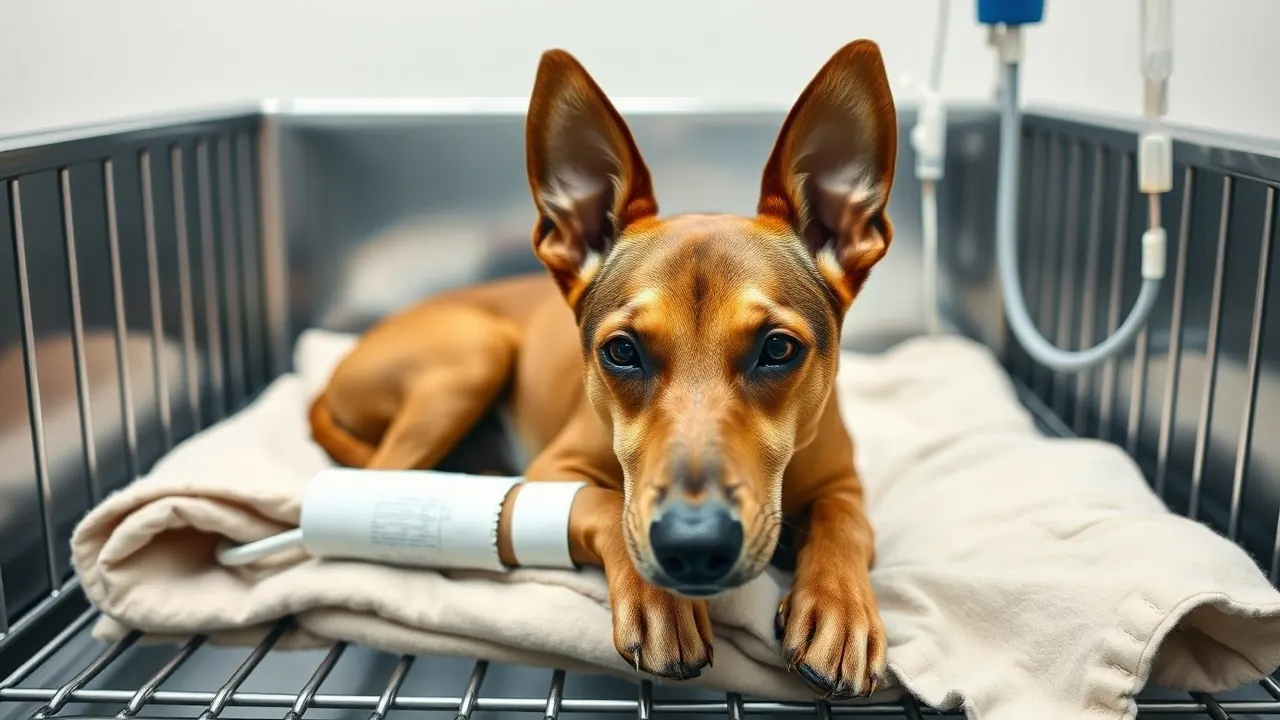
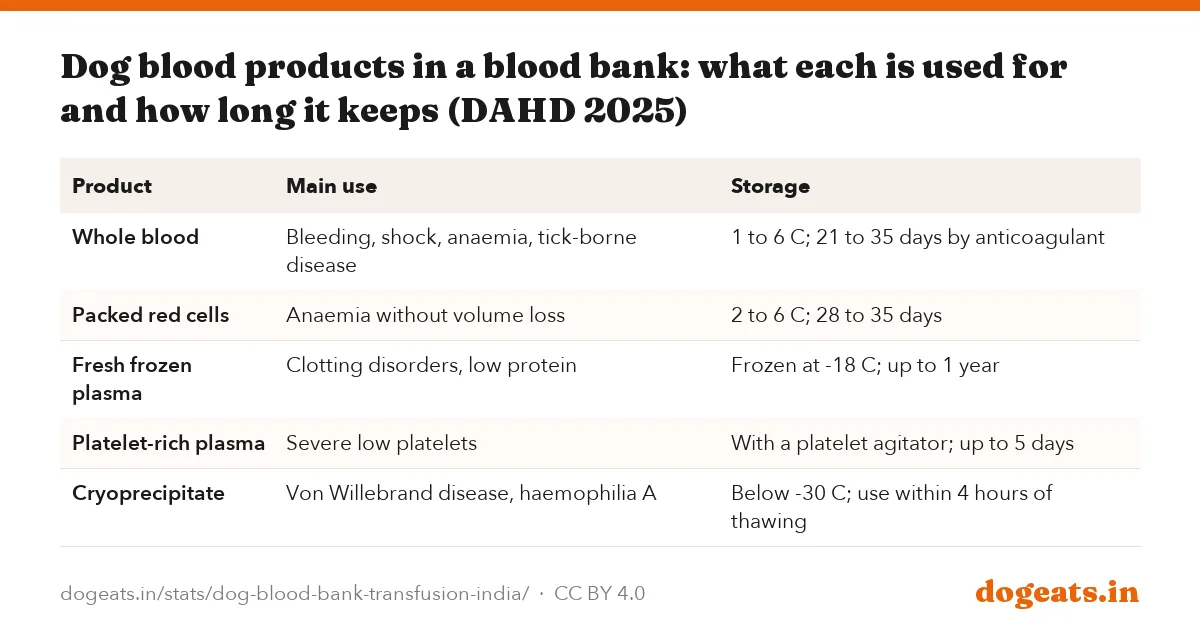
| Product | Main use | Storage |
|---|---|---|
| Whole blood | Bleeding, shock, anaemia, tick-borne disease | 1 to 6 C; 21 to 35 days by anticoagulant |
| Packed red cells | Anaemia without volume loss | 2 to 6 C; 28 to 35 days |
| Fresh frozen plasma | Clotting disorders, low protein | Frozen at -18 C; up to 1 year |
| Platelet-rich plasma | Severe low platelets | With a platelet agitator; up to 5 days |
| Cryoprecipitate | Von Willebrand disease, haemophilia A | Below -30 C; use within 4 hours of thawing |
The need is steady at a big teaching hospital. In 2020 a GADVASU vet told ANI that the hospital handled at least 25,000 cases a year, of which 500 to 600 were dogs with low haemoglobin. In one case a dog's haemoglobin had dropped to 3 g and rose to 7 g after transfusion.
How common tick fever is in Indian dogs is covered in our dog diseases in India report, including blood parasite rates in Kolkata, Kerala and Tamil Nadu. Year-round tick control, especially in the rains, is in our monsoon dog care guide.
How long can dog blood be stored, and how much blood does a dog have?
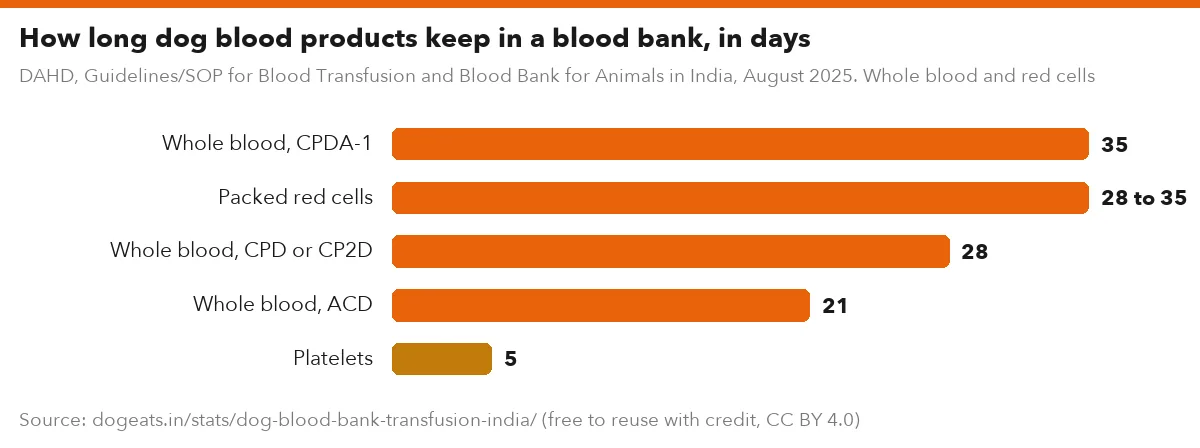
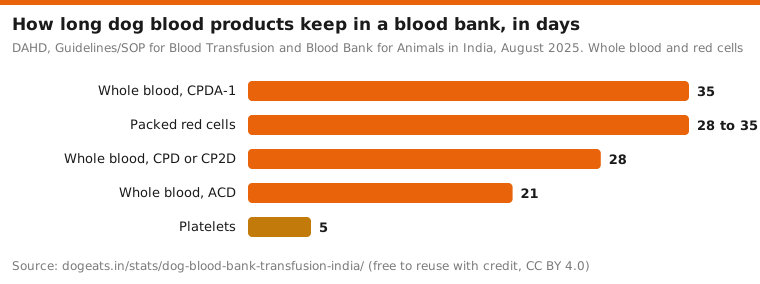
Whole blood keeps 21 to 35 days in a fridge at 1 to 6 C, depending on the anticoagulant in the bag, under DAHD's guidelines. Packed red cells keep 28 to 35 days, platelets about 5 days and frozen plasma up to a year.
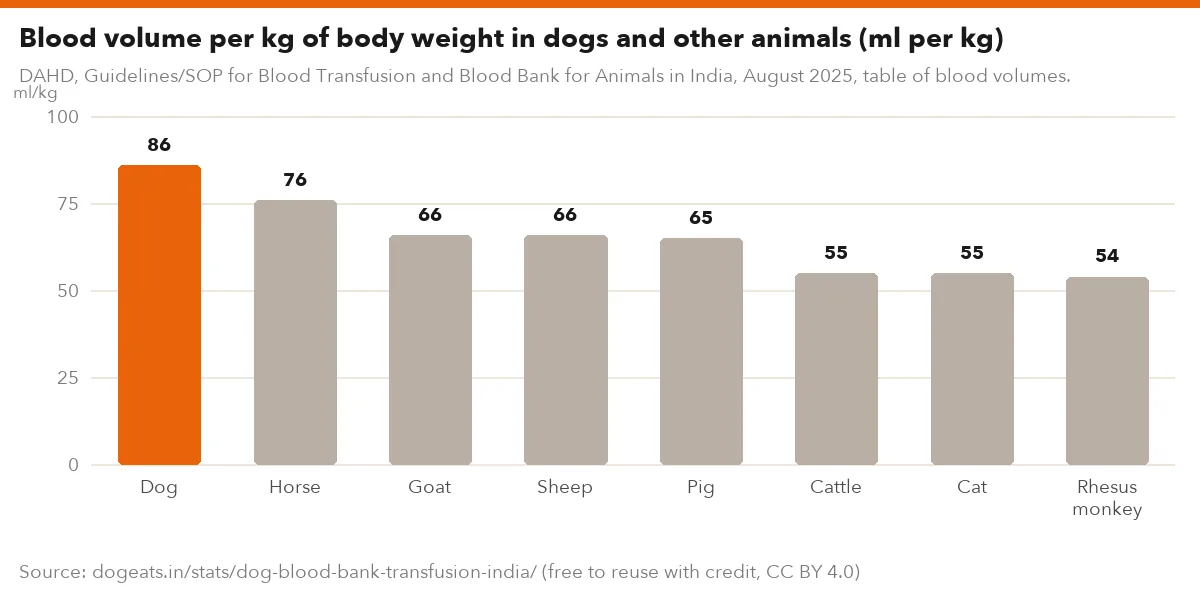
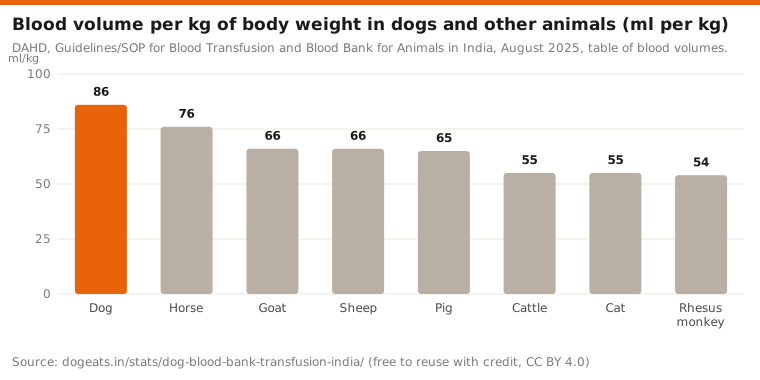
A dog has about 86 ml of blood per kg of body weight in DAHD's table, or 2,150 ml for an average 25 kg dog. The Merck Veterinary Manual gives a range of 80 to 90 ml per kg.
That makes a dog's blood volume per kg among the highest of the domestic animals in DAHD's table. Cats have 55 ml per kg, goats and sheep 66 and horses 76.
DAHD, Guidelines/SOP for Blood Transfusion and Blood Bank for Animals in India, August 2025. Whole blood and red cells refrigerated; platelets with a platelet agitator. Plasma frozen at -18 C keeps up to 1 year (not shown).
Show the numbers
| Label | days |
|---|---|
| Whole blood, CPDA-1 | 35 |
| Packed red cells | 28 to 35 |
| Whole blood, CPD or CP2D | 28 |
| Whole blood, ACD | 21 |
| Platelets | 5 |
Embed this chart
DAHD, Guidelines/SOP for Blood Transfusion and Blood Bank for Animals in India, August 2025, table of blood volumes.
Show the numbers
| Label | ml/kg |
|---|---|
| Dog | 86 |
| Horse | 76 |
| Goat | 66 |
| Sheep | 66 |
| Pig | 65 |
| Cattle | 55 |
| Cat | 55 |
| Rhesus monkey | 54 |
Embed this chart
Storage time matters for safety as well as supply. In a 2022 study, red cells stored longer than 28 days were linked to about four times the odds of a fever reaction, against cells stored 14 days or fewer.
DAHD notes that 350 ml veterinary blood bags for small animals such as dogs are sold in India, along with 150 ml and 1.5 litre bags.
Is a blood transfusion safe for dogs?
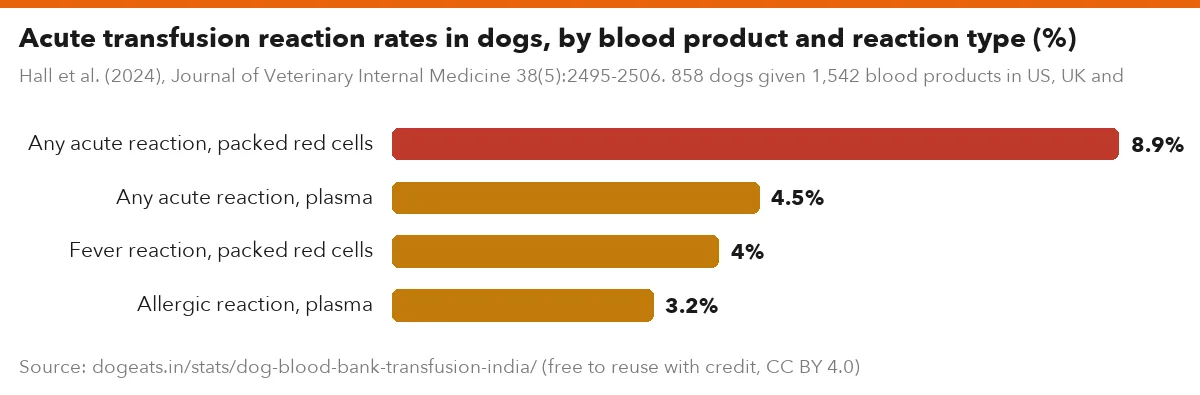
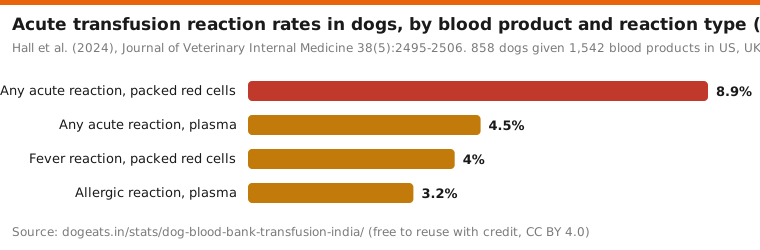
Mostly, but reactions are not rare. In a 2022 study of 858 dogs at referral hospitals in the US, UK and Australia, 8.9% reacted to packed red cells and 4.5% to plasma.
Fever was the most common reaction to red cells, at 4%; Merck defines it as a temperature above 39 C. Allergic reactions were the most common with plasma, at 3.2%. Red cells stored longer than 28 days raised the odds of fever about four times compared with cells stored 14 days or fewer.
Merck says vets should run a major crossmatch in any dog transfused more than 4 days after an earlier transfusion. DAHD agrees that a crossmatch is not needed before a dog's first transfusion, because dogs lack natural antibodies. Elsewhere, though, the same guidelines call typing and crossmatching mandatory before every transfusion.
Hall et al. (2024), Journal of Veterinary Internal Medicine 38(5):2495-2506. 858 dogs given 1,542 blood products in US, UK and Australian referral hospitals, March to November 2022.
Show the numbers
| Label | % |
|---|---|
| Any acute reaction, packed red cells | 8.9% |
| Any acute reaction, plasma | 4.5% |
| Fever reaction, packed red cells | 4% |
| Allergic reaction, plasma | 3.2% |
Embed this chart
Choi and Han (2024), Frontiers in Veterinary Science 11:1402459. 48 dogs selected from 750 applicants, October to December 2019.
Show the numbers
| Label | dogs |
|---|---|
| Donated blood | 38 |
| Vector-borne disease test positive | 5 |
| Behaviour problems | 2 |
| Clot in collection tube | 2 |
| Absent on the day | 1 |
Embed this chart
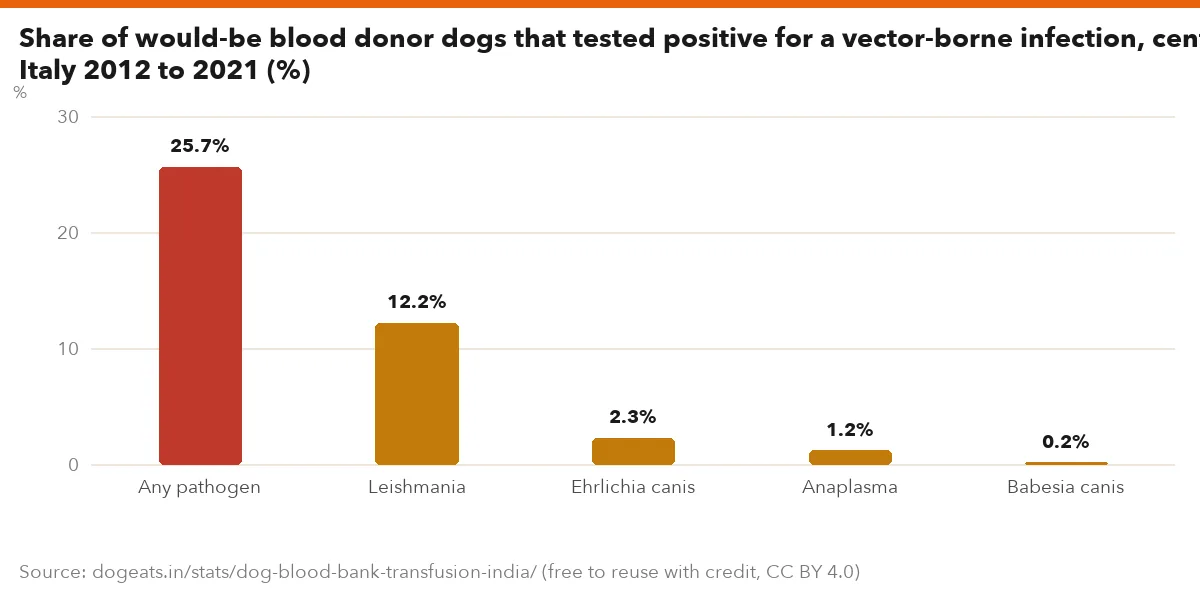
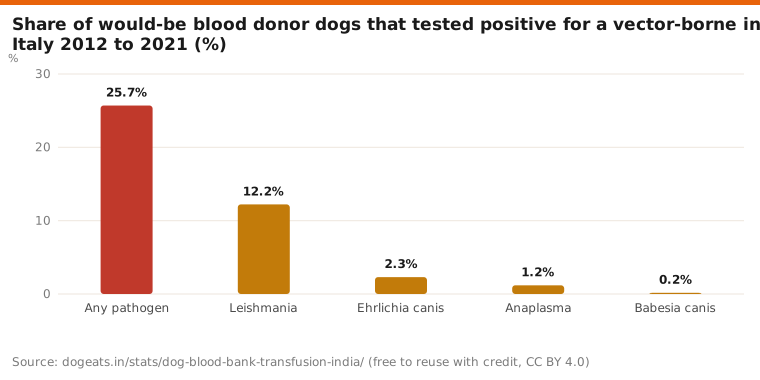
Morganti et al. (2022), Veterinary Sciences 9(6):274. 1,260 canine blood donors screened by antibody tests at a veterinary blood bank in central Italy. No comparable Indian donor screening data was found.
Show the numbers
| Label | % |
|---|---|
| Any pathogen | 25.7% |
| Leishmania | 12.2% |
| Ehrlichia canis | 2.3% |
| Anaplasma | 1.2% |
| Babesia canis | 0.2% |
Embed this chart
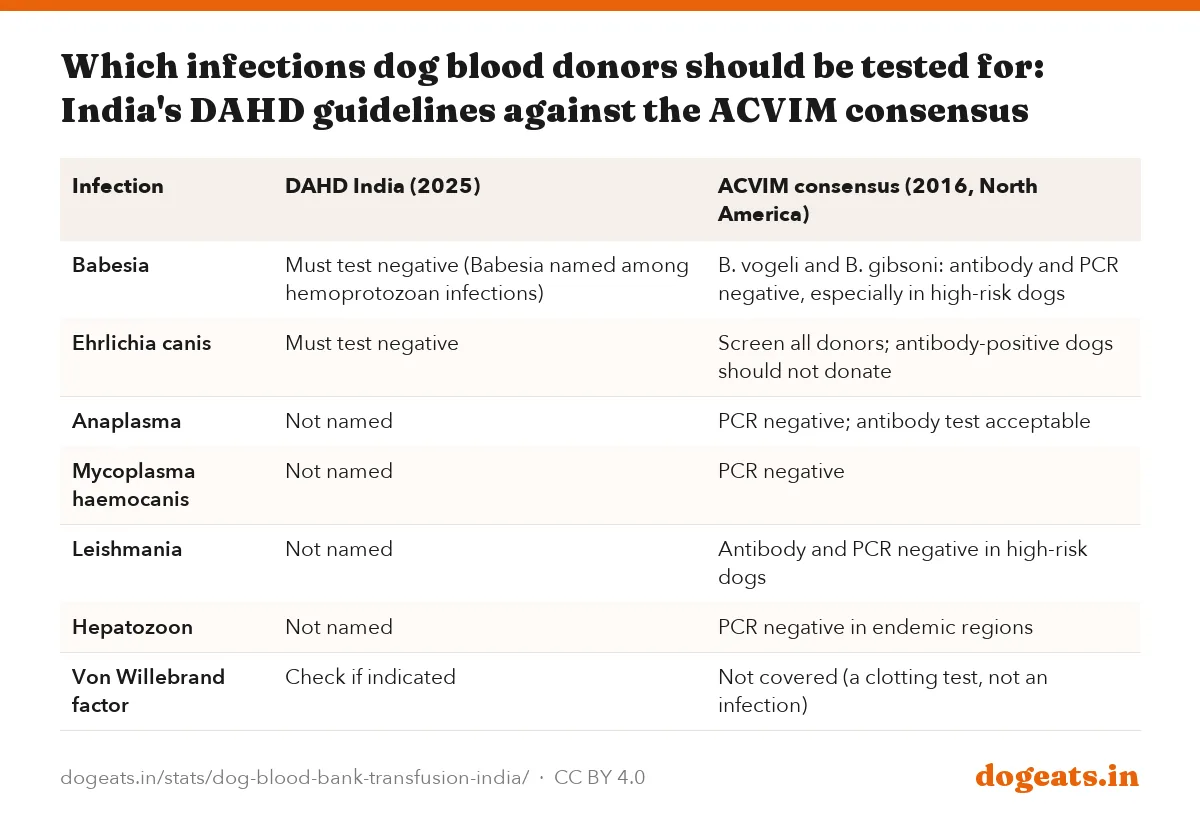
| Infection | DAHD India (2025) | ACVIM consensus (2016, North America) |
|---|---|---|
| Babesia | Must test negative (Babesia named among hemoprotozoan infections) | B. vogeli and B. gibsoni: antibody and PCR negative, especially in high-risk dogs |
| Ehrlichia canis | Must test negative | Screen all donors; antibody-positive dogs should not donate |
| Anaplasma | Not named | PCR negative; antibody test acceptable |
| Mycoplasma haemocanis | Not named | PCR negative |
| Leishmania | Not named | Antibody and PCR negative in high-risk dogs |
| Hepatozoon | Not named | PCR negative in endemic regions |
| Von Willebrand factor | Check if indicated | Not covered (a clotting test, not an infection) |
Screening is the main safety step for donors, because some tick-borne infections pass in blood. Even in an Italian blood bank whose donors had regular tick and worm control, 25.7% of 1,260 candidates tested positive for at least one infection over 10 years.
Owners can help by watching a dog's temperature after a transfusion. Our dog normal temperature chart gives the normal range of 37.5 to 39.2 C. Merck counts a reading above 39 C, with a rise of more than 1 C, as a fever reaction, so tell the vet at once.
In the Korean bloodmobile campaign, 5 of 48 selected dogs (10.4%) were turned away after a positive vector-borne disease screen. Only 48 of 750 applicants were selected at all.
Frequently asked questions
Is there a dog blood bank in India?
Yes. Two are confirmed by official or peer-reviewed sources: the TANUVAS Animal Blood Bank at Madras Veterinary College in Chennai, and the GADVASU dog blood bank in Ludhiana, opened in 2020. Bihar Animal Sciences University plans one in Patna, expected in 2027.
Can my dog donate blood in India?
Under DAHD's 2025 guidelines, a healthy, calm dog aged 1 to 8 can donate if it is vaccinated, dewormed, on no medicine and free of tick-borne disease. Large breeds must weigh at least 25 kg, and the dog needs a PCV of at least 35%.
How often can a dog donate blood?
DAHD allows every 4 to 6 weeks, at least 30 days apart and at most 6 times a year. Pet Blood Bank UK waits eight weeks, saying the blood volume takes around two months to be fully replaced.
How much blood is taken from a donor dog?
DAHD sets the safe volume at 15 to 20 ml per kg of body weight. For a 25 kg dog that is 375 to 500 ml. DAHD notes that 350 ml veterinary blood bags for dogs are sold in India.
Can my Indie dog donate blood?
No rule excludes a breed. DAHD sets weight lines by size: 5 to 7 kg for small dogs, 15 to 20 kg for medium and 25 kg for large. A healthy adult Indie dog aged 1 to 8 that meets the line for its size qualifies.
What is the universal blood type for dogs?
There is no fully universal type, but DEA 1 negative red cells are the safest choice: Merck says DEA 1 positive dogs can receive them without risk of incompatibility. Pet Blood Bank UK says only about 30% of dogs are negative. In Chennai, 38.4% of 125 donors were negative.
Does a dog need a blood test before its first transfusion?
Merck advises typing every donor and recipient for DEA 1. A crossmatch is not needed before a dog's first transfusion, DAHD says, but is strongly recommended more than 4 days after an earlier one.
How long does a dog blood transfusion take?
DAHD says a dog transfusion must be finished within 4 hours, starting slowly while the vet watches for a reaction. Merck allows faster rates in unstable dogs.
Can tick fever make a dog need blood?
Yes. DAHD lists babesiosis and ehrlichiosis among the uses of whole blood. In a 2024 Indian report, two dogs with babesiosis and a PCV below 10% each received 350 ml of whole blood and improved.
Methodology and limitations
Donor rules, storage times, indications, blood volumes and the Indian policy position come from DAHD's guidelines. Their full title is Guidelines/SOP for Blood Transfusion and Blood Bank for Animals in India (Department of Animal Husbandry and Dairying, August 2025). We read the PDF in full from dahd.gov.in (live, October 2026).
Blood group facts, blood volume, crossmatch advice and the fever reaction definition come from the Merck Veterinary Manual professional chapters on blood groups and transfusions in dogs and cats. Both were fully reviewed in November 2024 and updated in March 2026; we also used Merck's pet owner page.
Indian DEA 1 data come from Baranidharan et al. (2018), Hematology and Transfusion International Journal 6(4):47-49. Breed shares are computed by dogeats.in from the paper's Table 1, adding the male and female DEA 1 positive columns. We left out the Great Dane and Neo Mastiff rows because their counts do not add up in the source. Other countries come from Table 2 of Mangiaterra et al. (2021) and from Choi and Han (2024).
Blood banks were confirmed from official university pages (TANUVAS, GADVASU), peer-reviewed papers and named news reports, each labelled by source type. The 2020 ANI report in DNA India was read from its Internet Archive copy because the live page blocks automated access. Reaction rates come from Hall et al. (2024); donor screening data from Morganti et al. (2022) and Wardrop et al. (2016).
This report gives reference figures and study findings only. It does not give transfusion doses or treatment advice; those are decided by the treating vet.
Sources
- Department of Animal Husbandry and Dairying, Government of India: Guidelines/SOP for Blood Transfusion and Blood Bank for Animals in India (August 2025), Donor age, weight, PCV, interval, volume; storage; blood volume; indications; crossmatch; policy gaps
- Merck Veterinary Manual: Blood Transfusions in Dogs and Cats (Blois, full review November 2024, updated March 2026), Blood volume 80 to 90 ml/kg, DEA 1 typing, crossmatch after 4 days, fever reaction above 39 C
- Baranidharan GR et al. (2018), Prevalence of DEA 1 amongst the dog blood donors at TANUVAS Animal Blood Bank (TABB), India, Hematol Transfus Int J 6(4):47-49, 125 donor dogs, 77 (61.6%) DEA 1 positive, by breed, Chennai 2010 to 2011
- Also consulted: Merck Veterinary Manual: Blood Groups in Dogs and Cats (Blois, full review November 2024), Mangiaterra S et al. (2021), Canine Blood Group Prevalence and Geographical Distribution around the World: An Updated Systematic Review, Animals 11(2):342, Hall GBF et al. (2024), A prospective multicenter observational study assessing incidence and risk factors for acute blood transfusion reactions in dogs, J Vet Intern Med 38(5):2495-2506, Wardrop KJ et al. (2016), Update on Canine and Feline Blood Donor Screening for Blood-Borne Pathogens, J Vet Intern Med 30(1):15-35, Morganti G et al. (2022), Retrospective longitudinal survey on canine vector-borne pathogens at a veterinary blood bank in central Italy, Vet Sci 9(6):274, Choi HJ, Han HJ (2024), Launch of the first canine mobile blood donation center in Asia, Front Vet Sci 11:1402459, Pet Blood Bank UK: Dog owner FAQs and Can your dog donate blood, TANUVAS: Madras Veterinary College infrastructure, GADVASU news: Punjab Governor lauds first Dog Blood Bank in Northern India (September 2020), DNA India (ANI), 18 September 2020: Blood bank for dogs established in Punjab's Ludhiana, The Tribune, 9 June 2026: Vet varsity urges Ludhiana residents to register pet dogs as blood donors, CNN (via CNN Newsource), 28 June 2024: Indian tycoon appeals for blood donations for sick puppy, Reddy BS, Sivajothi S, Nagarjuna G (2024), Blood transfusion in two anaemic dogs with babesiosis, Indian J Vet Med 44(2), Kasondra A et al. (2017), Therapeutic management of canine ehrlichiosis with aid of blood transfusion, J Parasit Dis 41(2):395-397, Patna Press, 11 July 2026: Bihar to open animal blood bank at BASU veterinary hospital by 2027, Merck Veterinary Manual, pet owner version: Blood Groups and Blood Transfusions in Dogs (Cotter, updated September 2024), Merck Veterinary Manual: Babesiosis in Animals (full review March 2022).
Cite, embed and download
This report, its data and its images are free to reuse under a Creative Commons Attribution 4.0 licence. Credit dogeats.in with a link to this page. Every chart has its own embed code, every table has a CSV and an image download, and the images below are ready for social posts, slides and articles.
Cite this report
Link to this report
Every chart and table as an image