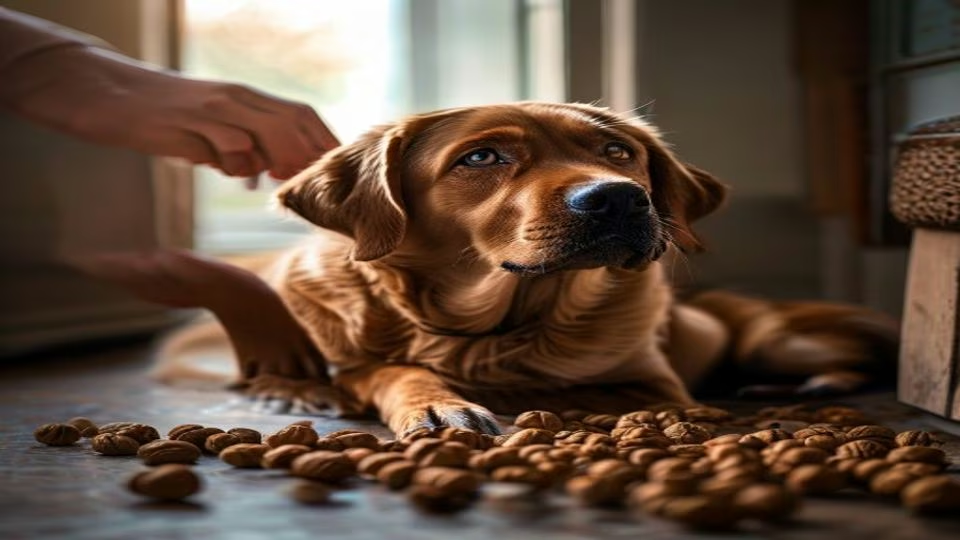
Can Dogs Eat Walnuts? Benefits, Risks & Indian Serving Tips
5 min read · Updated May 2026
No, Walnuts is not safe for dogs and should be kept away entirely. Even small amounts can be harmful, and signs of poisoning may be delayed by hours or days. If your dog has eaten any, call your vet immediately (or the local helplines below), do not wait for symptoms, and do not try to make your dog vomit at home unless a vet tells you to.
Is Walnuts From Your Indian Kitchen Safe for Dogs?
Akhrot (walnuts) are very popular in Indian dry fruit mixes, nut snack mixes, mithai, kheer, halwa. Never give any walnut-containing food to dogs. Check all dry fruit preparations for hidden walnuts.
Why Walnuts Are Dangerous for Dogs
Walnuts present two distinct toxicity risks for dogs. Black walnuts (Juglans nigra) contain juglone, a compound that causes neurological damage. More commonly, any walnut species can harbour mycotoxins produced by Aspergillus and Penicillium moulds, tremorgenic toxins that cause rapid-onset muscle tremors, seizures, ataxia (loss of coordination), and can be fatal. Even walnuts that appear normal may carry invisible mould. The very high fat content (65 g per 100 g) also makes walnuts a pancreatitis risk independent of toxicity.
Indian context: akhrot (walnuts) are popular in dry fruit mixes, Kashmiri dishes, halwa, kheer, and health snack mixes. Walnut-containing mithai and baked goods are increasingly common in Indian bakeries. Symptoms of walnut mycotoxin poisoning appear rapidly, within 30 minutes to a few hours: tremors, vomiting, weakness, seizures. Any suspected walnut ingestion is a veterinary emergency. Act immediately, do not wait for symptoms to develop.
| Toxic Compound | Level | Effect on Dogs |
|---|---|---|
| Juglone (black walnut) | Present | ⚠️ Highly toxic, neurological damage |
| Mycotoxins (mould) | Possible | ⚠️ Tremorgenic, causes tremors and seizures |
| Fat | 65g | ⚠️ Very high fat, pancreatitis risk even if not otherwise toxic |
| Choking risk | HIGH | Large size hazard |
| Risk level | HIGH | All dogs |
Risks of Walnuts for Dogs, And When to Worry
| Risk | Level | Most at risk |
|---|---|---|
| Juglone in black walnuts causes neurological and GI damage | HIGH | All dogs |
| Tremorgenic mycotoxins from mould cause tremors and seizures | CRITICAL | All dogs, even apparently fresh walnuts |
| Large size causes intestinal obstruction | HIGH | Small and medium dogs |
Indian-specific concerns: Diabetic dogs, obese apartment dogs (Labs, Pugs, Beagles with limited exercise), puppies under 3 months, senior dogs, and dogs with kidney or liver conditions should be treated with extra care when it comes to Walnuts. Has your dog a health issue? Run this past the vet before offering it.
- • Vomiting or diarrhoea within hours of eating Walnuts
- • Lethargy, collapse, or seizures
- • Swollen face, hives, or difficulty breathing
- • Pale or yellowish gums (sign of anaemia or organ damage)
- CUPA Bangalore 080-22947301
- PFA Delhi 011-45615915
- Blue Cross Chennai 044-22350586
- Bombay SPCA Mumbai 022-24137518
- RESQ Pune 98909-99111
- PFA Hyderabad 73374-50643
- CSPCA Kolkata 033-22367738
- PFA Ahmedabad 94270-00501
Can Indian Dog Breeds Eat Walnuts? Breed-by-Breed Guide
The answer is the same for every breed: walnuts is not safe for dogs, whatever their size or constitution. What differs is only how quickly a dog reaches a harmful dose and how easily it can get hold of some, so the real task is keeping walnuts out of reach, not finding a breed-appropriate portion.
Labrador Retriever, India's Most Popular Breed
Food-driven Labradors will bolt walnuts before you can react, so the priority is keeping it off low tables and out of bins rather than rationing it. There is no safe amount for a Lab, whatever its size.
Golden Retriever
Goldens are gentle but greedy, and walnuts is unsafe for them at any size. Keep it well out of reach instead of relying on portion control.
Indian Pariah Dog (INDog / Indie Dog)
A robust street-dog stomach does not make walnuts safe, the toxic effect is the same for Indie dogs as for any other breed. Keep it away from them entirely, and watch newly rescued dogs that may scavenge.
Pomeranian & Indian Spitz
Tiny Poms and Spitz reach a harmful dose of walnuts from a very small amount, so they are at the highest risk. Keep it completely out of their reach.
German Shepherd
German Shepherds are no exception, walnuts is unsafe for them too, regardless of size. There is no 'trial' amount; keep it away entirely.
Feeding Walnuts in India, Why the Season Doesn't Make It Safe
Unlike a fresh food whose risk shifts with heat or humidity, walnuts is unsafe for dogs in every season, there is no time of year when it becomes a safe treat. The only thing that changes through the year is how much of it is around the house, so the practical job is managing access.
Summer (March–June)
Summer brings more of some of these foods into the home, but walnuts does not become safe in the heat. Keep it out of reach and clear away anything dropped, as warmth can also make spoiled food an extra hazard.
Monsoon (June–September)
Damp monsoon weather changes nothing about walnuts's toxicity. Keep it stored away from your dog, and be especially careful with bins and leftovers in humid conditions.
Winter (November–February)
Festive winter cooking and gatherings mean more walnuts around, often within a dog's reach. Keep it on high surfaces and out of bins, and remind guests not to share it with your dog.
English, Black, Mouldy, with Almonds, Cashews, Pecans & Source
Walnuts split sharply by variety, fresh English walnuts (the common shelled type) are non-toxic in tiny amounts, but black walnuts and any mouldy walnuts can be dangerous:
- Plain English walnuts (fresh, shelled): A few halves are non-toxic but calorie-dense and fatty. Not a routine treat.
- Black walnuts: Toxic, contain juglone and are more likely to host the tremorgenic mould that causes seizures in dogs. Skip entirely.
- Mouldy or old walnuts: Genuinely dangerous, tremorgenic mycotoxins from Aspergillus and Penicillium moulds cause tremors and seizures. Throw out any walnuts past their date or with a musty smell.
- Walnut shells: Choking and gut-laceration hazard, never let a dog chew shells.
- Walnuts and almonds: Almonds are similarly non-toxic in small amounts but bitter almonds can be, see our almonds guide.
- Walnuts and cashews: Both fine plain in tiny amounts.
- Walnuts and pecans: Pecans are similar to walnuts, fresh fine, mouldy or old dangerous.
- Walnuts from Australia / source country: No safety difference by source, the mould risk is about storage.
- If your dog has eaten mouldy walnuts: Treat as a poisoning emergency, call your vet. Seizures from tremorgenic mycotoxins can be severe.
People Also Ask, Related Other Foods Safety Questions
Indian dog owners also ask about these other foods:
More Other Foods Safety Guides
Explore the full other foods safety guide →, every food reviewed
Frequently Asked Questions About Walnuts for Dogs
Safe Alternatives to Walnuts for Dogs
- Peanut Butter, Safe nut product in tiny xylitol-free amounts
- Almonds, Safer nut option though still high fat
- Pumpkin Seeds, Safe seed option with good nutritional value
See our complete guide to all 905 foods →
3 Common Myths About Walnuts and Dogs, Debunked by About
These misconceptions about feeding walnuts to dogs are widespread among Indian pet owners, and some are genuinely dangerous.
❌ Myth: "A tiny amount of walnuts won't hurt my dog"
✅ Reality: Some toxins have no safe threshold for dogs. Grapes and raisins, for example, have caused acute kidney failure from a single small serving. Walnuts falls into a category where the dose does not reliably predict safety, any amount carries risk. The only safe amount is zero.
❌ Myth: "My dog ate walnuts and seemed fine, so it is probably safe for them"
✅ Reality: Many toxic reactions are delayed by 24–72 hours. Onion toxicity accumulates over 3–5 days before manifesting as anaemia. Grape/raisin toxicity causes kidney damage that is only apparent in blood tests. "Seemed fine" immediately after eating is not a safety signal, call your vet even if your dog appears normal.
❌ Myth: "Indian dogs and street dogs have adapted to walnuts over generations"
✅ Reality: Toxicity is determined by biochemistry, not familiarity. The thiosulfates in onion/garlic damage red blood cells equally regardless of breed or prior exposure. Walnuts contains compounds that dogs cannot metabolise safely, this is a physiological fact, not a cultural one. This is one of the most dangerous myths in Indian dog care.
Editorial Note
"With walnuts, the factors that matter most are preparation and quantity, not just the safety rating. A 'safe' or 'caution' label is only the start; portion size and frequency matter more. The katori measures are a starting point, your own dog's response tunes them."
, dogeats.in Editorial TeamEditorially Rigorous
Sources & References
- American Kennel Club (AKC), Source-verified food safety guidance for dogs
- PetMD Veterinary Review, Veterinarian-reviewed canine nutrition guide
- National Institute of Nutrition (NIN), Hyderabad, Indian food composition tables
- Indian Council of Agricultural Research (ICAR), Indian food safety and agricultural standards