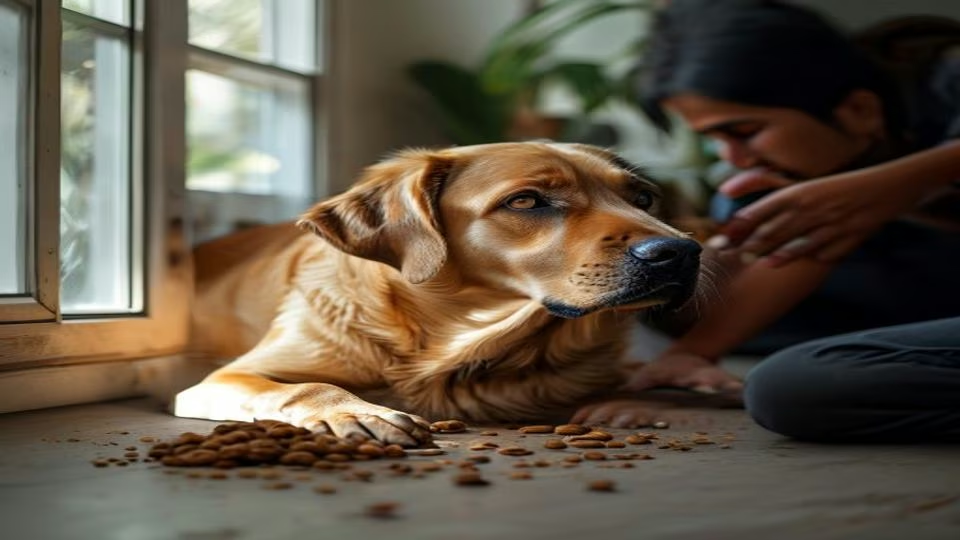
Can Dogs Eat Caffeine? Benefits, Risks & Indian Serving Tips
5 min read · Updated May 2026
No, Caffeine is not safe for dogs and should be kept away entirely. Even small amounts can be harmful, and signs of poisoning may be delayed by hours or days. If your dog has eaten any, call your vet immediately (or the local helplines below), do not wait for symptoms, and do not try to make your dog vomit at home unless a vet tells you to.
Is Caffeine From Your Indian Kitchen Safe for Dogs?
Chai (tea) is ubiquitous in Indian households. Never give chai to dogs, it contains caffeine (toxic), milk (lactose intolerance), and often masala (spices). Coffee, coffee powder, and instant coffee are all toxic. Energy drinks, never.
Why Caffeine Is Dangerous for Dogs
Caffeine belongs to the same methylxanthine family as the theobromine in chocolate. Dogs process caffeine far slower than humans, what causes alertness in a person causes rapid heart rate, elevated blood pressure, tremors, seizures, and internal bleeding in a dog. Toxic doses start as low as 9 mg per kg body weight; a potentially fatal dose is approximately 140 mg per kg. A standard cup of Indian chai contains 50–80 mg caffeine, potentially dangerous for small dogs.
Hidden caffeine sources in Indian households: chai, coffee, energy drinks, cola, green tea, some headache tablets, weight-loss teas, pre-workout supplements, and kaada (herbal brew containing tea leaves). There is no safe amount of caffeine for dogs.
| Toxic Compound | Level | Effect on Dogs |
|---|---|---|
| Methylxanthine | Caffeine type | ⚠️ Causes cardiac arrhythmia, tremors, seizures |
| Sensitivity | 5x more than humans | Dogs process caffeine much more slowly than humans |
| Tea | 40–70mg per cup | ⚠️ Enough to cause toxicity in small dogs |
| Coffee | 80–135mg per cup | ⚠️ Higher concentration than tea, very dangerous |
| Energy drinks | Up to 300mg | ⚠️ Can be fatal for small to medium dogs |
How Much Caffeine Is Dangerous?
Caffeine is a methylxanthine like theobromine, and the thresholds are similar: mild signs (restlessness, racing heart) from about 20 mg per kg of body weight, heart-rhythm effects from 40 mg/kg, and seizures and collapse at 60 mg/kg and above (the lethal dose is around 140 mg/kg). To put that in an Indian context, a single cup of strong filter coffee or chai holds roughly 60–120 mg of caffeine, enough to sicken a small Indie, Pomeranian or Spitz under about 5–6 kg. The biggest everyday hazards are leftover tea and coffee, used tea bags and coffee grounds in the bin, energy drinks, cola, green tea and caffeine or pre-workout pills. Signs begin within 1–2 hours; if your dog has had any, call your vet immediately.
Risks of Caffeine for Dogs, And When to Worry
| Risk | Level | Most at risk |
|---|---|---|
| Cardiac arrhythmia and tachycardia | CRITICAL | All dogs, life-threatening |
| Tremors and seizures | CRITICAL | All dogs |
| Death in severe cases | CRITICAL | All dogs, especially small dogs |
Indian-specific concerns: Diabetic dogs, obese apartment dogs (Labs, Pugs, Beagles with limited exercise), puppies under 3 months, senior dogs, and dogs with kidney or liver conditions should be treated with extra care when it comes to Caffeine. Check with your vet first if your dog carries a health condition.
- • Vomiting or diarrhoea within hours of eating Caffeine
- • Lethargy, collapse, or seizures
- • Swollen face, hives, or difficulty breathing
- • Pale or yellowish gums (sign of anaemia or organ damage)
- CUPA Bangalore 080-22947301
- PFA Delhi 011-45615915
- Blue Cross Chennai 044-22350586
- Bombay SPCA Mumbai 022-24137518
- RESQ Pune 98909-99111
- PFA Hyderabad 73374-50643
- CSPCA Kolkata 033-22367738
- PFA Ahmedabad 94270-00501
Can Indian Dog Breeds Eat Caffeine? Breed-by-Breed Guide
The answer is the same for every breed: caffeine is not safe for dogs, whatever their size or constitution. What differs is only how quickly a dog reaches a harmful dose and how easily it can get hold of some, so the real task is keeping caffeine out of reach, not finding a breed-appropriate portion.
Labrador Retriever, India's Most Popular Breed
Food-driven Labradors will bolt caffeine before you can react, so the priority is keeping it off low tables and out of bins rather than rationing it. There is no safe amount for a Lab, whatever its size.
Golden Retriever
Goldens are gentle but greedy, and caffeine is unsafe for them at any size. Keep it well out of reach instead of relying on portion control.
Indian Pariah Dog (INDog / Indie Dog)
A robust street-dog stomach does not make caffeine safe, the toxic effect is the same for Indie dogs as for any other breed. Keep it away from them entirely, and watch newly rescued dogs that may scavenge.
Pomeranian & Indian Spitz
Tiny Poms and Spitz reach a harmful dose of caffeine from a very small amount, so they are at the highest risk. Keep it completely out of their reach.
German Shepherd
German Shepherds are no exception, caffeine is unsafe for them too, regardless of size. There is no 'trial' amount; keep it away entirely.
Feeding Caffeine in India, Why the Season Doesn't Make It Safe
Unlike a fresh food whose risk shifts with heat or humidity, caffeine is unsafe for dogs in every season, there is no time of year when it becomes a safe treat. The only thing that changes through the year is how much of it is around the house, so the practical job is managing access.
Summer (March–June)
Summer brings more of some of these foods into the home, but caffeine does not become safe in the heat. Keep it out of reach and clear away anything dropped, as warmth can also make spoiled food an extra hazard.
Monsoon (June–September)
Damp monsoon weather changes nothing about caffeine's toxicity. Keep it stored away from your dog, and be especially careful with bins and leftovers in humid conditions.
Winter (November–February)
Festive winter cooking and gatherings mean more caffeine around, often within a dog's reach. Keep it on high surfaces and out of bins, and remind guests not to share it with your dog.
Why Caffeine Is Toxic, Coffee, Tea, Soda, Decaf & "Caffeine-Free"
Caffeine is one of the genuinely dangerous toxins for dogs, chemically related to theobromine (the chocolate toxin), and dogs metabolise it much more slowly than humans. Even small amounts cause hyperactivity, tremors, and in larger amounts seizures and arrhythmia:
- Caffeine (any source): Toxic in any meaningful amount. Toxic dose starts at about 9 mg per pound body weight; a small dog can be at risk from less than a single cup of coffee.
- "Can dogs consume caffeine?": No, never deliberately. Even trace amounts can cause symptoms in small dogs.
- "Can dogs have caffeine?": No.
- Caffeine-free chocolate: Chocolate doesn't contain caffeine primarily, it contains theobromine, which is similarly toxic. "Caffeine-free" chocolate is still toxic. See our chocolate guide.
- Caffeine-free green tea / caffeine-free tea: Decaffeinated tea contains trace caffeine plus tannins. Trace amounts of plain decaf tea are unlikely to harm a healthy adult dog, but tea isn't a treat to share.
- Caffeine-free soda: Most "caffeine-free" sodas (lemon-lime, root beer) are still sugary and acidic. Skip.
- Coffee grounds and tea bags: Concentrated caffeine, eating coffee grounds or used tea bags is a vet emergency. Wet used grounds still contain significant caffeine.
- Energy drinks (Red Bull, Monster, etc.): Skip entirely, concentrated caffeine plus taurine plus sugar.
- If your dog has eaten caffeine: Call your vet immediately. Bring caffeine source, your dog's weight, and time of ingestion. Symptoms appear within 1–2 hours.
People Also Ask, Related Other Foods Safety Questions
Indian dog owners also ask about these other foods:
More Other Foods Safety Guides
Explore the full other foods safety guide →, every food reviewed
Frequently Asked Questions About Caffeine for Dogs
Safe Alternatives to Caffeine for Dogs
- Water,
- Coconut Water, Small amount of plain coconut water is safe
- Plain Yogurt, Safe dairy treat without caffeine
See our complete guide to all 905 foods →
3 Common Myths About Caffeine and Dogs, Debunked by About
These misconceptions about feeding caffeine to dogs are widespread among Indian pet owners, and some are genuinely dangerous.
❌ Myth: "A tiny amount of caffeine won't hurt my dog"
✅ Reality: Some toxins have no safe threshold for dogs. Grapes and raisins, for example, have caused acute kidney failure from a single small serving. Caffeine falls into a category where the dose does not reliably predict safety, any amount carries risk. The only safe amount is zero.
❌ Myth: "My dog ate caffeine and seemed fine, so it is probably safe for them"
✅ Reality: Many toxic reactions are delayed by 24–72 hours. Onion toxicity accumulates over 3–5 days before manifesting as anaemia. Grape/raisin toxicity causes kidney damage that is only apparent in blood tests. "Seemed fine" immediately after eating is not a safety signal, call your vet even if your dog appears normal.
❌ Myth: "Indian dogs and street dogs have adapted to caffeine over generations"
✅ Reality: Toxicity is determined by biochemistry, not familiarity. The thiosulfates in onion/garlic damage red blood cells equally regardless of breed or prior exposure. Caffeine contains compounds that dogs cannot metabolise safely, this is a physiological fact, not a cultural one. This is one of the most dangerous myths in Indian dog care.
Editorial Note
"With caffeine, the factors that matter most are preparation and quantity, not just the safety rating. Knowing the safety class is step one, amount and frequency are the bigger step two. The katori portions are a guide, not a prescription, read your own dog and scale accordingly."
, dogeats.in Editorial TeamEditorially Rigorous
Can Dogs Drink Filter Coffee?
Filter coffee is a concentrated source of caffeine, which is toxic to dogs, and the South Indian style is usually mixed with sugar and milk, adding more problems. There is no safe serving: caffeine can cause restlessness, a racing heart, tremors and, in larger amounts, seizures, and dogs are far more sensitive to it than people. Keep filter coffee, decoction, instant coffee and coffee grounds well away from your dog, and contact a vet immediately if your dog drinks coffee or eats grounds.
Sources & References
- American Kennel Club (AKC), Source-verified food safety guidance for dogs
- ASPCA Animal Poison Control Center, Toxin database, foods harmful to pets
- National Institute of Nutrition (NIN), Hyderabad, Indian food composition tables
- Indian Council of Agricultural Research (ICAR), Indian food safety and agricultural standards